
Drummond’s Dryandra
Description
Previously known as Dryandra drummondii, Banksia drummondii is a low-growing shrub from the south-west of Western Australia. It is prized for its attractive foliage and compact growth habit.
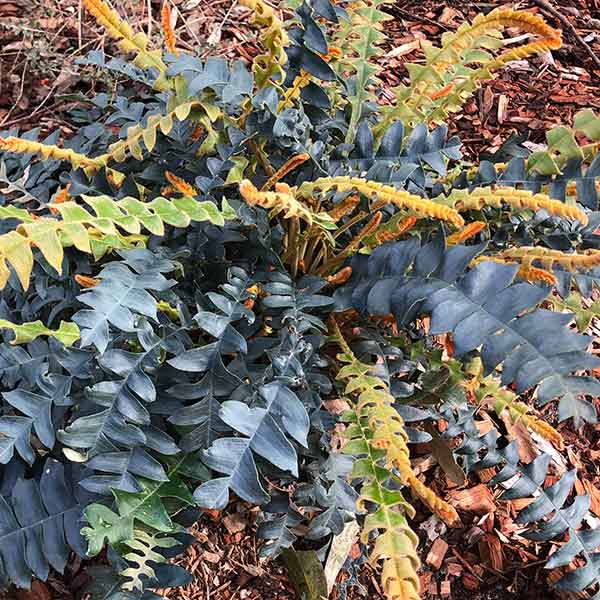
The finely divided leaves emerge in striking coppery-bronze tones before gradually maturing to a deep green. This colourful new growth provides seasonal interest and is one of the main reasons gardeners grow this species.
The deeply serrated leaf margins add texture throughout the year, making Banksia drummondii an excellent foliage plant even when not in flower.
The flowers are relatively small and are often nestled amongst the foliage. Depending on the subspecies, flowers range from yellow through to orange-red and may appear at different times of the year.
Like many former Dryandra species, Banksia drummondii is well suited to water-wise gardens and performs best in sunny positions with excellent drainage.
Although highly ornamental, it remains uncommon in cultivation and can be difficult to source. Specialist native plant nurseries and community native plant growers are often the best places to find it.
Why Was Dryandra drummondii Renamed Banksia drummondii?
Many gardeners still know this plant as Dryandra drummondii. However, advances in botanical research showed that the genus Dryandra was closely related to Banksia.
As a result, all species previously classified as Dryandra were transferred into the Banksia genus. This change was made to better reflect the evolutionary relationships between these plants.
Although the botanical name is now Banksia drummondii, the common name “Drummond’s Dryandra” remains widely used by gardeners and native plant enthusiasts.
When searching for plants, seeds or growing information, it is often worthwhile looking under both names as some nurseries and reference books still use the former name Dryandra drummondii.
How To Grow Banksia drummondii
Banksia drummondii prefers a sunny position and well-drained soil. It is naturally adapted to the winter rainfall climate of south-west Western Australia.
- Choose a sunny position.
- Ensure the soil is free draining.
- Improve drainage in heavier soils by planting on a raised mound or garden bed.
- Weed the area thoroughly before planting.
- Plant and water in well.
- Apply mulch around the base of the plant, keeping it away from the stem.
- Water regularly during the first growing season.
- Use a low-phosphorus fertiliser formulated for Australian native plants if required.
Top Tips
- Grow in full sun to encourage colourful new growth.
- Avoid poorly drained soils.
- Excellent for low-maintenance and water-wise gardens.
- Use only low-phosphorus fertilisers.
- Protect young plants from excessive summer watering.
Pruning Banksia drummondii
Very little pruning is required.
Remove any dead or damaged growth as needed and lightly trim after flowering to maintain a neat, compact habit.
Regular light pruning can help encourage dense growth and fresh copper-coloured foliage.
Landscaping Uses
- Use as a feature plant in smaller native gardens.
- Ideal for rockeries and raised garden beds.
- Plant in water-wise landscapes.
- Suitable for coastal gardens with good drainage.
- Combine with other Western Australian native plants.
- Grow for its colourful foliage and year-round texture.
Companion Plants
Banksia drummondii combines well with other Australian native plants that enjoy similar growing conditions.
Good companion plants include:
- Kangaroo Paws (Anigozanthos species)
- Conostylis species
- Verticordia species
- Dampiera species
- Low-growing Grevilleas
- Native grasses such as Lomandra and Dianella
These plants provide contrasting flowers and foliage while thriving in the same sunny, free-draining conditions.
Growing Banksia drummondii in Pots
Banksia drummondii can be grown successfully in containers provided drainage is excellent.
Use a quality native plant potting mix and position the container in full sun. Wide containers are often best as they allow the plant’s natural spreading habit to develop.
Container-grown plants make attractive additions to patios, courtyards and native garden displays.
A Bird-Attracting Banksia
Although grown mainly for its foliage, Banksia drummondii can also attract nectar-feeding birds and insects when in flower.
The blooms provide a food source for native bees and small honeyeaters, helping to increase biodiversity in the garden.
Planting it alongside Grevilleas, Correas and other flowering native plants can create a valuable habitat for wildlife throughout the year.
Banksia drummondii Varieties
Three subspecies are currently recognised, each with slightly different characteristics and flowering periods.
- Banksia drummondii subsp. drummondii – generally flowers during summer.
- Banksia drummondii subsp. macrorufa – noted for differences in flower and foliage characteristics.
- Banksia drummondii subsp. hiemalis – typically flowers during winter.
Problems
Banksia drummondii is generally a reliable plant when grown in suitable conditions.
- Poor drainage can lead to root problems and plant decline.
- Excessive phosphorus can damage roots and reduce vigour.
- Plants grown in heavy shade may become less compact.
- Overwatering may encourage weak growth.
Providing full sun and excellent drainage will help prevent most issues.
Banksia drummondii Summary Sheet
- Botanical Name: Banksia drummondii (formerly Dryandra drummondii)
- Common Name: Drummond’s Dryandra
- Height: Up to 1 metre, often smaller
- Width: Up to 1 metre
- Flowering Season: Varies between subspecies, generally winter to summer
- Flower Description: Small flowers ranging from yellow to orange-red
- Foliage: Coppery-bronze when young, maturing to deep green with deeply serrated margins
- Soil Requirements: Well-drained soils
- Sunlight: Full sun
- Fertilising: Apply a low-phosphorus fertiliser suitable for native plants if required
- Frost Tolerance: Light frost once established
- Drought Tolerance: High once established
- Coastal Tolerance: Moderate in well-drained positions