
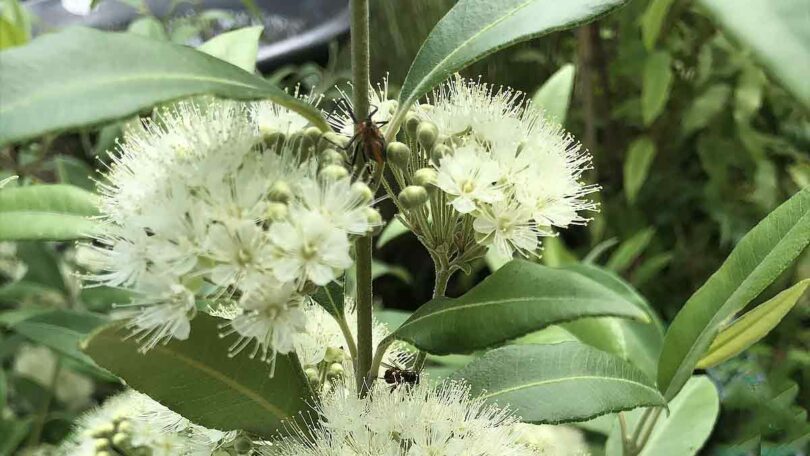
Backhousia citriodora, commonly known as Lemon Myrtle, Lemon Scented Myrtle or Lemon Ironwood, is one of Australia’s most popular native food plants. Valued for its intensely fragrant foliage, attractive flowers and versatility in the garden, it is equally at home as an ornamental tree, screening plant or bush tucker species.
Native to the rainforests of Queensland and northern New South Wales, Lemon Myrtle is now grown throughout much of Australia and can be cultivated successfully as far south as Victoria in suitable positions.
The plant naturally develops an upright, dense growth habit with glossy green foliage held tightly along the stems. This makes it an excellent alternative to Lily Pilly for hedging and screening, particularly where gardeners are looking for an edible Australian native.
In cultivation, Lemon Myrtle generally reaches between 5 and 20 metres in height, although it is easily maintained at a much smaller size through regular pruning.
The foliage is its most famous feature. Crushing a leaf releases an intense lemon fragrance, often considered stronger and purer than that of lemons themselves. During summer and autumn, masses of creamy-white flowers cover the tree, adding further ornamental appeal.
Plant Information
- Botanical Name: Backhousia citriodora
- Common Names: Lemon Myrtle, Lemon Scented Myrtle, Lemon Ironwood
- Plant Type: Evergreen native tree
- Origin: Queensland and Northern New South Wales
- Height: 5–20 metres, smaller when pruned
- Spread: Up to 5 metres
- Position: Full sun to part shade
- Soil: Moist, well-drained soil rich in organic matter
- Foliage: Evergreen, aromatic and glossy green
- Flowers: Creamy white flower clusters
- Flowering Time: Summer to autumn
- Frost Tolerance: Light frosts
- Drought Tolerance: Moderate once established
How To Grow Backhousia citriodora – Basic Care
Easy to grow and very hardy in a well drained humus rich soil.
Backhousis Citriodora is suitable for growing in containers where it can be pruned to maintain a smaller more compact growth habit..
- Position
Being a rainforest tree part shade in hotter areas is advisable. - Soil
A deep humus rich soil is best and a cool root run will promote better growth. Backhousia citriodora is tolerant of poor soils as well. - Watering
Maintain moisture in summer months and reduce watering during winter and colder months. - Fertiliser
A slow release organic native plant fertiliser applied in spring will be beneficial.
Pruning
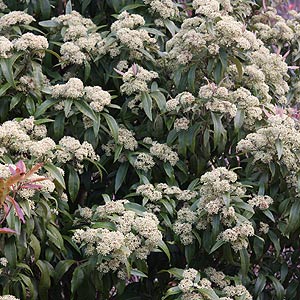
When pruned after 1-2 years growth it makes a great hedging plant. Attractive cream – white fluffy flowers in summer through to autumn.
Propagation
Propagation of Backhousis Citriodora is not difficult, cuttings can be taken in early autumn and when a rooting hormone are used the strike rate is good. Also possible from seed.
Landscaping Uses
Backhousia citriodora is one of the most versatile Australian native trees for home gardens.
It can be used as:
- A dense evergreen hedge.
- A screening plant.
- A feature tree.
- A specimen in native gardens.
- A bush tucker garden plant.
- A wildlife-friendly tree.
- A container-grown patio specimen.
Its naturally dense growth habit responds exceptionally well to pruning, making it easy to maintain as a formal hedge or screen.
Growing Lemon Myrtle in Pots
Lemon Myrtle adapts well to container growing.
- Use a quality native plant potting mix.
- Choose a large container with excellent drainage.
- Water regularly during warm weather.
- Prune to maintain size and shape.
Container-grown plants are ideal for courtyards, patios and small gardens.
Wildlife Benefits
The flowers attract bees and other pollinating insects, making Lemon Myrtle a valuable addition to wildlife-friendly gardens. The dense foliage also provides shelter for small birds.
Lemon Myrtle as an Australian Native Food Plant
Lemon Myrtle is regarded as one of Australia’s most important native culinary plants and is widely used by chefs, food manufacturers and home cooks.
The leaves contain high levels of citral, the compound responsible for the plant’s intense lemon aroma and flavour. The result is a clean, sweet lemon taste without the acidity associated with citrus fruit.
Both fresh and dried leaves are used in cooking.
Culinary Uses
Lemon Myrtle leaves are commonly:
- Dried and ground into a spice.
- Used to flavour fish and seafood.
- Added to chicken and pork dishes.
- Mixed into herb and spice blends.
- Used in baking and desserts.
- Added to sauces, dressings and marinades.
- Infused into syrups and cordials.
- Used to flavour tea.
Lemon Myrtle Tea
One of the most popular uses is as a herbal tea. Fresh or dried leaves can be steeped in hot water to create a refreshing lemon-scented drink.
Baking and Desserts
Lemon Myrtle is widely used in:
- Cakes.
- Biscuits.
- Cheesecakes.
- Ice cream.
- Custards.
- Shortbread.
The sweet lemon flavour pairs exceptionally well with dairy products and desserts.
Where To Buy and Wholesale Suppliers

Specialist Native Food Nursery with thirty species available in both forestry tubes and 14 cm pots, from ground cover to canopy. Twenty years experience supplying landscape scale projects to backyard gardens.
www.peppermintridgefarm.au .

email [email protected]
One of Australia's largest wholesale trade nurseries. Over 30,000 species available, tubestock to advanced trees, an almost unlimited choice of plants.
www.plantmark.com.au