
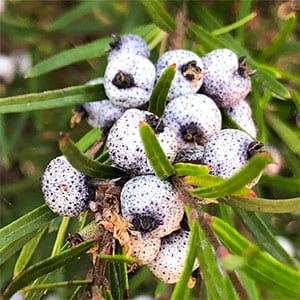
Austromyrtus tenuifolia is commonly known as Narrow-leaf Myrtle and is sometimes referred to as Midgen Berry. This attractive Australian native shrub occurs naturally in moist forest environments, often growing alongside creeks, drainage lines and damp depressions in coastal forests.
Valued for its glossy foliage, creamy white flowers and edible berries, it is a useful addition to both native gardens and bush food plantings. It also makes an attractive low hedge, responding well to regular pruning and forming a dense, compact habit.
Although reasonably tolerant of short dry periods once established, adequate moisture is important for reliable flowering and fruit production.
Australian Native Food Plant Uses
Austromyrtus tenuifolia produces small edible berries that ripen from late summer into autumn. The fruit is white with attractive purple markings and is enjoyed by both gardeners and wildlife.
Traditionally regarded as a bush tucker plant, the berries can be eaten fresh from the shrub or used in a variety of recipes.
Possible uses include:
- Fresh eating.
- Fruit salads.
- Jams and preserves.
- Desserts.
- Sauces and native fruit blends.
The fruit is generally less widely grown than the closely related Midyim Berry (Austromyrtus dulcis), which produces larger and more abundant fruit. However, Austromyrtus tenuifolia remains a worthwhile species for gardeners interested in Australian native food plants.
Flowers and Fruit
Clusters of small creamy white flowers appear from late spring into summer.
The flowers are attractive to pollinating insects and are followed by small berries that gradually mature as temperatures warm. Fruit typically ripens during late summer.
The berries are decorative as well as edible, adding seasonal interest to the plant.
Growing Austromyrtus tenuifolia
Position
A position in full sun to part shade is suitable.
In warmer regions, some protection from hot afternoon sun is beneficial, particularly while young plants are establishing.
Soil
A moist but well-drained soil is ideal.
The species naturally occurs in damp environments but does not appreciate waterlogged conditions.
Incorporating compost and organic matter into the soil before planting will improve moisture retention and encourage healthy growth.
Water Requirements
Regular watering is important during establishment and during prolonged dry periods.
Plants that receive adequate moisture generally flower and fruit more heavily than those subjected to extended drought.
Mulching
A layer of mulch will help maintain soil moisture, suppress weeds and improve overall plant health.
Landscaping Uses
Austromyrtus tenuifolia is a versatile garden plant with a range of applications.
It can be used as:
- A low hedge.
- A native screening shrub.
- A feature plant.
- A bush food garden specimen.
- A wildlife garden plant.
- A planting for moist garden areas.
- A companion plant in rainforest-style gardens.
Regular pruning encourages dense growth and improves its suitability as a formal or informal hedge.
Harvesting the Fruit
The berries can be harvested once fully coloured and slightly soft.
Fruit is best picked by hand and can be eaten immediately or stored for short periods in the refrigerator.
As with many native fruits, birds may also be attracted to the crop, so some protection may be required if maximum harvests are desired.
Propagation
From Seed
Fresh seed can be sown into a quality propagation mix and kept evenly moist until germination occurs.
From Cuttings
Semi-hardwood cuttings taken during the warmer months generally provide more reliable results and produce plants that are identical to the parent.
Pruning
Light pruning after fruiting or flowering will encourage a compact growth habit and help maintain a dense hedge.
Avoid removing excessive growth at any one time.
Austromyrtus tenuifolia vs Austromyrtus dulcis
The closely related Austromyrtus dulcis is often regarded as the better-known bush food species.
Austromyrtus tenuifolia
- Taller growing shrub.
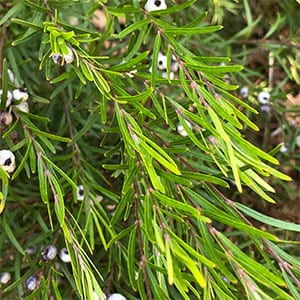
- Narrow leaves.
- Suited to moist forest conditions.
- Produces edible white berries with purple markings.
Austromyrtus dulcis
- Lower-growing spreading shrub.
- Larger fruit.
- More commonly cultivated for bush food production.
- Excellent coastal ground cover.
Both species deserve a place in Australian native food gardens.
Quick Growing Guide
| Feature | Details |
|---|---|
| Botanical Name | Austromyrtus tenuifolia |
| Common Names | Narrow-leaf Myrtle, Midgen Berry |
| Family | Myrtaceae |
| Origin | Coastal New South Wales |
| Height | 1–1.5 metres |
| Spread | Around 1 metre |
| Position | Full sun to part shade |
| Soil | Moist, well drained |
| Water | Moderate |
| Flowers | Creamy white |
| Flowering Time | Late spring to summer |
| Fruit | White berries with purple markings |
| Growth Rate | Medium |
| Frost Tolerance | Light frost |
| Drought Tolerance | Low to moderate |
| Propagation | Seed, cuttings |
Austromyrtus tenuifolia is an attractive native shrub that combines ornamental value with edible fruit production. Whether grown as a hedge, a feature plant or as part of a bush tucker garden, it offers year-round appeal and rewards gardeners with both flowers and berries.
Where To Buy

Specialist Native Food Nursery with thirty species available in both forestry tubes and 14 cm pots, from ground cover to canopy. Twenty years experience supplying landscape scale projects to backyard gardens.
www.peppermintridgefarm.au .