
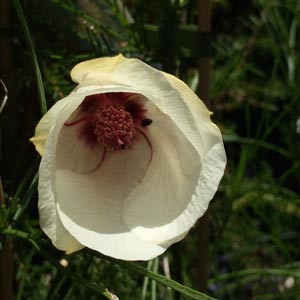
Alyogyne hakeifolia is one of Australia’s most attractive native hibiscus species, prized for its masses of hibiscus-like flowers and exceptional drought tolerance. Naturally occurring across the harsh, dry conditions of the Nullarbor Plain, it has adapted to long periods without rain, making it an excellent choice for low-water gardens.
Sometimes referred to as a native hibiscus, Alyogyne hakeifolia is easily recognised by its very narrow, almost needle-like foliage, which distinguishes it from other Alyogyne species. Flowers range from soft mauve through to creamy white and pale yellow, depending on the cultivar.
A medium-sized shrub, it generally reaches around 2–3 metres in height with a similar spread. Once established it is remarkably hardy, with poor drainage and heavy frosts being its main limitations.
Alyogyne hakeifolia Care
For best results, plant Alyogyne hakeifolia in a sunny position with excellent drainage. While it will tolerate part shade, flowering is usually more prolific in full sun.
As this species naturally grows in dry inland regions, it performs best where humidity is low and air circulation is good. Avoid planting in damp or poorly ventilated locations.
Once established, Alyogyne hakeifolia requires very little watering and is highly drought tolerant. Water regularly while establishing young plants, then only during extended dry periods.
Feed with a low-phosphorus fertiliser formulated for Australian native plants. High phosphorus fertilisers can damage sensitive native species.
Prune immediately after flowering to maintain a compact, bushy habit and encourage a heavier display of flowers the following season. Protection from strong, drying winds can also improve flowering performance.
Propagation
Propagation from seed is generally reliable, with fresh seed germinating readily under warm conditions.
Semi-hardwood cuttings also strike well, making this an easy species to propagate from established plants.
Summary
- Height: 2–3 metres.
- Spread: Around 2 metres.
- Position: Full sun to part shade.
- Soil: Well-drained soil. Sandy or gravelly soils are ideal.
- Flowers: Hibiscus-like flowers in mauve, purple, creamy white and pale yellow, depending on the cultivar.
- Foliage: Narrow, mid-green, needle-like leaves.
- Drought tolerant: Excellent once established.
- Frost tolerant: Tolerates light frosts but benefits from protection from severe frost.
- Maintenance: Low.
Named Cultivars
Several attractive cultivars are available through specialist native plant nurseries, including:
- Alyogyne hakeifolia ‘Elle Maree’ – Creamy yellow flowers.
- Alyogyne hakeifolia ‘Shelby Anne’ – Rich purple flowers.
- Alyogyne hakeifolia ‘Melissa Anne’ – Soft mauve flowers.
Alyogyne hakeifolia or Alyogyne huegelii – Which Should You Grow?
Both Alyogyne hakeifolia and Alyogyne huegelii are outstanding Australian native hibiscus species, but each suits slightly different garden conditions. Alyogyne hakeifolia is the better choice for hot, dry gardens thanks to its narrow, needle-like foliage and exceptional drought tolerance.
Alyogyne huegelii has broader, lobed leaves and generally performs well across a wider range of climates, making it an excellent choice for temperate and coastal gardens. Whichever you choose, both reward gardeners with masses of colourful hibiscus-like flowers and respond well to annual pruning.
Frequently Asked Questions
Is Alyogyne hakeifolia drought tolerant?
Yes. Once established it is one of the more drought-tolerant native hibiscus species and is well suited to waterwise gardens.
Does Alyogyne hakeifolia need pruning?
Light pruning immediately after flowering encourages a denser, bushier plant and more flowers the following season.
Can Alyogyne hakeifolia grow in pots?
Yes, provided a large container with excellent drainage is used. A free-draining native potting mix is recommended.
Why isn’t my Alyogyne hakeifolia flowering?
The most common causes are too much shade, excessive humidity, poor drainage or overfeeding with high-phosphorus fertilisers.