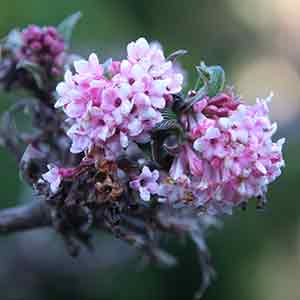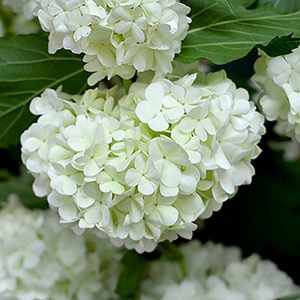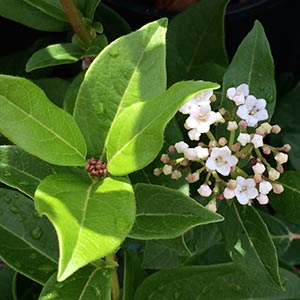

Viburnum plicatum comes in two distinct flower shapes, Snowball and Lacecap.
Viburnum plicatum, often called Japanese snowball or doublefile viburnum, is a much-loved deciduous shrub prized for its elegant branching, beautiful spring flowers, and reliable fall color. Native to Japan and China, it’s a versatile plant that fits beautifully in mixed borders, foundation plantings, or as a standout specimen.
One of the most interesting things about Viburnum plicatum is that it comes in two distinct flower forms – the bold, rounded Snowball type and the graceful, flat-topped Lacecap type.
While both share the same layered, horizontal branching and attractive foliage, their flower shapes give them very different looks in the garden.
Snowball form
This type is found in Viburnum plicatum f. plicatum varieties, such as the popular ‘Japanese Snowball’. The flowers grow in big, rounded clusters made up entirely of sterile blooms, giving the shrub its signature “snowball” appearance. These varieties are especially striking when in full bloom and make beautiful focal points in the landscape.
Examples include:
- Viburnum plicatum f. plicatum ‘Grandiflorum’ – large, pure white snowball clusters.
- Viburnum plicatum f. plicatum ‘Sterile’ – classic Japanese Snowball form, very showy.
- Viburnum plicatum f. plicatum ‘Newport’ – compact habit with dense, spherical blooms.
- Viburnum plicatum f. plicatum ‘Popcorn’ – smaller, rounded clusters and a neat, mounded shape.
Lacecap form
This flower type is typical of Viburnum plicatum f. tomentosum varieties, such as the well-loved ‘Doublefile Viburnum’. The blossoms form graceful, flat-topped clusters with a ring of larger, showy outer florets surrounding smaller, fertile flowers in the center. This gives the plant a layered, “double row” of blooms along the branches.
Examples include:
- Viburnum plicatum f. tomentosum ‘Mariesii’ – classic horizontal branching and elegant white lacecap flowers.
- Viburnum plicatum f. tomentosum ‘Shasta’ – heavy blooming, with a broad, spreading habit.
- Viburnum plicatum f. tomentosum ‘Lanarth’ – compact, early-blooming form with delicate white flowers.
- Viburnum plicatum f. tomentosum ‘Summer Snowflake’ – repeat-blooming from spring into summer, with a more upright habit.
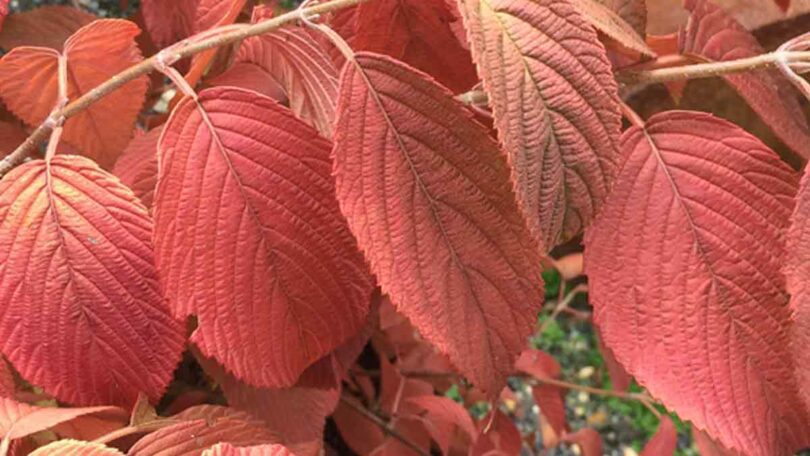
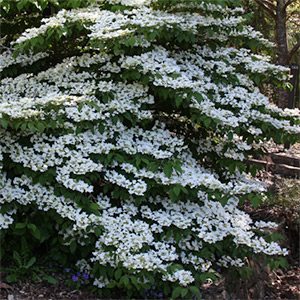

How To Grow Viburnum plicatum varieties
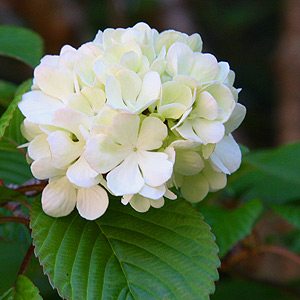
Try a position at the back of the border or as a dividing plant at the front of the border, V. plcatum ‘Lanarth’ will reach around 4m. Pruning is minimal as these plants seen to develop a naturally pleasing shape, remove old dead wood or damaged matter. Prune lightly after flowering to keep in shape or hard prune in winter to reshape. Some protection from hot afternoon sun is required, a humus rich well drained but moist soil.
Detailed Care & Growing Tips
Light:
For the best flowering and strongest growth, plant in full sun to partial shade. In cooler climates, full sun encourages the most abundant blooms. In warmer regions, a bit of afternoon shade helps prevent leaf scorch and keeps the plant looking fresh through summer.
Soil:
Prefers moist, well-drained, slightly acidic soil rich in organic matter. Avoid dry, sandy sites or heavy, waterlogged clay. Adding compost at planting time improves both drainage and fertility.
Watering:
Keep evenly moist, especially during dry spells or in the first year after planting. Once established, Viburnum plicatum is moderately drought-tolerant.
Pruning:
Prune immediately after flowering, if needed, to maintain shape or remove crossing branches. Avoid hard pruning in late summer or fall, as it can reduce next spring’s blooms.
Fertilizing:
Feed in early spring with a balanced, slow-release fertilizer or a light layer of compost to encourage healthy growth and flowering.
Other notes:
These shrubs are generally low-maintenance and resistant to most pests and diseases. Lacecap forms may produce red berries that attract birds, while snowball forms (with sterile blooms) typically do not fruit.

Pruning Differences: Snowball vs. Lacecap Viburnums
Both snowball and lacecap viburnums bloom on old wood — that means the flower buds form during the summer and fall of the previous year. For that reason, any major pruning should be done right after flowering in late spring, before new buds begin to set for the following season.
That said, the style and purpose of pruning can differ slightly between the two forms:
Snowball Viburnums (f. plicatum)
- Snowball varieties tend to have a denser, rounder shape, and their sterile flower heads often weigh down the branches in bloom.
- Light pruning right after flowering helps maintain a balanced shape and encourages air circulation.
- Focus on removing older or crowded stems at the base to promote fresh, vigorous growth from below.
- Avoid heavy shaping or shearing, which can spoil the plant’s natural, full form and remove next year’s blooms.
Lacecap Viburnums (f. tomentosum)
- Lacecap types have a more horizontal, layered branching pattern that gives them their signature “doublefile” look.
- Pruning is best kept minimal to preserve this graceful, tiered structure.
- After flowering, remove only spent flower clusters and any weak or crossing branches, cutting them back to a pair of strong buds or a lateral shoot.
- Older plants benefit from occasional renewal pruning — removing one or two of the oldest stems at ground level every few years to keep the shrub vigorous and blooming well.
OTHER VIBURNUM SPECIES and CULTIVARS