
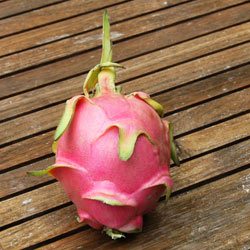
Dragon Fruit or ‘Pitaya’ are a tropical fruit tree ( actually a vine) readily available for sale in Queensland and used both as a fruit producing plant and a flowering ornamental with fragrant flowers that fill the night air as they open with a lovely scent.
Originally from South America like so many great edible plants, these plants were introduced by the French into Vietnam where it is known as “thang loy”.
These are actually a ‘tropical’ cactus and grow well in the Northern Territory and parts of Queensland. Some varieties will grow well in cooler climates and can be found in many areas of Melbourne as well as Tasmania.
Dragon Fruit Varieties are numerous, as they are a plant that readily hybridises. The common name Dragon fruit comes from the scaly skin.
Dragon Fruit Varieties
Dragon fruit naturally cross-pollinates, which leads to a range of varieties differing in colour, taste, and cold tolerance. The main types include:
- White-fleshed Pitaya Blanca (Selenicereus undatus) – Red skin, white flesh, medium to large fruit.
- Red-fleshed Pitaya Roja (Selenicereus monacanthus) – Pink to red skin and flesh, high in antioxidants and visually striking.
- Yellow Pitaya Amarilla (Selenicereus megalanthus) – Golden yellow skin with white flesh, prized for flavour but less cold hardy and spiny.
These are all warm to tropical cacti commonly nicknamed “Queen of the Night” or “Night-blooming Cactus” for their nocturnal flowers.
So in order
Selenicereus undatus, Selenicereus monacanthus and Selenicereus megalanthus, all warm to tropical plants all with other names related to the flowers that open at night such as ‘Queen of the Night’ and Night-blooming Cactus’.
How to Grow Dragon Fruit Trees
Dragon fruit thrives in sunny to lightly shaded positions with warmth and good air movement.
- Climate: Best suited to subtropical and tropical zones, but can grow in cooler areas with cold protection.
- Soil: Free-draining, slightly acidic, and rich in organic matter.
- Sunlight: Full sun to part shade – avoid harsh all-day exposure in extremely hot climates.
- Support: Being a climbing cactus, it needs a strong trellis, post, or frame to hold its weight once mature.
In southern areas, position plants near a north-facing wall or fence for warmth and shelter from frost and wind.
How to Plant Dragon Fruit
- From Cuttings (easiest method):
- Take healthy 30 cm cuttings and let them dry for 1–2 days before planting.
- Insert the bottom 5–6 cm into soil.
- Use a cactus or premium potting mix that drains freely.
- Water in with a seaweed solution to encourage root growth.
- From Seed (slower method):
- Harvest seed from fresh fruit.
- Sow on the surface of a moist seed-raising mix.
- Keep warm and lightly covered. Germination can take 2–3 weeks.
Once established, feed monthly during the growing season with a balanced liquid fertiliser or organic compost tea.
Watering and Care
Although a cactus, dragon fruit benefits from consistent moisture during growth and fruiting.
- Water regularly in summer but avoid soggy conditions.
- Reduce watering during winter dormancy.
- Apply mulch to retain soil moisture and suppress weeds.
Tip: Avoid overfertilising – too much nitrogen will encourage vines and fewer fruiting flowers.
Pollination and Flowering
Most dragon fruit bloom at night and rely on moths or bats for pollination.
- If your plants don’t set fruit, they may need hand pollination.
- Use a soft brush or your fingertip to transfer pollen from one flower to another early in the morning.
- Self-pollinating cultivars simplify this process and are ideal for home gardens.
When and How to Harvest
Fruit develops quickly after flowering – usually 4–6 weeks. Harvest when:
- The fruit skin turns bright and uniform in colour.
- The scales or “wings” begin to dry slightly.
- The fruit softens just a little when pressed.
Cut rather than twist the fruit from the stem to avoid damage.
Enjoy dragon fruit fresh, added to fruit salads, paired with ice cream, or blended into juices and smoothies. The flavour is lightly sweet and refreshing — a tropical hybrid between pear and melon.
Common Problems
- Lack of fruit: Usually due to poor pollination or excessive vegetative growth.
- Rot at the base: Caused by waterlogging — ensure soil is free-draining.
- Frost damage: Protect plants with frost cloth or grow in pots that can be moved.
In Summary
- Dragon fruit are grown for both the fruit and the ornamental flowers
- The fruit is attractive with a clean fresh taste
- Easy to grow the fruit is said to be high in antioxidants, fibre and vitamin C.
- Requires a climate with mild winters
- Fruits throughout the year with the main crop in summer.
- Fruit need to ripen on the plant
- They are a climbing plant and will need support
- Plants grow easily from cuttings
Cuttings are available for sale from the following growers

132 Silver Valley Rd. MS 415 Mt.Garnet QLD 4872
Australia's largest collection & specialist breeders of world class frangipani cultivars & rare species. Includes Dwarf cultivars. Mail order specialists Australia & worldwide. Australia's biggest range of the Worlds best frangipani.
www.sacredgardenfrangipanis.com