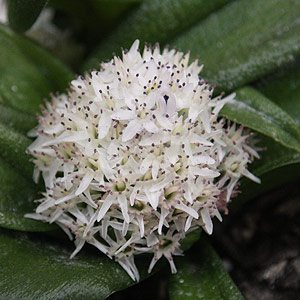

Massonia species are captivating, low-growing bulbous perennials prized by plant collectors for their unusual ground-hugging flowers, textured leaves, and delightful winter blooms. Native to southern Africa, these gems range from the arid regions of southern Namibia through the winter-rainfall areas of South Africa to the highlands of Lesotho.
While most are winter-growers, Massonia wittebergensis and Massonia saniensis are exceptions, flowering in December (summer) in their native habitat.
Massonia sempervirens is evergreen and is one of the few exceptions to being summer dormant and this one may require light summer water.
All Massonia belong to the Asparagaceae family (subfamily Scilloideae) and grow from small underground bulbs. Most species produce just two broad leaves that lie flat against the soil, often featuring attractive patterns, hairs, or pustules. Their flowers emerge at or near ground level in dense clusters, frequently accompanied by a sweet or unusual fragrance that attracts specific pollinators.
While older references mentioned around 39 names in the genus, modern taxonomy recognises approximately 15–30 accepted Massonia species, with ongoing revisions. In recent years, several former Massonia have been reclassified into the genera Daubenya or Lachenalia. This guide covers the most popular and cultivable species still widely grown under the Massonia name, with detailed care instructions tailored for both Southern and Northern Hemisphere growers.
General Care
- Soil/potting mix:
Use a very free-draining mix with plenty of grit, coarse sand, perlite or pumice; a mineral-heavy bulb mix works well. Avoid rich, moisture-retentive composts that stay wet for too long. - Pot size:
Choose a relatively deep pot for the bulb and roots, but don’t go oversized. A snug pot is usually better than a large one because the soil dries more quickly after watering. - Watering: Water during the active growing season, then reduce as growth slows and keep dry through summer dormancy. Let the mix dry out between waterings, especially in cool weather.
- Light:
Give bright light and as much sun as possible in the cool season. In hotter climates, a little protection from harsh afternoon sun helps prevent stress. - Temperature:
Cool conditions, 5–18°C during growth; protect from frost but tolerate down to -5°C if dry. - Fertiliser:
Feed lightly during active growth with a dilute, low-nitrogen fertiliser. Too much fertiliser can push weak growth and reduce bulb health. - Pests:
Watch for mealybugs, aphids, and bulb rot caused by overwatering. Good airflow and careful watering are the best preventives. - Pollination:
Flowers are usually insect-pollinated in habitat, but hand pollination can help in cultivation. Use a small brush to transfer pollen between fresh flowers if you want seed set.
In warm temperate climates these plants suit unheated glasshouses or cold frames, with summer storage under cover as summer rains can cause problems with those summer dormant species.
Growing Massonia Species from Seed
- Use fresh seeds for best germination rates (they lose viability quickly)
- Sow in autumn (their natural growing season)
- Use a very well-draining mix (e.g. cactus mix + extra sand/perlite)
- Sow seeds on the surface and lightly press in (don’t bury deeply)
- Keep soil lightly moist, not wet
- Place in a cool environment (10–18°C is ideal)
- Germination usually occurs within a few weeks
- Provide bright light but avoid harsh direct sun initially
- Seedlings grow through winter and spring
- Reduce watering as leaves begin to die back (entry into dormancy)
- Expect several years (2–4+) before flowering maturity

Massonia Species Dormancy
- Occurs naturally in late spring to summer
- Leaves yellow and die back — this is normal, not a problem
- Stop watering once leaves begin to decline
- Keep bulbs completely dry during dormancy
- Store in a cool, dry place (avoid humidity and rot)
- Do not disturb bulbs unnecessarily during this period
- Dormancy typically lasts all summer
- Resume watering in autumn when new growth appears
- First watering should be light to avoid rot
- Growth cycle = winter-growing, summer-dormant
Massonia sempervirens is evergreen and is the exception
The Two summer growing species
Massonia wittebergensis and Massonia saniensis alpine species and are Summer-growing, Summer-flowering and winter-dry so reverse watering schedule is required.
Massonia vs Daubenya
Both are South African geophytes in the same family (Hyacinthaceae/Asparagaceae)
Massonia Species Characteristics:
- Usually has 2 broad, flat leaves lying on the ground
- Flowers are low-growing, often cushion-like in the center
- More compact and subtle in appearance
- Easier to grow for beginners
Daubenya Species Characteristics:
- More upright or structured flower heads
- Bright, showy flowers (often red, orange, or yellow)
- Generally more visually striking
- Can be slightly more demanding in cultivation
Key differences:
Growth habit: Massonia = flat and ground-hugging, Daubenya = more upright
Flower style: Massonia = understated, Daubenya = bold and colorful
Difficulty: Massonia is typically more forgiving
Some popular Massonia Species
Massonia depressa
The largest Massonia Species , with smooth, rounded leaves and yeasty-scented flowers that attract gerbils instead of insects.
- Flowering time: Mid to late winter (June–August in South Africa; December–February in the Northern Hemisphere).
- Watering: Lightly from autumn to spring; keep dry in summer dormancy.
- Temperature: 5–20°C; protect from frost.
- Light: Bright, indirect sun or morning light; avoid harsh midday heat.
- Soil: Well-drained sandy mix — 50% coarse sand or grit, 30% loam, 20% compost.
Massonia echinata
A charming winter flowering species with flat, patterned leaves and sweet honey-scented white flowers.
- Flowering time: Early to mid-winter (May–July South Africa; November–January Northern Hemisphere).
- Watering: Moderate during growth (autumn–spring), dry completely through summer.
- Temperature: 5–18°C; prefers cool, bright winter conditions.
- Light: Full winter sun or bright filtered light; slight shade in heat. Soil: Open mix with plenty of grit; excellent drainage essential.
Massonia hirsuta
A rarer species with soft, hairy leaves and compact winter flowers — a collector’s treasure.
- Flowering time: Mid-winter (June–August South Africa; December–February Northern Hemisphere).
- Watering: Water sparingly from autumn to late spring; keep dry in dormancy.
- Temperature: 7–20°C; cool but frost-free.
- Light: Bright, diffused light; protect from strong direct sun.
- Soil: Gritty, well-drained mix; add a little leaf mould for moisture balance.
Massonia jasminiflora
One of the prettiest, with smooth or bumpy leaves and white-to-pink, jasmine-scented flowers.
- Flowering time: Winter for most forms (May–August South Africa); a Lesotho subspecies flowers in summer.
- Watering: Winter-growing forms—water from autumn to spring; summer form—reverse cycle.
- Temperature: 5–22°C; avoid frost, enjoys cool bright winters.
- Light: Full sun in winter, partial shade in summer. Soil: Sandy, fast-draining mix; add perlite or pumice to prevent rot.
Massonia pustulata
A striking species with green to purple, pustulate leaves and long, showy flower filaments.
- Flowering time: Mid to late winter (June–August South Africa; December–February Northern Hemisphere).
- Watering: Water well during winter growth, drying off fully in summer.
- Temperature: 5–20°C; tolerates brief cool spells if dry.
- Light: Full winter sun for best colour; partial shade in warmer regions.
- Soil: Mineral-rich gritty mix; prefers lean, well-drained soil.
Massonia sempervirens
A distinctive evergreen Massonia species, retaining its foliage year-round — unlike most of its deciduous relatives. It bears glossy, slightly hairy leaves and clusters of fragrant, pale flowers that attract nocturnal pollinators such as moths.
- Flowering time: Late winter to early spring (July–September in South Africa; January–March in the Northern Hemisphere).
- Watering: Moderate throughout the year; allow the soil surface to dry slightly between waterings but never remain bone dry for extended periods.
- Temperature: 5–25°C; tolerates mild frost if kept dry but prefers cool, frost-free conditions.
- Light: Bright, filtered light or gentle morning sun; protect from intense midday sun.
- Soil: Free-draining mix — approximately 40% coarse sand or grit, 40% loam, 20% organic matter.
Massonia pygmaea
A tiny, high-mountain Massonia species with small hairy leaves and early blooms — sometimes even three leaves!
- Flowering time: Early winter (April–June South Africa; October–December Northern Hemisphere).
- Watering: Lightly from autumn to early spring; dry the rest of the year.
- Temperature: 3–18°C; cool-loving but frost-sensitive.
- Light: Bright sun in winter; avoid intense heat.
- Soil: Very free-draining alpine mix — 60% grit, 20% loam, 20% compost.
Some Massonia Species In Detail.