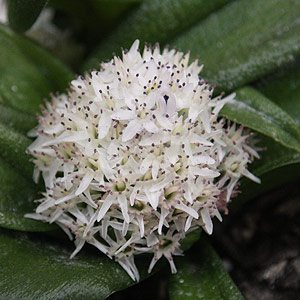
Massonia sempervirens is a captivating species known for its unusual foliage and delicately scented flowers. Compact in size, it’s ideal for container cultivation, and when in bloom, it becomes a real standout thanks to its low-growing, symmetrical form.

Native to South Africa and still relatively rare in cultivation, this species flowers in late winter and makes a charming addition to any enthusiast’s collection. It also performs well in a protected position outdoors, such as a sunny, sheltered patio, provided conditions are right.
As the name sempervirens suggests (“always green”), this species often retains its foliage longer than many others in the genus. The flowers emerge nestled between two broad, flat leaves, creating a striking and tidy appearance.
How to Grow Massonia sempervirens – Basic Care Guide
Originating from a climate with dry summers and wet winters, Massonia sempervirens thrives when these conditions are mimicked in cultivation. It’s best suited for growers in regions with dry summers or those able to provide a dry dormancy period.
- Position: Full sun
- Soil: Well-drained and humus-rich; ideal in a free-draining potting mix
- Watering: Water during active growth (autumn to spring); keep dry in summer
- Frost tolerance: Not frost hardy – protect from freezing temperatures
- Foliage: Broad, flat green leaves appear in autumn and often persist for an extended period
- Flowers: Typically white or pale in color, subtly fragrant, and sit closely between the leaves
- Flowering time: Late winter to early spring
Propagation
Massonia sempervirens can be propagated from seed, though patience is required—plants can take 3 to 5 years to reach flowering size. Over time, mature bulbs may also form offsets, which can be separated and replanted.
Tip: If growing in containers, place the pot where you can enjoy the sweet scent of the flowers up close—it’s one of the species’ most delightful features.