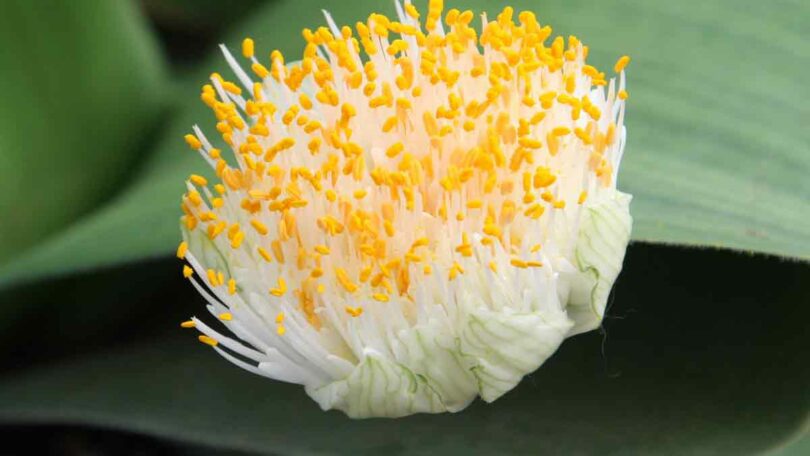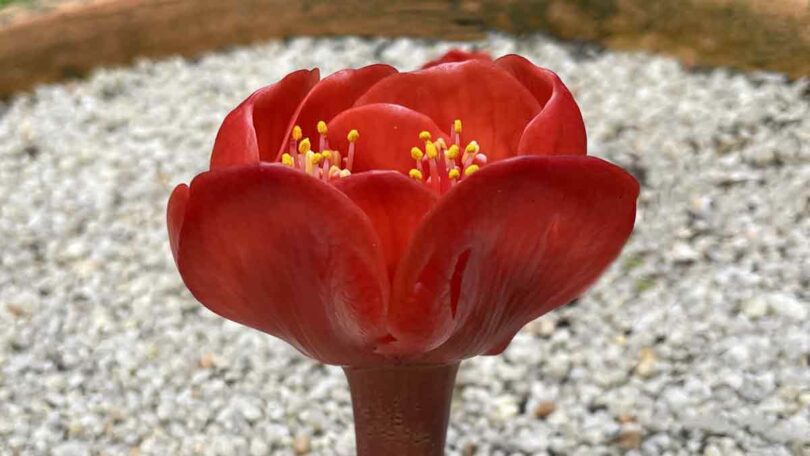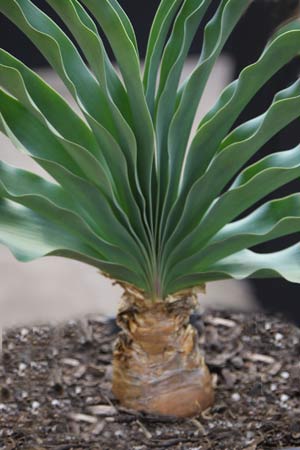
Another drought tolerant bulb from South Africa, Haemanthus humilis comes in a number of forms, the species has pink flowers and a ‘giant’ form is also available.
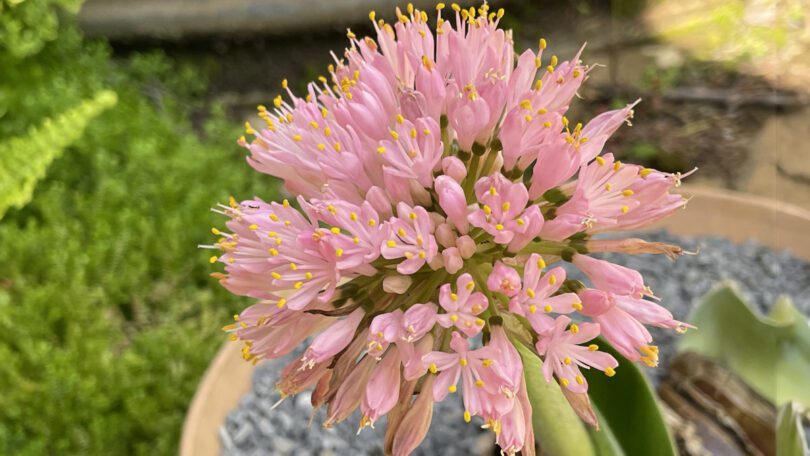
Other difference do exist in terms of flower colour and size. This is a summer flowering plant and the foliage follows. The foliage itself is a deep green and broad.
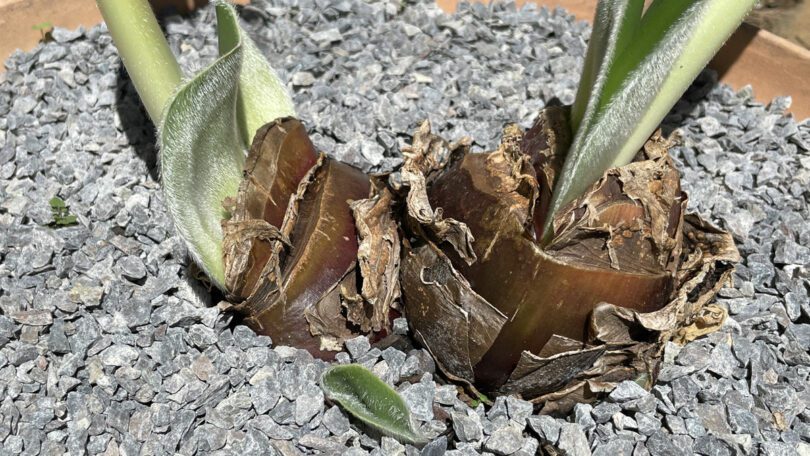
Haemanthus humilis subsp hirsutus has closer to white flowers, interesting ‘hairy foliage’, and is from an area of summer rainfall.
Haemanthus humilis Care
In a well drained soil this is very easy care bulb. It flowers reliably for us every year. We use very little fertiliser, and never water them.
They grow well in the ground as well as in containers.
- Watering:
It is essential that in spring through summer the plant has a wet/dry cycle. So water well and then allow the soil to dry before watering again.
In winter you should not water and allow the growing medium to dry out almost completely.
In some climates you may not need to water them at all. - Soil:
Ideally a rock garden or even a crevice garden. Soil should be free draining, add drainage material such as pumice, horticultural grit, or gravel. - Light/Sun:
Best planted in full sun to dappled afternoon shade. Deep shade is not suitable. - Fertiliser:
Generally very little to no fertiliser is required. Some growers use a little low nitrogen, slow release fertiliser once a year at 25% of the recommended rate. - Transplanting
Late spring to early summer while they are in dormancy.
Haemanthus humilis Propagation
Easy by division of offsets or ‘pups’ and also possible from seed. Seed needs to be fresh and sown directly after collection.
Growing Haemanthus humilis from seed
- 1 Harvesting Seeds: Wait until the seed pods are mature. The seeds will be orange and fleshy once fully ripe.
- Remove the seeds from the pods, then clean off any pulp by gently rubbing them under water.
- Seeds are best sown immediately after harvesting.
- Scarification of the seed coat slightly by gently nicking it with a knife, but this is optional.
- Use a deep seed tray or small pots with drainage holes.
- Fill with a well-draining seed-starting mix, like a mixture of sand, perlite, and peat.
- Plant the seeds about 1–2 cm deep in the soil mix, ensuring they’re spaced out. Gently press the seeds into the soil, but don’t pack the soil too firmly.
- Water the seeds lightly to moisten the soil, but avoid over-watering.
- Consider covering the tray with a plastic lid or a clear plastic bag to retain moisture.
- Place the tray or pots in a warm location, ideally between 21-24°C (70-75°F).
- Germination usually takes a few weeks to a couple of months, but can vary depending on conditions.
- Once you start seeing the first shoots appear, reduce humidity slightly to prevent mold growth.
- If your seeds seedlings in trays you will need to tranfer them to indivivual pots once thay are large enough to handle, this is after they have developed at least two true leaves.We strat ours in individual pots to avoid disturbance.
- Grow them on indirect light and free-draining soil.

With division it is recommended that you can divide them every 5 – 6 years, this will improve the growth as soil will be improved and the bulbs will have more space to grow..
Pruning
No pruning is required, simply remove the dead foliage.
Summary Information
- Botanical Name – Haemanthus humilis
- Botanical Family – Amaryllidaceae
- Common Name – None known.
- Position – Full sun to a little shade.
- Climate zone – Cool to Warm Temperate. Not suited to sub tropical or tropical areas.
- Soil – Well drained to dry, best in a sandy soil with some moisture through summer.
- Height – To around .6 metres.
- Spread – To around .8 metres across when in full foliage.
- Growth Rate – Medium
- Flowers – Pink or White depending on variety..
- Flowering Time – Summer
- Foliage – Large deep green scrappy leaves.
- Frost tolerant – Yes.
- Drought tolerant -Yes.
You may also like: