

Amorphophallus are a large genus of tuberous bulbs or plants mainly from West Africa to the Pacific Islands(over 150 species) members of the the arum family.
Amorphophallus Varieties
- One of the most accessible for sale in Australia is the popular Amomorphallus Konjac with its large deep red flowers spotted stem and large leaves.
- Amorphophallus paeoniifolius or ‘Elephant Yam’ is found in the tropical areas of far North Queensland.
- A. kiusianus is commonly caked the ‘Kyushu Love Lily’ or ‘Kyushu Voodoo Lily’, fairly easy care and with amazing Cobolt Blue Seed Pods
- A. prainii has creamy flowers.
- The huge Amorphophallus titanum has a giant flower that can reach 2.5m. Some species are said to have a tendancy to ‘smell’ a little when first flowering, but they are spectacular.
- A. bulbifer is another easy species.
- A.dunnii, commonly called Dunn’s Voodoo Lily and regarded as one of the more attractive of the genus and also easy to grow. Yellow to green pale spathe with a crimson throat. Frosty white spadix and a mottles green flower stalk.
How to Grow Amomorphallus – Basic Care
All species can be propagated from offsets or grown from seeds. The root systems are formed on the top of the bulb so be careful when planting. We suggest growing these plants in a large pot or container. Water and fertilize Amophophallus when the plant is in active growth and keep reasonably dry during dormancy.
Site and climate
- Amorphophallus are suited to warm to hot climates, and are at their best in areas with frost-free winters or only very light frosts. They grow strongly when temperatures sit between about 18–30 °C.
- In the garden, choose a position in full sun to part shade, with some dappled afternoon shade in hotter districts to prevent the foliage from scorching.
- In cooler regions they are best in large containers or tubs so they can be moved under cover for their dry winter dormancy, and protected from late frosts.
- This is a frost tender plant, the foliage is very frost sensitive the tubers are more hardy however do not cope with freezes, so in colder zones they be grown indoors.
Soil and potting mix
- Good drainage is essential. Plant into a rich but open soil, or use a deep pot filled with a loam‑based mix improved with compost and coarse material such as grit or perlite.
- Avoid heavy clay and any site that becomes waterlogged, as saturated conditions are the main cause of tuber and corm rot.
- Slightly acidic to neutral conditions (around pH 5.5–6.5) suit most species, including A. konjac.
Planting depth and spacing
- Plant tubers or corms as they begin to show signs of growth, usually from late winter into spring depending on the species.
- Set each tuber at roughly twice its own depth in soil; for example a 5 cm tuber is planted with about 10 cm of mix over the top, with large flowering‑size tubers set a little deeper again.
- In the garden, allow around 45–70 cm between plants for bigger species such as A. konjac so that the large umbrella‑like foliage has room to develop.
Watering and feeding
- Water in lightly at planting, then increase watering as new growth appears and the weather warms.
- During the main growing period keep the soil or potting mix evenly moist but not sodden, letting the surface dry slightly between waterings in containers.
- They are hungry bulbs, so feed well through active growth with a balanced fertiliser or flowering‑type fertiliser every few weeks, or use a quality slow‑release fertiliser backed up with occasional liquid feeds.
Easy Amorphophallus Species For the Home garden
So for the regular gardener, try A.konjac or A.bulbifer and A.kiusianus not that difficult. If you are keen try growing the fantastic A. titanium, a sure talking point when flowering.
Flowering
The flower will appear on a tall stalk which is mottled, this is a Monoecious plant, so the flower has both male and female parts.
In many species (including A. kiusianus), the lower, flower‑bearing part is relatively short .
In Amorphophallus, female flowers sit in one zone on the spadix and male flowers in another zone, but all on the same spa. The male and female parts are usually in different tiny flowers on the same flowering structure, rather than mixed together in one single flower.
The female flowers form a ring or band at the very bottom of the spadix, and the male flowers sit just above them in a separate band.
The spadix itself the fleshy, upright central spike that carries all the tiny flowers and sits in the middle of the vase‑ or funnel‑shaped spathe.
Where each zone sits
The female zone is relatively short and sits at the base of the spadix, hidden down inside the tubular part of the spathe, and consists of tightly packed little ovaries.
The male zone sits immediately above the female zone and is an elongated “appendix” that looks like a spear or club and often provides colour, heat, and scent to attract pollinators. It still sits within the spathe, and is made of small pollen‑bearing units (stamens or synandria).
Amorphophallus Propagation
Amorphophallus Propagation
- Propagated by seed or by dividing tubers from mature plants
Seed Propagation
- Requires successful pollination of the flower
- Flowers are protogynous (female part receptive before pollen is released)
- Usually needs pollen from a different plant
- Pollen is taken from the upper male part of the spadix
- Pollen is brushed onto the lower female part of the spadix
- Female flowers are receptive for a short time
- Seeds form in berries after pollination
- Seed-grown plants take several years to mature
Tuber Division
- Done on older, established plants
- Best carried out during dormancy
- Offsets or side tubers are separated from the main tuber
- Use clean tools to prevent disease
- Produces plants identical to the parent
- Plants mature faster than those grown from seed
Where To Buy

412 James Lane, Fern Hill VIC. 3458 - Phone 0419002651
Large range of Rare plants, Climbers, Bulbs, Perennials Fruit Trees, Ornamental Trees and Shrubs. Available both Retail and by Mail Order
www.whitehousenursery.com.au
PO Box 7040 Leura NSW 2780
Rare woodland plants, Trilliums Epimediums, Arisaemas, plus much more.www.lynnsrareplants.com.au

'Sylvan Vale' 375 Olinda Creek Rd, Kalorama, VIC.3766
Including a large range of Rare and unusual bulbs, corms and perennials
www.tonkinsbulbs.com.au

52 Rodd St Canowindra NSW 2804
An online nursery specialising in drought and frost tolerant perennials and fragrant, edible and herbs.
www.perennialle.com.au
More Aroids


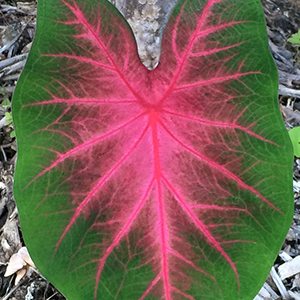


– Devils Ivy or Golden Pothos.
Are Amorphophallus Toxic?
Yes –
All parts are considered toxic if eaten, and the sap can be irritating; wear gloves when cutting, and keep plants away from pets and children.