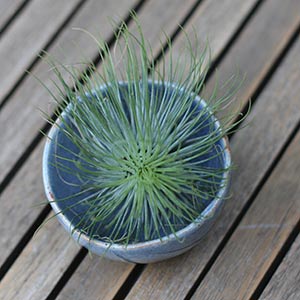
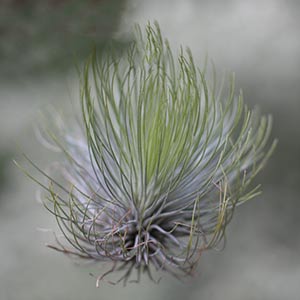
Tillandsia andreana is a truly unique air plant with super-fine, soft, needle-like foliage that forms a beautiful, rounded, almost sea-urchin shape. This little gem isn’t super common in every nursery, but it’s not truly rare either — just a bit special and always eye-catching.
Endemic to rocky cliffs in Colombia (and parts of Venezuela), it thrives in mid-altitude, bright but shaded spots in nature. We’ve even spotted ours happily tucked in a ceramics shop on the outskirts of Melbourne, proving these plants adapt surprisingly well!
The foliage is mid-green, delightfully soft to the touch, and when it gets good light, the tips can blush a pretty red — which is actually an exciting sign that blooming is on the way. Ours hasn’t flowered yet, but we’re told the flowers are a vivid, tubular red that really pops against the green spikes.
Whether indoors in a little pot, mounted on cork, or tucked into a terrarium, T. andreana is a low-key, fascinating addition to any collection.
Why Grow Tillandsia andreana?
- Compact, spherical shape (usually 3–6 inches across) — perfect for small spaces or detailed displays
- Super-soft, wispy leaves that feel like nothing else in the air plant world
- Stunning red tubular flowers (when it blooms) for a dramatic contrast
- Forgiving once you nail the light and moisture balance
- Great conversation starter — people always ask “what is that?!”
Tillandsia andreana Care at a Glance (Quick Reference)
Light → Bright, filtered/indirect light; some morning sun is fine
Water → Mist regularly or soak; keep humidity in mind
Temperature → 15–32°C (60–90°F); protect from frost
Humidity → Moderate to high preferred
Fertilizer → Optional, diluted air plant formula monthly in growing season
Growth Rate → Slow; forms nice clumps over time with offsets
Detailed Tillandsia andreana Care Instructions
1. Light Requirements
- In the wild, it hangs out on cliffs with bright but diffused light.
- Best position — Good filtered light or dappled shade (east-facing window indoors, or under tree cover outdoors)
- Indoor — Near a bright window with sheer curtains; 4–6+ hours of bright indirect light
- Outdoor — Partial shade; a little morning sun keeps ours looking vibrant, but avoid harsh midday sun to prevent scorching
Tip — Red blushing on the leaf tips is normal and a good sign (especially pre-bloom); too much silver/pale = needs more light/moisture
2. Watering & Humidity (Key to Keeping It Happy!)
Like most Tillandsias, it absorbs everything through its leaves — but this one likes a bit more consistent moisture than some xeric types.
- Misting — Spray thoroughly 3–5 times a week in summer (more in very hot/dry weather); once a week in winter
- Soaking (recommended) — Submerge fully in room-temperature water (rain or dechlorinated) for 20–40 minutes every 1–2 weeks. Shake off excess and let dry completely.
- Drying → Essential! Ensure good airflow so it dries within 3–4 hours to avoid rot.
- Signs of thirst — Curling or overly pale tips
- Overwatering sign → Mushy base or browning from the center → improve airflow/drying
Pro tip: In warmer, humid climates or outdoors, natural mist/rain might be enough. Indoors, bathrooms or kitchens with decent circulation are ideal spots.
3. Fertilizer
Not strictly needed, but it encourages faster growth and better color.
- Use diluted bromeliad/air plant fertilizer (¼ strength)
- Mist or soak with it once a month in spring/summer
- Skip in cooler months
4. Mounting & Display Ideas
No roots = total freedom!
Tuck into small ceramic pots (like ours!) for a cute tabletop look
- Mount on cork, driftwood, or wire for a natural vibe
- Pop into open terrariums or glass orbs (good airflow required)
- Group with other small air plants for mini displays
5. Common Problems & Solutions
- Rot — Too much water + poor airflow. Dry thoroughly after watering; increase circulation.
- Browning tip — Too dry or too much direct sun. Boost misting and shift to brighter indirect light.
- No blooming — Normal if young; needs maturity + good light/humidity. Red blush is your preview!
- Pest — Rare, but watch for mealybugs (wipe with alcohol or use insecticidal soap).
How Big Does Tillandsia andreana Get?
Usually stays compact: 3–8 inches (7–20 cm) across in a nice round rosette. It slowly produces offsets to form small clumps over years — never gets huge, which makes it perfect for collections.
Final Thoughts
Tillandsia andreana is one of those air plants that feels a bit magical — soft, spiky, and ready to surprise you with those red flowers someday. It’s forgiving for beginners but rewarding for anyone who loves unique textures. Give it bright filtered light, regular misting, and good airflow, and it’ll thrive.
You May also Like