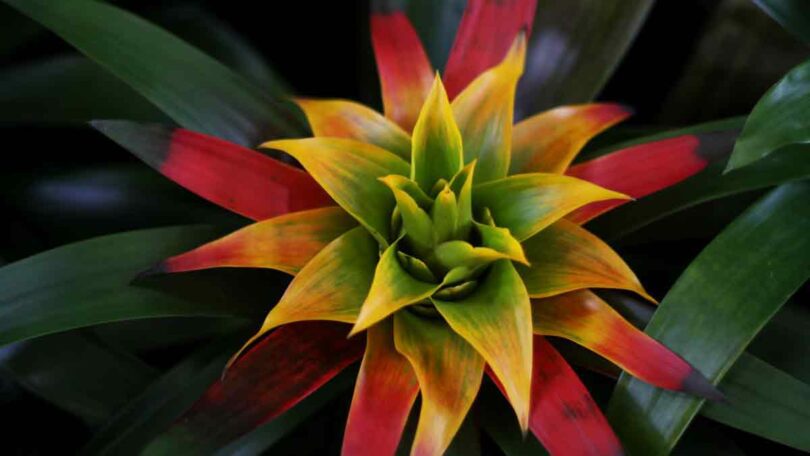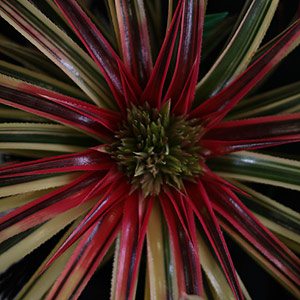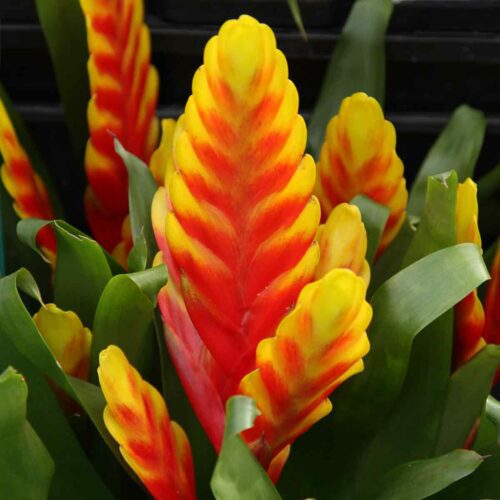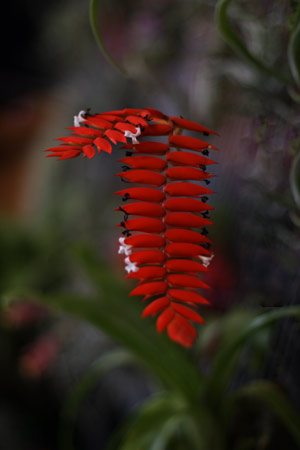

Also known as the Fragrant Alcantarea, Alcantarea odorata (syn. Vriesea odorata) is a striking bromeliad that thrives in a sunny position. True to its name, mature plants produce beautifully fragrant flowers, although the large blue-green foliage is the real feature for most gardeners.
The broad, arching leaves form an attractive symmetrical rosette, making this one of the best Alcantarea species for landscaping in warm temperate, subtropical and tropical gardens. Long-lived, low maintenance and equally at home in the ground or a large container, it makes an impressive feature plant.
The fragrant flowers appear only on mature plants, rising above the foliage on tall red stems with clusters of yellow blooms. After flowering, the parent plant gradually produces offsets (pups), allowing the plant to continue growing for many years.
Quick Facts
| Feature | Details |
|---|---|
| Botanical Name | Alcantarea odorata (syn. Vriesea odorata) |
| Common Name | Fragrant Alcantarea |
| Plant Type | Bromeliad |
| Position | Full sun to part shade |
| Soil | Well-drained soil |
| Water Needs | Low |
| Flowers | Fragrant yellow flowers on red stems |
| Foliage | Large blue-green arching leaves |
| Best Uses | Feature planting, containers, tropical gardens |
Landscaping Uses
The foliage is the main attraction so use Alcantarea odorata in a position where it can be shown off.
Planted as a single specimen in a container it looks spectacular.
In the garden, give it a little room to spread and grow into its natural attractive symmetrical shape.
How to Grow Alcantarea odorata
Grow in full sun to part shade in well-drained soil. While it tolerates some shade, good light encourages stronger growth and better colour.
Like many bromeliads, Alcantarea odorata forms a central “tank” that should be kept topped up with fresh water. Flush the tank occasionally to remove debris and keep the plant looking its best.
Avoid planting in poorly drained or waterlogged soils, as excess moisture around the roots can lead to problems.
Fertiliser
This is a naturally low-care bromeliad and rarely needs fertiliser. A light application of mulch around the base once a year is usually sufficient. If growing in containers, an occasional application of a slow-release fertiliser formulated for bromeliads or other ornamental plants during the growing season can encourage healthy foliage.
Propagation
Normal pups (offsets): These look like small versions of the parent plant and are the most common type.
Grass pups: These appear as small clumps of grass rather than miniature plants. They can form before the plant flowers.
The parent plant flowers only once (it is monocarpic) and then gradually dies. As it declines, the pups continue growing and can be separated to produce new plants. Larger, normal offsets are often easier to remove after the mother plant has flowered.
Maintenance
Maintenance is minimal. Remove older leaves as they brown naturally and cut away the spent flower spike once flowering has finished. Mature plants will produce offsets that can be left to form a larger clump or separated and replanted to grow new plants.
Alcantarea odorata – Two Types of Pups
Alcantarea odorata can produce two different types of pups:
You May Also Like