
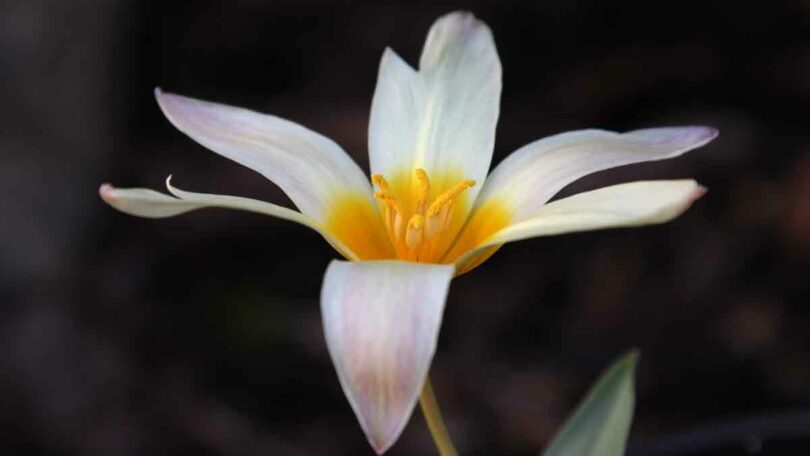
Tulipa kaufmanniana, commonly known as the Waterlily Tulip, is one of the earliest spring-flowering tulip species and the parent of many popular Kaufmanniana garden varieties. Native to Turkestan, it is valued for its compact growth and distinctive two-tone flowers, making it a reliable choice for both garden beds and containers.
Overview
This is a deciduous perennial bulb and for us usually the first tulip species to bloom, Tulipa kaufmanniana brings colour to the garden in late winter to early spring. Its low-growing habit and ability to naturalise make it especially useful in borders, rock gardens, and pots.
Flower Characteristics
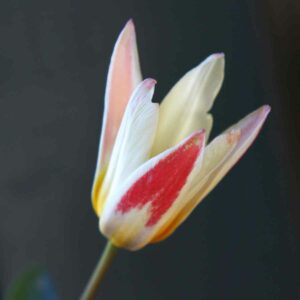
The appeal of this species lies in its striking flowers. Buds are pointed and typically cream with orange to pink tones, although colour can vary between forms.
As the flowers open in sunlight, they reveal a creamy white interior, often with a contrasting base. When fully open, the blooms flatten out, creating a distinctive shape.
Why It’s Called Waterlily Tulip
The common name “Waterlily Tulip” comes from the flower’s appearance when fully open. The wide, flat shape closely resembles that of a waterlily, especially on bright, sunny days.
How To Grow Tulipa kaufmanniana – Basic Care
An easy-care species, Tulipa kaufmanniana performs well with minimal attention once established.
Light Requirements
Plant in full sun for best flowering. While it will tolerate light shade, flowering may be reduced.
Soil
Well-drained soil is essential. Improve heavy soils with compost or organic matter before planting.
Planting
Plant bulbs in autumn at a depth of around 10–15 cm (4–6 inches), spacing them approximately 8–10 cm apart.
Watering
Water during active growth, but avoid overly wet conditions, particularly in winter.
Fertilising
Top dress annually with compost or apply a general-purpose fertiliser as new growth appears.
Growing in Containers
Well suited to pots and containers. Use a free-draining potting mix and repot every 2–3 years as the soil becomes depleted.
Care and Maintenance for the Kaufmanniana Tulip
This species does not need to be lifted each year and can be left in the ground to naturalise. Over time, bulbs will slowly multiply and form small clumps.
Deadheading is optional, but removing spent flowers can help direct energy back into the bulb. Allow foliage to die back naturally before removing.
Propagation
Tulipa kaufmanniana is most commonly propagated by offsets, which develop naturally around the parent bulb. These can be separated when the bulbs are dormant and replanted individually.
Propagation from seed is also possible, but is a much slower process and is mainly used for breeding or producing new forms. Seed-grown plants may take several years to reach flowering size.
Uses in the Garden
Because of its early flowering and compact size, Tulipa kaufmanniana is well suited to:
- Rock gardens
- Border edges
- Under deciduous trees
- Container displays
- Naturalising in informal plantings
Seasonal Interest Note
One of the best tulips for extending the flowering season due to its very early bloom time.
Summary Information Quick Facts)
- Botanical Name – Tulipa kaufmanniana
- Common Name – Waterlily Tulip
- Origins – Turkestan
- Growing position – Full Sun.
- Soil – Well drained.
- Height – Around 15 cm (6 inches)
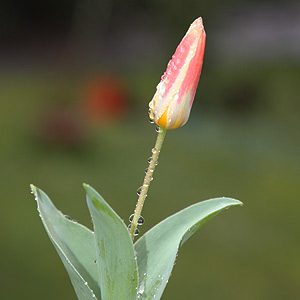
- Flowers – Pink exterior with creamy white interior, many varieties with colours from yellow to red are available.
- Flowering time – Late winter to early spring.
- Foliage – Mid green, sometimes marked.
- Frost tolerant – Yes
- Drought tolerant – Yes
Where To Buy

'Sylvan Vale' 375 Olinda Creek Rd, Kalorama, VIC.3766
Including a large range of Rare and unusual bulbs, corms and perennials
www.tonkinsbulbs.com.au

357 Monbulk Road SILVAN VIC 3795
Guaranteed "garden worthy" bulbs, plants and perennials. Visit the website to browse our large range of daffodils or request the latest free catalogue.
www.tesselaar.net.au
Does Tulipa kaufmanniana return every year?
Yes, they naturalise well and can return for several years when grown in well-drained soil.
Are they suitable for pots?
Yes, their compact size makes them ideal for container growing.
When should bulbs be planted?
Plant in autumn for flowering in late winter to early spring.
More Tulips


Kaufmanniana Tulip Varieties
Tulipa kaufmanniana is the wild species from which the Kaufmanniana group of garden tulips was developed. The species is native to Central Asia and has been used extensively in tulip breeding because of its early flowering, compact growth and distinctive flowers.
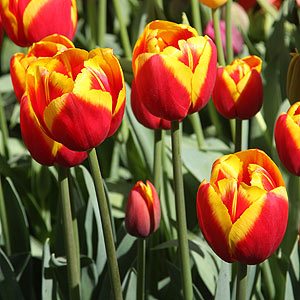
Today, gardeners are more likely to encounter named Kaufmanniana varieties than the wild species itself. These cultivated forms have been selected for different flower colours, markings and garden characteristics, while retaining the early flowering habit and wide-opening flowers that make Kaufmanniana tulips so distinctive.
Popular Kaufmanniana Varieties
There are many named Kaufmanniana varieties available, with colours ranging from white and yellow through to pink and red. Although not always available popular varieties include:
- ‘Stresa’ – yellow flowers with attractive red markings.
- ‘Johann Strauss’ – pink, red and creamy-yellow flowers with contrasting markings.
- ‘Heart’s Delight’ – pink to red flowers with a warm yellow base.
- ‘Oriental Beauty’ – richly coloured pink-red flowers.
- ‘Shakespeare’ – an early flowering variety with red and pink colouring.
These are just a selection of the many Kaufmanniana varieties grown by gardeners.
Species or Variety?
The name Tulipa kaufmanniana refers to the wild species, while names such as ‘Stresa’ and ‘Johann Strauss’ refer to cultivated garden varieties belonging to the Kaufmanniana group.
Although the cultivated varieties can differ considerably in colour and flower markings, they retain many of the qualities associated with the species, including their short growth, early flowering and tendency for the flowers to open widely in sunlight.
For the home gardener, Kaufmanniana varieties offer an easy way to enjoy the character of this early tulip in a wider range of colours and forms.