
The Candy Cane Oxalis
Oxalis versicolor – Description and Origins
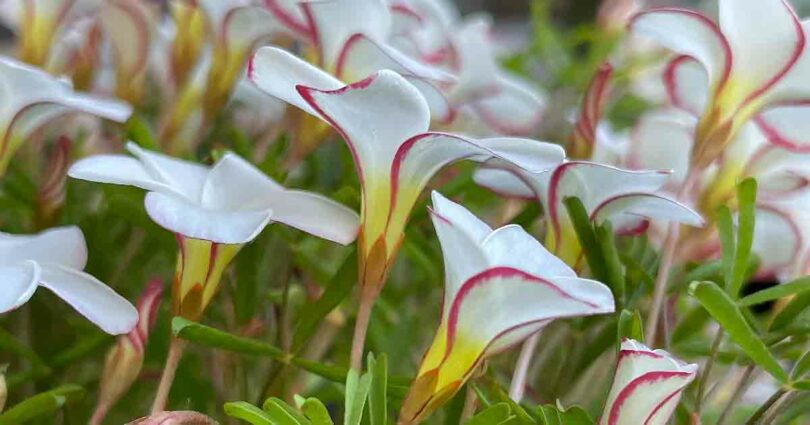
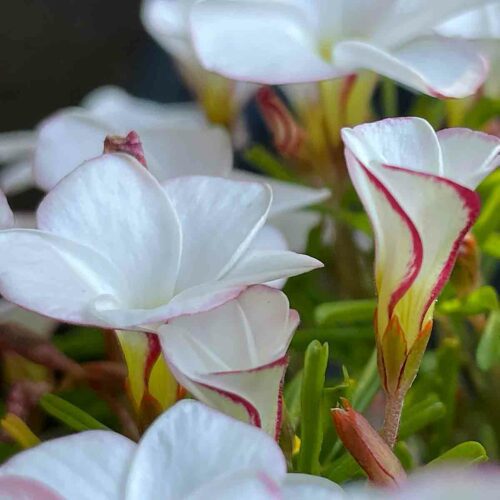
Commonly known as the Candy Cane Oxalis, Oxalis versicolor is a small, bulb-forming perennial native to South Africa. It’s grown for its eye-catching flowers which appear white from above, but reveal red margins when viewed from the side — giving it the ‘barber’s pole’ effect.
This is one of many Oxalis species that are not regarded as being invasive and it provides brilliant color in the cooler months of the year.
It flowers from late winter through spring and looks great in pots, hanging baskets, or rock gardens. Unlike some oxalis species, this one isn’t invasive and thrives in sunny, well-drained spots.
Growing Conditions for Oxalis versicolor
🌍 Natural Habitat
Dry, rocky, sunny regions with excellent drainage. Mediterranean-like conditions — wet winters, dry summers.
🪨 Soil
Light, sandy or loamy soil. Fertile and well-drained. Avoid heavy or soggy soil.
☀️ Sun and Light
Full sun is best — flowers stay closed without it. Afternoon shade can help prevent leaf scorch in hotter climates.
🌡️ Temperature Range
Hardy down to -5°C (23°F) but not tolerant of hard frosts. Grow in pots if winters are severe.
🌦️ Climate Zones
- Australia: Temperate or Mediterranean
- USA: USDA Zones 8–10 (protect in Zone 7)
- UK: Under glass or sheltered areas
🌾 Fertiliser
Use a slow-release fertiliser in spring or a balanced liquid feed every 2–3 weeks during active growth.
✂️ Pruning
Little to no pruning needed. Just tidy up spent flowers and yellowing leaves.
🌱 Propagation
Best by dividing bulbs in late summer or early autumn. They multiply quickly in ideal conditions.

🌸 Other Oxalis Varieties Worth Growing
- Oxalis hirta rosea – Vivid Rose/Pink Flowers
- Oxalis hirta – Mauve Form
- Oxalis triangularis – Deep purple foliage
- Oxalis deppei – Lucky shamrock, green with burgundy
- Oxalis articulata – Pink flowers, more vigorous
- Oxalis enneaphylla – Low alpine with pale lilac blooms
Some Oxalis species are regarded as being invasive weeds, both in the garden and in lawns, we deal with how to control invasive oxalis in a seperate article.
🔧 Ongoing Care for Oxalis versicolor
🌼 How to Plant
Plant 5 cm deep and 10 cm apart. Best done in autumn.
🪴 Repotting
Every 1–2 years. Lift and divide when overcrowded. Refresh potting mix.
💧 Watering
Water weekly or fortnightly. Increase in hot weather. Let soil dry between waterings.
💤 Dormancy
Goes dormant in summer or post-flowering. Reduce watering and resume when new growth appears in autumn.
⚠️ Common Problems
- Pests: Slugs and snails
- Diseases: Bulb rot from overwatering
🧾 Summary
Easy-going and unique, Oxalis versicolor brings colour and charm to any sunny, well-drained corner. It’s compact, non-invasive, and does well in containers, rockeries, or hanging baskets.
📋 Quick Plant Facts
| Feature | Detail |
|---|---|
| Plant Type | Bulbous perennial |
| Growth Habit | Clumping |
| Height | 10–15 cm (4–6 in) |
| Width | 15–20 cm (6–8 in) |
| Time to Ultimate Height | 1–2 years |
| Light | Full sun |
| Climate Zones | AUS: Temperate/subtropical USA: Zones 8–10 UK: Protected |
| Plant Usage | Pots, hanging baskets, rock gardens |
| Plant Environment | Dry, sunny areas |
| Frost Tolerance | Down to -5°C with protection |
| Drought Tolerance | Moderate |
| Special Features | Red and white striped flowers |
| Soil Type | Sandy or loamy, well-drained |
| Soil Moisture | Low to moderate |
| pH Level | Slightly acidic to neutral (6.0–7.0) |
| Attracts Wildlife | Low |
| Flower Colour | White with red stripes |
| Flowering Time | Late winter to early spring |
| Foliage Type | Clover-like |
| Foliage Colour | Green |
| Autumn/Fall Colour | N/A (foliage dies back) |
| Lifespan | Perennial, bulbs multiply over time |
🌿 Companion Plants for Oxalis versicolor
Choose companions that enjoy the same sunny, dry, well-drained conditions. These pair well visually and practically.
🌸 Best Companion Plants
- Sedum (Stonecrop): Great groundcover, drought-hardy
- Sempervivum (Hens and Chicks): Rosette texture, perfect in rockeries
- Echeveria: Stylish succulent for pots
- Thymus serpyllum (Creeping Thyme): Fragrant and great filler
- Iberis sempervirens (Candytuft): Early white blooms to match Oxalis
- Lavender: Scented, sun-loving, and drought-tolerant
- Dianthus (Pinks): Colourful low mound, contrasts nicely
- Armeria maritima (Sea Thrift): Coastal-ready and tidy
✅ Tips for Companion Planting
- Don’t plant next to tall or aggressive growers
- Avoid heavy-feeding neighbours
- Gravel mulch keeps bulbs happy and rot-free
🌎 Companion Ideas by Region
🇦🇺 Australia
- Scaevola
- Kangaroo Paw
- Brachyscome
- Lomandra
- Pelargoniums
🇺🇸 USA
- Coreopsis
- Agave
- Gaillardia
- Yucca
- Creeping Phlox
🇬🇧 UK
- Aubrieta
- Saxifraga
- Erigeron
- Lewisia
- Festuca glauca
🪴 Container-Only Combos
- Echeveria
- Miniature Daffodils
- Trailing Lobelia
- Sedum ‘Little Missy’
- Thyme or Oregano