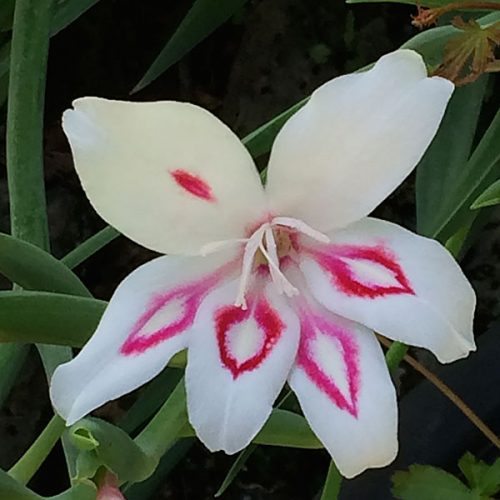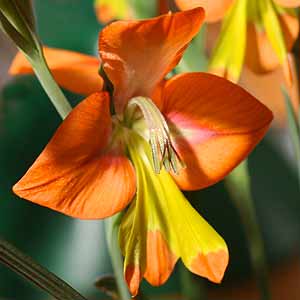
Gladiolus cardinalis are from the Cape area of South Africa, this hybrid seems to have clearer markings than the species and indeed G. cardinals itself is the parent of many hybrids.
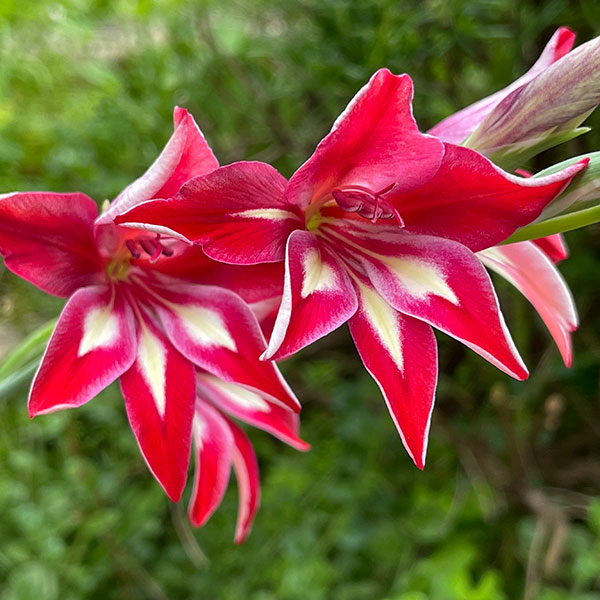
So here we have one of the prettiest late spring flowering Gladiolus, crimson red flowers with creamy white markings. These markings only appear on the lower three petals the upper petals being plain red.
In its natural environment it would grow in damp soils, wet rocky cliffs and near waterfalls, hence one common name of ‘Waterfall Gladioli’ however ours grows in a dry area and receives very little supplementary water.
It grows from corms, produces strikingly colourful flowers and reaches around 50cm (18 inches) in height. Plant in groups of 3 or more. Over time they will form a clump and can be divided when dormant.
This Gladiolus cardinalis hybrid has been in cultivation for many years, and is readily available from good specialist nurseries.
Gladiolus cardinalis Care
One established this is an easy care plant. It does require a well drained soil, with at least good morning sun.
It is a Gladioli with a strong growth habit, and although the flowers are brilliant in colour, they are smaller than modern cultivars, so rarely does this plant require staking.
Position
For best flower colour, plant in full sun, to a little afternoon shade in hotter climate zones.
Soil
Prepare a humus rich well drained soil that will retain moisture.
Fertiliser
In good soil you will need very little e4xtra fertiliser. A top dressing with blood and bone each year in early spring should be enough. In containers use a slow release fertiliser in spring and a liquid fertiliser every 3 weeks in spring.
Where to grow
Plant in the garden near the front of the border for a strong splash of colour in spring.
You can also this spring flowering bulb in containers, bring it to the forefront when it flowers for impact.
Ongoing care
By the time summer gets into full swing it will be dying back, it is summer dormant and therefore drought tolerant. Simply let the foliage die back and then do a quick tidy up. Mulch lightly adding a little compost if you have it, and this lovely plant will bounce back next spring.
Every 3 years dig and dived the corms. Do this in winter or earlier in late summer. Digging and dividing will encourage more vigorous growth and at the same time you should replenish the soil with good well rotted compost and some aged cow manure.
Propagation
This is a plant that is reluctant to set seed, so propagation is by division of bulbs or corms during dormancy.