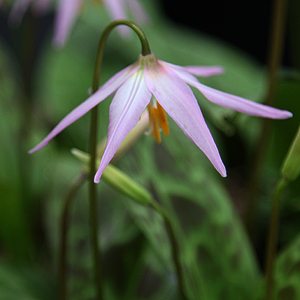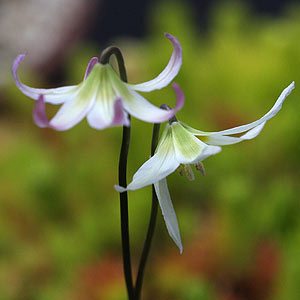

Erythronium helenae is a wonderful woodland species that probably deserves far more recognition than it receives. Native to California and extending slightly into southern Oregon, this charming fawn lily is still relatively uncommon in Australia and highly sought after by collectors.
With its soft lemon-yellow flowers and elegant growth habit, it is one of the more delicate and refined species in the genus.
Gardeners already familiar with other woodland Erythroniums, such as Erythronium revolutum, will notice similar growth requirements, although Erythronium helenae is often regarded as a little more selective in cultivation.
Flowers and Growth Habit
The nodding lemon-yellow flowers appear in spring above attractively mottled foliage typical of many Erythronium species.
As the flowers open and reflex backwards they create the graceful ‘fawn lily’ appearance that makes these woodland bulbs so admired amongst collectors.
Plants naturally grow in cool woodland conditions where moisture is available through winter and spring followed by a drier dormancy period through summer.
Best Grown in Pots
Although Erythronium helenae can be grown in the garden in suitable cool climates, we usually recommend container growing, especially for such a rare and beautiful species.
Growing plants in pots allows better control of moisture, drainage and summer dormancy conditions while also making it easier to protect emerging growth from adverse weather.
One interesting characteristic of this species that always amazes us we go to repot that Erythronium helenae is that it has pulled itself right down to the lower part of the pot. Like many it searches for that ideal combination of cool and moisture.
For this reason deeper containers are generally better than shallow pots.
Care and Cultivation
Erythronium helenae prefers cool conditions with protection from harsh sun, heavy rain and spring frosts.
Position
A position with dappled shade is ideal, particularly beneath deciduous trees or in a sheltered courtyard.
Morning sun with afternoon shade suits the plant well in cooler climates.
Soil
Use a free draining but moisture retentive potting mix rich in leaf mould or composted organic material.
Good drainage is essential, particularly during summer dormancy.
Watering
Keep plants moist through winter and spring while actively growing.
As the foliage dies back in late spring to early summer, gradually reduce watering and allow bulbs to rest through dormancy.
Avoid wet conditions during summer.
Frost Protection
Some protection from spring frosts is beneficial, especially while flower buds and new foliage are emerging.
Many growers move pots closer to the house during flowering so the blooms can be appreciated and protected more easily.
Propagation
Propagation from seed is possible, although patience is required as seedlings can take many years — sometimes up to eight years — to reach flowering size.
Fresh seed generally gives the best germination results.
Division of bulbs is a faster and more reliable method and is best carried out while plants are dormant during mid to late summer.
A Plant for Collectors
Because Erythronium helenae remains relatively uncommon in cultivation, availability can be limited. Specialist bulb growers, collector plant fairs and overseas seed suppliers are often the best sources.
For woodland bulb enthusiasts however, it is a species well worth seeking out.
Why Grow Erythronium helenae?
- Elegant lemon-yellow spring flowers
- Excellent woodland bulb for cool climates
- Attractive mottled foliage
- Ideal for pots and containers
- Rare and collectible species
- Suited to shaded gardens and woodland settings
Quick Growing Notes
| Feature | Details |
|---|---|
| Botanical Name | Erythronium helenae |
| Common Name | St Helena Fawn Lily |
| Plant Type | Woodland bulb |
| Flower Colour | Lemon yellow |
| Position | Dappled shade |
| Soil | Moist but well drained |
| Water Needs | Moist in growth, dry in dormancy |
| Flowering Time | Spring |
| Propagation | Seed or bulb division |
| Climate | Cool temperate |
| Garden Use | Pots, woodland gardens, collectors plant |
You may also be interested in :