
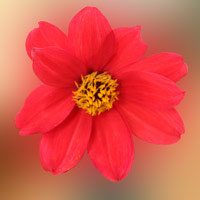
One of the best known of all cultivars is the Dahlia ‘Bishop of Llandaff’, it is an attractive dark foliage cultivar with dark coloured, almost black, foliage and brilliant clear red flowers.
The red flowers are semi double and this os one Dahlia that has stood the test of time, being in cultivation for nearly 100 years. It is disease resistant and hardy, as well as being a stunning garden plant.
Usually available for sale from May through to August.
Growing Conditions
Grow Dahlia ‘Bishop of Llandaff’ in a sunny position where it will receive at least six hours of direct sunlight each day. A fertile, humus-rich, free-draining soil will give the best results.
Good drainage is essential, particularly during winter, as waterlogged soils can cause tubers to rot.
Care
Dahlia ‘Bishop of Llandaff’ is a tough shrubby Dahlia that generally does not require staking.
Best planted in a free draining soil, ‘Bishop of Llandaff’ will reach around 1m in height with a spread of around .5m. You could grow them in a large container or simply plant them in the garden border in a cottage garden, try to give it enough room to spread.
A humus rich well drained soil is essential, and in Australia you can get away with leaving the tubers in the ground over winter, as long as the soil is a sandy well drained type, and you do get heavy frosts. Otherwise lift in late autumn and over winter in a cool dry shed.
Best Uses
Dahlia ‘Bishop of Llandaff’ is ideal for:
- Cottage gardens
- Mixed perennial borders
- Pollinator gardens
- Large patio containers
- Cut flower gardens
Its dark foliage combines particularly well with ornamental grasses, salvias, echinaceas and other late summer flowering perennials.
Propagation
The easiest way to propagate ‘Bishop of Llandaff’ is by dividing the tubers during winter while dormant. Each division should have at least one healthy growing eye to produce a new plant.
Growing from seed is not recommended, as seedlings will not come true to this named cultivar.
Where To Buy

357 Monbulk Road SILVAN VIC 3795
Guaranteed "garden worthy" bulbs, plants and perennials. Visit the website to browse our large range of daffodils or request the latest free catalogue.
www.tesselaar.net.au

470 Monbulk-Silvan Road Monbulk VIC 3793
"Guaranteed mail order flowering bulbs, perennials, roses, trees, landscaping plants, garden accessories and community fundraising Austra lia-wide."
www.gardenexpress.com.au
Frequently Asked Questions
Does Dahlia ‘Bishop of Llandaff’ need staking?
Usually not. It has stronger stems than many taller dahlia varieties and generally supports itself well.
Can it be grown in pots?
Yes. Choose a large container with excellent drainage and water regularly during hot weather.
Is it frost hardy?
The foliage is damaged by frost. In warmer Australian climates the tubers can often remain in the ground over winter if drainage is excellent. In colder areas they are best lifted and stored until spring.
Is it good for bees?
Yes. Unlike fully double dahlias, the open flowers provide easy access to pollen and nectar, making this cultivar popular with bees and butterflies