

Amaryllis belladonna, commonly called Belladonna Lily or ‘Naked Lady’, is a tough bulb that sends up fragrant blooms on bare stems in late summer to autumn. The pink or white flowers arrive before the foliage, bringing colour just when many other plants are starting to slow down.plants.
Flowers and forms
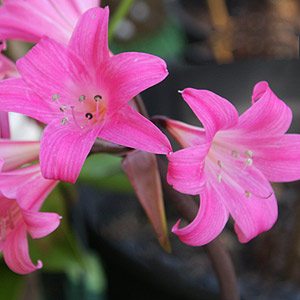
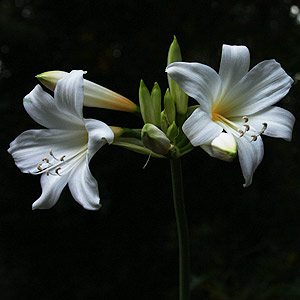
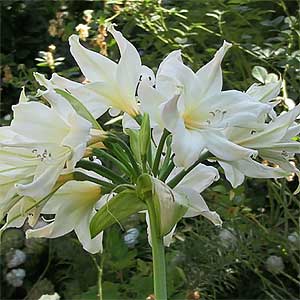
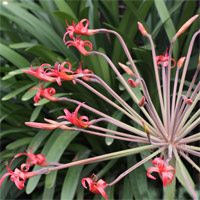
Most Belladonna lilies have soft to mid‑pink trumpet‑shaped flowers held on tall, leafless stems around 60–75 cm high. Pure white forms such as Amaryllis belladonna ‘Alba’ are less common but highly sought after for their scented, luminous flowers. Each mature bulb can carry a cluster of many blooms, giving a strong show from just a small clump.
After flowering, the plant produces rosettes of strappy green leaves that grow through autumn and winter before dying back in spring as the bulb goes into its dry summer rest. This habit – bare stems first, then foliage – is what gives rise to the cheeky ‘Naked Lady’ name.
Selected varieties
- Belladonna ‘Cyclamen Pink’ – A strong, deep pink form with tall stems and fragrant flowers, ideal if you want a reliable, sun‑loving bulb for borders or pots.
- Belladonna ‘Hathor’ – A white‑flowering selection with tall stems and a good number of blooms per head, excellent for cutting and mass planting.
- Amaryllis belladonna ‘Alba’ – Rare pure white flowers with a soft fragrance, reaching similar height to the pink types and standing out beautifully in twilight plantings.plants.
How to grow the Amaryllis Belladonna
Belladonna Lilies are easy to grow and cope well with dry conditions. Large bulbs can be planted until early summer and do well in rock gardens or pots where they receive good sun and drainage. Bulbs are planted with the shoulder or neck above soil level.
Position and planting
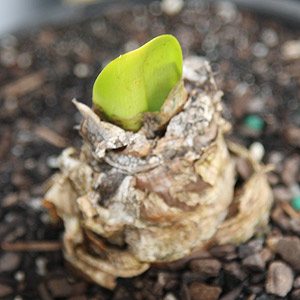
Amaryllis belladonna is best in full sun, though a little afternoon shade is helpful in hotter inland gardens. Choose a well‑drained soil – sandy or loamy – as these bulbs resent sitting in heavy, waterlogged ground.
- Plant bulbs in winter to early spring, or as supplied by mail order.
- Set bulbs so that the neck or shoulder sits just above soil level.
- Space around 20–30 cm apart and plant in small groups for a stronger display.
Once planted, Belladonna lilies are best left undisturbed and may take a season or two to settle before they flower to full potential. They suit rock gardens, mixed borders and containers where good drainage and sun can be provided.
Watering and fertiliser
These are drought‑tolerant bulbs that prefer a dry summer rest once the foliage has died back.
- Water lightly after planting to help roots establish.
- Through autumn and winter, natural rainfall is usually enough; water only if the soil is very dry.
- In very dry late summers, a modest drink can help trigger flowering.
Fertilise with a slow‑release or general bulb fertiliser in early spring as leaves are actively growing, and you can also top dress with a little blood and bone at the same time. Avoid heavy, high‑nitrogen feeding, which can encourage foliage at the expense of flowers.
Care, longevity and propagation
Belladonna lilies cope well with neglect once established and are suited to many Mediterranean‑type and temperate areas. Allow the foliage to yellow and die back naturally before removing it so that the bulb can store energy for next year’s flowers.
- Propagation by division is straightforward: lift and separate offsets from established clumps in late winter to spring and replant immediately.
- They can also be grown from fresh seed, though seed‑grown plants will take several years to reach flowering size.plants.
Clumps are long‑lived and do not need frequent division; only split when they become crowded or flowering declines.
Amaryllis Belladonna Propagation
Division of established clumps diring dormancy is the easiast method of propagation.
You can also propagate Belladonna Lilies from seed collected after flowering.
Uses in the garden
Belladonna lilies are ideal for adding late‑season colour to sunny borders, gravel or rock gardens and cottage‑style plantings. The tall stems and fragrant flowers also make excellent cut flowers for indoor arrangements
Quick reference
- Flowering time – Late summer to early autumn, before foliage.
- Planting time – Winter to spring.
- Sun – Full sun to light afternoon shade.
- Water – Low once established; keep relatively dry in summer, with occasional water in very dry periods.
- Propagation – By division of clumps or from seed.
- General care – Fertilise in spring, leave foliage until it dies back, divide congested clumps in late winter to spring.
The late summer rains bring on the flowers, so in dry seasons a little water will be needed. The number of individual flowers on a stem can vary depending on the season and the size of the bulbs. On a mature sized bulb in good conditions up to 10 flowers will appear on each stem.
You May Also Like
Where To Buy

412 James Lane, Fern Hill VIC. 3458 - Phone 0419002651
Large range of Rare plants, Climbers, Bulbs, Perennials Fruit Trees, Ornamental Trees and Shrubs. Available both Retail and by Mail Order
www.whitehousenursery.com.au

'Sylvan Vale' 375 Olinda Creek Rd, Kalorama, VIC.3766
Including a large range of Rare and unusual bulbs, corms and perennials
www.tonkinsbulbs.com.au