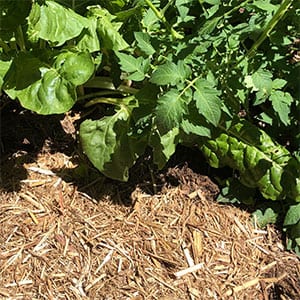

Natures Soil Conditioner
Looking for a free way to improve your soil, reduce watering and make use of autumn leaves? Leaf mould is one of the most valuable soil conditioners a gardener can make. Created simply by allowing fallen leaves to break down naturally, leaf mould improves soil structure, increases moisture retention and encourages healthy soil life.
Although often described as nature’s compost, leaf mould is actually closer to a soil conditioner than a traditional compost. It contains relatively few nutrients of its own, however its ability to improve soil and support beneficial organisms makes it one of the best additions you can make to the garden.
By definition, leaf mould is simply decomposed leaves. In nature it forms beneath deciduous trees where fallen leaves remain moist and gradually break down into a rich, dark, crumbly material. You could describe the process as “cold composting” as very little heat is generated during decomposition.
Leaf Mold or Leaf Mould
In The UK, Australia its Leaf Mould – In the United States its Leaf Mold
Quick Facts
- Made entirely from fallen leaves
- Excellent soil conditioner
- Improves moisture retention
- Ideal for sandy soils
- Encourages earthworms and beneficial microbes
- Can be used as mulch
- Suitable for raised garden beds
- Useful in potting mixes
- Usually slightly acidic
- Free to make
Why Use Leaf Mould?
The biggest advantage of leaf mould is its remarkable ability to hold moisture.
This makes it especially useful in:
- Sandy soils
- Raised garden beds
- Vegetable gardens
- Areas affected by drought or water restrictions
Leaf mould also provides a home for:
- Earthworms
- Beneficial insects
- Soil fungi
- Helpful bacteria
Although it contributes little nutrition itself, these organisms help convert organic matter into plant-available nutrients over time.
Many gardeners find that regular additions of leaf mould dramatically improve the structure and water-holding capacity of poor soils.
How to Make Leaf Mould
We have used a very simple method for years. If you have deciduous trees in the garden, you’ll have all the raw materials you need.
Six Easy Steps
- Pile autumn leaves into a solid-sided bin or enclosure, preferably while they are still damp.
- The leaves do not require large amounts of airflow, so wire mesh bins work well but are not essential.
- Wooden-sided bins can also be used. Two adjacent bays separated by mesh work particularly well.
- Place the bin directly on the soil in a shaded position.
- Continue adding leaves throughout autumn.
- Cover the pile with wire mesh or a few pieces of timber to stop leaves blowing away.
Once the pile is complete, simply leave it alone.
By the following autumn the leaves will have begun breaking down, and after sufficient time you’ll have a rich dark leaf mould ready for use.
Starting a second pile beside the first allows beneficial fungi and microorganisms to move naturally between the piles.
How Long Does Leaf Mould Take?
This is one of the most commonly asked questions.
The answer depends on the type of leaves and the conditions.
- Shredded leaves: 6–12 months
- Whole leaves: 1–2 years
- Tough leaves: up to 3 years
You can speed up the process by:
- Shredding leaves first
- Keeping the pile moist
- Using a lined bin
- Adding compost activators
We generally keep things simple and let nature do the work.
Best Leaves for Leaf Mould
Most deciduous leaves work very well.
Good choices include:
- Maple
- Elm
- Birch
- Poplar
- Ash
- Fruit tree leaves
These tend to break down relatively quickly.
Leaves That Break Down Slowly
Some leaves take much longer to decompose.
Examples include:
- Magnolia
- Camellia
- Evergreen oak
- Eucalyptus
We generally avoid eucalyptus leaves as they take longer than we would like.
Using Leaf Mould as a Soil Conditioner
Once fully decomposed, leaf mould becomes a dark, crumbly material that can be dug directly into the garden.
Simply remove any undecomposed leaves from around the edges and return them to a new pile.
The finished leaf mould can then be:
- Dug into garden beds
- Added to vegetable gardens
- Used in raised beds
- Mixed into potting media
- Spread around trees and shrubs
For improving sandy soils, leaf mould is hard to beat.
Using Leaf Mould as Mulch
Leaf mould also works well as a natural mulch.
Spread it around:
- Vegetables
- Fruit trees
- Roses
- Shrubs
- Perennial plants
Benefits include:
- Reduced evaporation
- Improved soil moisture
- Weed suppression
- Better soil structure over time
Leaf Mould vs Compost
Many gardeners ask whether leaf mould is the same as compost.
Not quite.
| Leaf Mould | Compost |
|---|---|
| Made mainly from leaves | Made from mixed organic materials |
| Excellent soil conditioner | Higher nutrient content |
| Improves moisture retention | Improves fertility |
| Fungal decomposition | Bacterial decomposition |
| Slower process | Usually faster process |
The best approach is often to use both.
Questions and Answers
Do I Need to Turn the Pile?
No.
Turning may speed decomposition slightly, however we have never found it necessary.
Do I Need to Cover the Pile?
Not really.
Remember this is cold composting, so keeping heat in is not important.
Should I Shred the Leaves First?
If you want quicker results, yes.
We usually run leaves over with the mower first, however it is not essential.
Can I Make Leaf Mould in Plastic Bags?
Many gardeners use plastic bags successfully by adding moisture and ventilation holes.
We still prefer the traditional wire bin method as it is simple, reliable and avoids having bags scattered around the garden.
Can I Add Manure?
Yes.
Cow manure, sheep manure and vermicast tea can all help speed decomposition.
Is Leaf Mould Acidic?
Usually slightly acidic, often around pH 6, although this varies depending on the leaves used and the decomposition process.
What Else Can You Do with Autumn Leaves?
Use Them as Mulch
Run them over with the mower and spread them over bare soil.
This helps:
- Suppress weeds
- Retain moisture
- Encourage earthworms
- Improve soil structure
Add Them to Compost
Autumn leaves provide valuable brown material for compost bins.
Shredding them first helps speed decomposition.
Suppress Weeds
For difficult weedy areas:
- Lay down a thick layer of newspaper.
- Cover with at least 30cm of shredded leaves.
- Top with pea straw, sugar cane mulch or another organic mulch if desired.
The newspaper blocks light and helps smother existing weeds.
Let Nature Do the Work
One of the simplest options is to leave leaves beneath deciduous trees.
Pile them beneath the canopy, out to the drip line if possible.
Over time they will break down naturally, improve moisture retention and enrich the soil.
Spring bulbs such as daffodils can be planted through the leaf layer with excellent results.
Four Things Not to Do with Autumn Leaves
Don’t Smother Small Plants
A thick layer of leaves can flatten and damage young plants and ornamental grasses.
Don’t Smother the Lawn
A few leaves mulched into the lawn are fine.
Large quantities can block light and damage turf.
Don’t Burn or Throw Them Away
Autumn leaves are a valuable garden resource and should be recycled wherever possible.
More Soil Improvers