
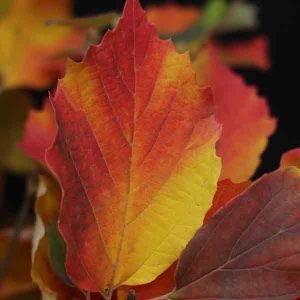
As winter comes around it is the autumn leaves that add colour to the garden. The autumn or fall foliage of deciduous trees and shrubs provide us with a riot of colour.

Autumn is one of the most rewarding seasons in the garden, bringing rich tones of red, gold, orange and copper as deciduous plants prepare for winter. While many Australian gardens are evergreen, a carefully chosen mix of deciduous trees and shrubs can transform your landscape with spectacular autumn colour.
This guide explores a range of popular autumn foliage plants suited to Australian conditions, highlighting trees and shrubs known for their seasonal colour, growth habits and garden appeal. Whether you are planning a new garden or adding interest to an established landscape, these plants can provide reliable autumn colour year after year.
Trees and Shrubs with Outstanding Autumn Colour
Many plants produce autumn colour, but some stand out for their intensity and reliability. The following trees and shrubs are well known for their seasonal display and are commonly grown in Australian gardens.
Japanese Maple (Acer palmatum)
Japanese Maples are among the most popular trees for autumn foliage, admired for their delicate leaf shape and brilliant seasonal colour. Leaves turn shades of crimson, orange and gold before falling, creating a striking autumn display.
- Best suited to: Cool to temperate climates
- Position: Part shade, sheltered from hot afternoon sun
- Garden use: Feature trees, courtyards, containers
They prefer well-drained soil and benefit from protection against strong winds and heat. With the right conditions, Japanese Maples provide beauty across all seasons.
Liquidambar (Liquidambar styraciflua)
Liquidambar is one of the most reliable trees for vivid autumn colour, producing a mix of red, orange, yellow and purple tones. Its strong upright form makes it a popular choice for larger gardens and streetscapes.
- Best suited to: Cool to temperate climates
- Position: Full sun
- Garden use: Shade trees, avenue planting, large landscapes
This deciduous tree performs best in deep, fertile soil and requires space to reach its full potential.
Ginkgo (Ginkgo biloba)
Ginkgo trees are prized for their unique fan-shaped leaves and spectacular golden autumn colour. The foliage turns a clear, bright yellow before falling, often all at once.
- Best suited to: Cool to temperate climates
- Position: Full sun
- Garden use: Feature trees, urban gardens
Ginkgo is slow growing but long lived, tolerant of pollution, and well suited to city environments.
Crepe Myrtle (Lagerstroemia indica)
Crepe Myrtles are valued for their long summer flowering, smooth mottled bark and attractive autumn foliage. Leaves turn warm shades of orange, red and yellow before dropping.
- Best suited to: Warm temperate to subtropical climates
- Position: Full sun
- Garden use: Feature trees, small gardens, streetscapes
They are drought tolerant once established and offer year-round interest.
Parrotia (Parrotia persica)
Parrotia is a lesser-known deciduous tree that offers outstanding autumn colour in shades of red, orange, yellow and purple, often all on the same tree.
- Best suited to: Cool to temperate climates
- Position: Full sun to part shade
- Garden use: Feature trees, medium to large gardens
Its attractive bark and branching structure add winter interest after leaf fall.
Ornamental Pear (Pyrus calleryana)
Ornamental Pears are widely planted for their neat shape, spring flowers and reliable autumn colour. Leaves turn rich tones of red and purple late in the season.
- Best suited to: Cool to temperate climates
- Position: Full sun
- Garden use: Street trees, formal gardens, screening
They are hardy and adaptable, making them a common choice in urban landscapes.
Chinese Pistachio (Pistacia chinensis)
Chinese Pistachio produces striking autumn foliage in shades of orange, red and scarlet. It has a broad canopy and attractive branching habit.
- Best suited to: Temperate to warm climates
- Position: Full sun
- Garden use: Feature trees, shade trees
This tree is drought tolerant once established and suitable for larger gardens.
Virginia Creeper (Parthenocissus quinquefolia)
Virginia Creeper is a vigorous climber that produces brilliant red foliage in autumn. It is often used to cover fences, walls and pergolas.
- Best suited to: Cool to temperate climates
- Position: Full sun to part shade
- Garden use: Climbers, screening, wall coverage
It grows quickly and should be managed to prevent unwanted spread.
Tips for Achieving the Best Autumn Colour
Autumn colour can vary depending on climate, soil conditions and plant care. To get the most from your autumn foliage plants:
- Choose varieties suited to your local climate
- Ensure plants receive adequate water during dry periods
- Avoid heavy pruning late in the growing season
- Provide protection from extreme heat in warmer regions
Autumn Colour in Australian Gardens
Autumn foliage performs best in cooler regions such as Victoria, Tasmania, the Adelaide Hills and parts of New South Wales. However, with careful plant selection and positioning, many deciduous trees and shrubs can also perform well in warmer areas.
Selecting heat-tolerant varieties and providing afternoon shade can help improve results in warmer climates.
Tips for Best Autumn Colour
To encourage strong autumn colour:
- Plant deciduous trees in full sun where possible
- Ensure consistent watering during dry periods
- Avoid late-season fertilising with high nitrogen
- Choose varieties suited to your local climate
Cool nights and mild autumn days generally produce the most intense colour.
More Plants for Autumn Foliage :
- Cercis canadensis or ‘Forest Pansy’ – This is a small tree with brilliant autumn tones.
- Acer palmatum ‘Seiryu’ and ‘Osakazuki’ – Along with many other Japanese Maples, brilliant red foliage.
- Acer palmatum dissectum Viridis – A rainbow of colours red to yellow and orange.
- Hydrangea quercifolia – This is the Oak Leaf Hydrangea, a small shrub with large textured foliage that turns a deep red in autumn. Look for ‘Snow Queen’
- Fothergilla gardenii – Low growing to 2m and will provide good colour in a woodland, or shaded setting.
- Symphoricarpus – Also known as the ‘Snowberry’ good red to yellow foliage with attractive white berries on bare branches as well.
- Pistachia chinensis – A small to medium tree to around 4 metres with good red foliage, drought tolerant as well.
- Amelanchier canadenis – Very tough plant with attractive spring flowers and scarlet red flowers in autumn
- Euonymus alatus – Great autumn tones in sun as well as shade.
- Disanthus cercidifolius – The most reliable autumn tones even in part shade. Glorious crimson red with orange and gold hues.
- Oakleaf Hydrangea – large leaves with purple to red and orange tones. The foliage least through winter in protected positions so long lasting autumn colour until the new foliage pushed of the old.
- Berberis: Berberis thunbergii atropurpurea ‘Japanese Barberry’ has good orange yellow and red tones.
- Cotinus : The Smoke Bush – Both Cotinus coggygria and Cotinus obovatus along with the cultivars such as Cotinus Grace produce great tones in autumn.
- Rodgersia are often overlooked however a number of species have really good colour many with amazing bronze tones.
- Cercidiphyllum japonicum the Katsura tree has soft amber tones with a touch of pink and interestingly the foliage as it decays releases a fragrance reminiscent of caramel.
- Copper Beech – Fagus sylvatica purpurea has coppery leaves through taping and summer Turing red in autumn.
- Viburnum plicatum ‘Mariesii’ has good reddish purple tones in autumn. Also look of Viburnum plicatum Lanarth
- Boston Ivy (climber): Red, orange, purple
- Epimedium x rubrum : Good red tone.

Although in Australia autumn officially begins at the beginning of March it is not until the end of the month and into April that the foliage begins to turn in a spectacular manner.
It is the deciduous trees that put on the real show and from the Highlands in the Blue Mountains through to Melbourne and Tasmania many areas are spectacular in autumn.
Best Places to see Autumn Foliage in Australia
Some of the best places to see the changing foliage are the hills around Melbourne, Mt Macedon and the Dandenong Ranges, parts of Canberra are spectacular as is Tasmania. And of course the Southern Highlands near Sydney.
In and around Melbourne try the Tindal Gardens, Pirianda Gardens, The Hamer Arboretum at Olinda or the Nicholas Gardens in Ferny Creek. And of course the Melbourne Botanical Gardens is always worth a visit in autumn. In the country, try Harrietville and Bright, both spectacular in Autumn.

If you are in Sydney try the Southern Highlands, Bowral, Mittagong and of course the Botanical Gardens at Mt Tomah are not to be missed. Mt Wilson is also on the list. Everglades Gardens at Leura is also worth a visit.
In Tasmania it is worth a visit to Hobart and Launceston, as well as the drive in between the two, simply spectacular.
And you could detour to Cradle Mountain or Mount Field National Park to see the deciduous beech, Nothofahus gunnii, it is small growing but does put on a good autumn display. It also happens to be Tasmania’s only deciduous native plant.
So forget the notion that Australia does not have great autumn colour, you just need to look in the right places.
What to do with autumn leaves once they have fallen
Never burn autumn leaves, they are to valuable and should be used to make compost, or to make leaf mould.