
Australian native grasses are among the most versatile and low-maintenance plants for Australian gardens. Whether you are looking for a drought-tolerant landscaping plant, a native lawn alternative, a solution for erosion control or a way to attract birds and beneficial insects, there is a native grass suited to the task.
From the graceful blue-green foliage of Poa Tussock Grass to the rich seasonal colours of Kangaroo Grass and the lawn-like qualities of Weeping Grass, Australian native grasses are increasingly being used in home gardens, commercial landscapes and revegetation projects. Many species thrive in poor soils, cope with harsh conditions and require far less water than traditional garden plants once established.
In addition to their ornamental appeal, native grasses provide valuable habitat and food sources for wildlife, helping create healthier and more sustainable gardens. They can be used as feature plants, mass plantings, lawn substitutes, coastal stabilisers or as part of larger habitat restoration projects.

Use this guide to discover the best Australian native grasses for landscaping, revegetation, low-maintenance gardens, lawn alternatives, wetlands and coastal plantings, along with information on their growing requirements and landscape uses.
Choosing the Right Australian Native Grass
Australian native grasses generally fall into five main groups:
- Landscaping or ornamental grasses
- Revegetation grasses
- Aquatic and wetland grasses
- Lawn substitute grasses
- Pasture grasses
Many gardeners use ornamental species as feature plants or in mass plantings where drought tolerance and low maintenance are important considerations. Others are valuable for stabilising slopes, revegetating disturbed sites or replacing thirsty traditional lawns.
It is worth noting that some plants commonly grouped with native grasses, including Lomandra, Dianella, Carex and Ficinia, are technically grass-like plants rather than true grasses. However, they perform similar roles in the landscape and are often used alongside native grass species.
Well-known natives such as Poa, Kangaroo Grass (Themeda triandra), Lomandra and Dianella cope with a wide range of soils and growing conditions while providing year-round structure and habitat value.
Quick Guide to Australian Native Grasses
| Garden Need | Recommended Species |
|---|---|
| Lawn Alternative | Microlaena stipoides, Zoysia macrantha |
| Coastal Gardens | Spinifex sericeus, Poa poiformis |
| Erosion Control | Austrostipa stipoides, Sporobolus virginicus |
| Shade Tolerance | Microlaena stipoides |
| Wet Areas | Carex appressa, Ficinia nodosa |
| Mass Planting | Poa labillardieri |
| Wildlife Gardens | Themeda triandra, Poa species |
Australian Native Grasses come in five main types :
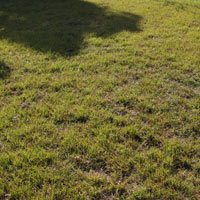
- Landscaping or Ornamental Grasses.
- Revegetation Grasses
- Aquatic Grasses
- Lawn substitute Grasse
- Pasture
The ornamental varieties are widely used in landscaping both as feature plants and for mass planting where low maintenance is a factor.
Well‑known natives like Poa, Themeda (Kangaroo Grass), Lomandra and Dianella can cope with a range of soils and exposures, and many also play a role in erosion control and habitat planting. Use this guide as a starting point to explore different groups of Australian native grasses, how they grow, and where they are best used in the garden or landscape.
The search for the ideal native grass continues in Australia. while many clumping species are used in landscaping it is the true ‘ grass like’ varieties that are currently being developed.
Many Australia native grasses such as Hermarthria uncinata are yet to be fully evaluated as to suitability for use in Australian Gardens as lawn substitutes. Ornamental Australian Grasses are widely used by landscapers and in the home garden.
Australian Native Grasses with common names and Uses.
Ornamental
- Carex appressa – Tall Sedge
- Carex fascicularis – Tassel Sedge
- Cymbopogon refractus – Barbed wire grass (textural feature grass)
- Dichelachne crinita – Long haired plume grass
- Dianella caerulea – Blue Flax Lily
- Dianella revoluta – Mauve Flax Lily
- Dianella tasmanica
- Imperata cylindrica – Blady grass (strong foliage colour, best in controlled beds)
- Lomandra confertifolia – Mat Rush
- Lomandra filiformis – Wattle mat-rush
- Lomandra longifolia – Spiny Mat Rush
- Pennisetum alopecuroides – Swamp foxtail
- Poa labillardieri – Large Tussock grass
- Poa poiformis – Coastal Tussock grass
- Poa sieberiana – Snow grass
- Spinifex sericeus – Coastal Spinifex (coastal ornamental/structural)
- Stipa scabra
- Stipa verticillata – Slender Bamboo grass
- Themeda australis – Kangaroo grass (ornamental and restoration)
- Themeda australis ‘Mingo’ – Dwarf Kangaroo Grass
- Zoysia Macrantha – Zoysia Grass or Prickly Couch
Australian Native Grasses Used For Revegetation
- Austrostipa stipoides – Coast Spear Grass
- Bothriochloa macra – Red Leg grass
- Capillipedum spicigerum – Scented Top grass
- Chloris truncata – Windmill grass
- Chloris ventricosa
- Danthonia caespitosa – Wallaby grass
- Danthonia linkii – Wallaby grass
- Danthonia richardsonii – Wallaby grass
- Danthonia setacea – Wallaby grass
- Dicanthium sericeum – Queensland Blue grass
- Eragrostis elongata – Clustered Love Grass
- Sorghum leiocladum
- Sporobolus virginicus – Sand couch
Lawn alternatives
- Hemarthria uncinata – Mat Grass (prostrate, running habit, being trialled as lawn substitute)
- Microlaena stipoides – Weeping grass (responds to mowing, suited to semi shade)
- Zoysia macrantha – Zoysia Grass or Prickly Couch (low, running, coastal tolerant)
- Paspalum distichum – Water couch (for damp/irrigated lawn‑like areas)
- Paspalum vaginatum – Salt water couch (lawn‑style cover in saline/coastal sites)
- Sporobolus virginicus – Sand couch (low coastal cover, occasionally used as lawn in tough sites)
Pasture
- Bothriochloa macra – Red Leg grass
- Dicanthium sericeum – Queensland Blue grass
- Danthonia species (Wallaby grasses) – D. caespitosa, D. linkii, D. richardsonii, D. setacea
- Microlaena stipoides – Weeping grass (dual use: pasture and lawn)
- Sorghum leiocladum
Aquatic / wetland / coastal fringe
- Juncus bufonius – Toad Rush (wet soils)
- Marsilea mutica – Smooth Nardoo (ponds, shallow water)
- Paspalum distichum – Water couch (wet soils, margins, sometimes lawn‑like)
- Paspalum vaginatum – Salt water couch (saline/coastal margins)
- Sporobolus virginicus – Sand couch (coastal foredunes and saline areas)
Mass Planting
For roadside plantings Poa labillardieri is an excellent choice while Poa poiformis with its green or blue green foliage makes an interesting border plant, nice tight clumps.
Another native grass worth considering is Carex Appressa, a versatile grass that grows in moist or dry conditions, it forms a nice tussock and has yellow seed heads as well.
What about a grass for damper conditions, try Ficinia nodosa (syn Isolepis nodosa) or ‘Club Rush’ reaching around 1m this tough native grass will also do well in coastal conditions, as long as its damp.
And the Pennisetums, Pennisetum alopecuroides is perhaps the most widely used, be a little carful here as many will self seed, and can tend to be a little invasive, but not all.
Resources