
Garden art, garden sculpture and outdoor sculpture are increasingly popular features in private and public gardens across Australia. From contemporary metalwork and traditional stone carvings to glass sculptures and decorative garden screens, outdoor art can add interest, create focal points and bring a landscape design together.

Whether you have a large garden, a compact courtyard or a small patio, the right sculpture can introduce colour, texture, movement and personality to an outdoor space.
Garden Sculpture in Landscape Design
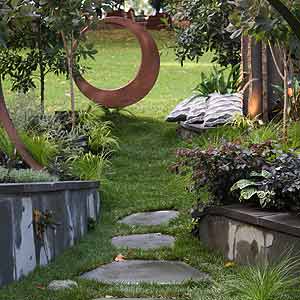
Garden sculpture may seem a little out of reach for the home gardener, but it is easier than ever to introduce sculptural elements into a garden. Modern materials and manufacturing techniques, including laser-cut Corten steel, offer a wide range of options for both residential and commercial landscapes.
A sculpture can become an integral part of the garden design or act as a feature that draws the eye through the space. Placed at the end of a garden path, for example, a sculpture creates a destination and encourages visitors to explore further.
Large garden sculptures can provide a strong focal point in an open landscape, while smaller pieces can be incorporated into garden beds, courtyards and patios. The scale of the sculpture should suit its surroundings, allowing the artwork to stand out without overwhelming the space.
Choosing Materials for Outdoor Sculpture
Garden sculptures are available in a wide range of materials, each offering different colours, textures and finishes. The choice of material can influence how a sculpture looks within the garden and how it changes over time.
- Corten steel: Known for its distinctive rust-coloured patina, Corten steel is popular in contemporary garden design. It works well for sculptural forms, decorative screens and architectural features.
- Stainless steel: With its clean, reflective finish, stainless steel suits modern gardens and can reflect light, surrounding plants and the sky.
- Stone: Natural stone provides texture, weight and a timeless quality. Stone sculptures work well in both traditional and contemporary landscapes.
- Glass: Glass introduces colour, transparency and changing reflections. It can create striking effects as sunlight moves through the garden.
- Timber: Timber offers a natural, tactile quality that complements planting and other organic materials.
- Metal: Beyond steel, other metals can be used to create intricate forms, decorative details and sculptural features.
When selecting an outdoor sculpture, consider the material alongside the surrounding paving, garden furniture, planting and architectural finishes. Durability is also important. Check that the artwork is suitable for outdoor exposure and that its finish, fixings and installation can withstand local weather conditions.
The combination of contrasting materials and textures can add depth and interest to a garden throughout the year.
Using Garden Sculpture as a Focal Point
A well-positioned sculpture can give a garden a clear point of focus. It may sit at the end of a pathway, anchor a garden bed, mark an entrance or draw attention to a particular view.
The surrounding space is just as important as the sculpture itself. Allowing some breathing room around a piece can help it stand out, while carefully chosen planting can soften its edges and connect it with the landscape.
Sculpture can also be integrated into the garden rather than displayed as a standalone object. A piece partially framed by grasses, shrubs or trees can create a sense of discovery, while a more prominent work can establish a strong visual statement.
Traditional and contemporary sculptures can both work well in a garden. The important consideration is how the artwork relates to the style, scale and character of the space.
Garden Art for Courtyards and Small Spaces
Garden sculpture is not limited to large gardens. Wall art and vertical sculptural features are particularly useful in smaller outdoor spaces, where ground area may be limited.
Decorative metal screens, wall-mounted artworks and compact sculptures can introduce visual interest without taking up too much room. In courtyard gardens, a sculptural feature can also help define a seating area or create a focal point against a plain wall.
When working with a small space, consider the proportions of the artwork and the amount of visual detail it introduces. A single, well-placed sculpture may have more impact than several competing features.
Commissioned garden sculptures can be worth considering when a particular size, material or design is needed. A bespoke piece can be created to suit the garden’s dimensions and complement the surrounding landscape.
Functional Garden Art and Sculptural Seating
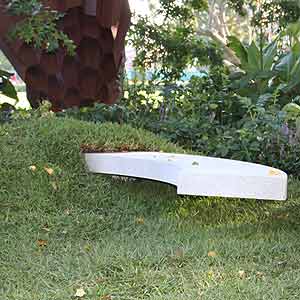
Garden art does not always need to be purely decorative. Functional elements such as garden seats, screens, water features and outdoor structures can incorporate sculptural forms while serving a practical purpose.
A sculptural garden seat, for example, can provide a place to rest while acting as a feature in its own right. Combining seating with a metal sculpture or decorative screen can create a useful and visually distinctive part of the garden.
These elements are particularly effective when they are considered early in the landscape design process, allowing their shape, materials and position to work naturally with the surrounding garden.
Sculptural garden seat: Surge, Semken Landscaping, Candeo Design, Melbourne International Flower and Garden Show, 2012.
Kinetic Sculpture for the Garden
Kinetic sculpture is an increasingly interesting option for outdoor spaces. Unlike static artworks, kinetic sculptures incorporate movement, introducing a changing element into the garden.
Some kinetic sculptures move with the wind, while others use water or mechanical systems to create movement. Their changing forms and shadows can bring a garden to life, particularly when viewed against a simple background or open sky.
For garden settings, slow and graceful movement is often desirable. The movement should complement the surroundings rather than distract from the garden as a whole.
When choosing kinetic outdoor sculpture, consider the available space, prevailing winds, exposure to the elements and any maintenance requirements. The sculpture should be installed securely and positioned where its movement can be appreciated safely.
Lighting Garden Sculpture
Outdoor lighting can extend the impact of a garden sculpture into the evening. Carefully positioned lighting can highlight the artwork’s shape, reveal surface textures and create interesting shadows against nearby walls or planting.
Uplighting can emphasise the form of a larger sculpture, while softer, angled lighting can bring out the details of metal, stone and textured surfaces. Reflective materials such as stainless steel and glass may also respond to changing light conditions.
The aim is to highlight the sculpture without creating excessive glare or overpowering the surrounding garden. Outdoor-rated lighting and suitable electrical installation are important for safety and long-term performance.
Choosing and Positioning Outdoor Sculpture
Before choosing a sculpture, consider how it will work within the garden and what you want it to achieve. A few practical considerations can help guide the decision.
- Location: Decide whether the sculpture will be a focal point, a feature along a path or an element integrated into the planting.
- Scale: Choose a size that suits the surrounding garden and can be appreciated from the main viewing points.
- Material: Consider the appearance, durability and maintenance requirements of the material in your local climate.
- Background: Think about how the sculpture will look against plants, walls, fences and the sky.
- Installation: Check the weight, fixing requirements and stability of the artwork, particularly for larger or freestanding pieces.
- Budget: Allow for delivery, installation, foundations and lighting where required, as well as the cost of the sculpture itself.
A sculpture can be a long-term investment in the character of a garden. Taking the time to consider its placement and relationship with the landscape will help ensure it remains an effective feature as the garden matures.
Finding Garden Art and Sculpture in Australia
Garden sculpture is available in many styles, from affordable decorative pieces to commissioned works by established artists. Options vary considerably in size, materials, design and price, making it possible to find artwork for a range of gardens and budgets.
For more inspiration, explore garden art and outdoor sculpture in Melbourne, Sydney, Canberra, Brisbane, Perth, Hobart, Adelaide and Darwin. Local artists, sculptors, galleries and specialist garden designers can provide ideas and help you find a piece suited to your outdoor space.
Whether you are planning a contemporary landscape, a traditional garden or a small urban courtyard, garden sculpture can add a distinctive focal point and create a stronger connection between art and the outdoor environment.
Garden Sculpture is available for sale form the following suppliers
Wholesaler of garden pots and accessories from around the world. All pots available from our warehouse in Melbourne, for distribution Australia wide & overseas. Glazed Outdoor & Indoor, Atlantis, Thai Limestone, Old Stone, Lightweight Metro Light, Pret-a-Pot, Iron Rust, Rustic, Cast Iron.
www.kellockpotsandplanters.com.au
Exquisite wrought iron accessories to create backyard spaces you will love.
Discover how these gorgeous outdoor mirrors and trellis wall features bring light and style to your walls. Beautifully made with attention to detail in solid wrought iron. Guaranteed to transform your gardens and courtyards.
www.rivasdesign.com.au
You May Also Like


More Suppliers
TERRACOTTA WARRIORS AUSTRALIA – 0411 622 195
Online retailers of the best looking and hardest wearing Terracotta Warriors from Xi’an, China.
IDEAS SEVEN art and design – phone: 0754945342
70 Isambert Rd Glenview Qld 4553
Contemporary and innovative artworks to enrich interior and exterior environments. Created in hand carved stone, recent commissions include Forde, Bovis Lend Lease.
ENTANGLEMENTS – phone 03 9576 9600
342 Jasper Road Ormond Vic 3204
Specialist in laser cut metal wall art, light boxes & sculptures for outdoor living spaces
AALCHEMY – phone: 03 9589 0550 03 9589 0550
19 Hepburn Ave Beaumaris Victoria 3193
Custom designed & manufactured metal work – decorative screens, barriers, mirrors and sculpture.