
Star Jasmine or ‘Chinese Star Jasmine’

Star Jasmine (Trachelospermum jasminoides) is a versatile, hardy evergreen climber grown for its masses of fragrant white star-shaped flowers that appear from late spring through summer and often continue into autumn.
Although commonly grown as a climbing plant, Star Jasmine is equally useful as a ground cover. With regular pruning it can also be maintained as an informal hedge or compact shrub. The glossy deep green foliage provides year-round appeal, while the sweetly scented flowers make it one of the most popular evergreen climbers for many gardens.
Quick Facts
- Botanical Name: Trachelospermum jasminoides
- Common Names: Star Jasmine, Chinese Star Jasmine
- Plant Type: Evergreen climber or ground cover
- Height: 4–8 metres as a climber
- Spread: 2–4 metres
- Flowers: Fragrant white star-shaped flowers
- Flowering Season: Late spring through summer, extending into autumn in warmer climates
- Position: Full sun to part shade
- Soil: Well-drained, humus-rich soil
- Water Needs: Moderate once established
- Frost Tolerance: Light frost tolerant once established
- Best Uses: Pergolas, fences, trellises, screens, hedges, ground cover and containers
How to Grow Star Jasmine
Star Jasmine is easy to grow once established and adapts well to full sun or part shade. It thrives in a well-prepared soil and rewards gardeners with years of reliable growth and flowering
- Choose a position in full sun to a little shade.
- Improve the soil by digging in plenty of well-rotted compost and aged cow manure.
- Plant into a humus-rich, well-drained soil.
- Water in thoroughly using a liquid seaweed fertiliser to encourage strong root development.
- Apply mulch around the base of the plant to help keep the root zone cool and retain soil moisture.
Although drought tolerant once established, occasional deep watering during extended dry periods will encourage stronger growth and better flowering.
Feeding
Feed Star Jasmine in spring with a balanced slow-release fertiliser. Avoid excessive nitrogen, as this can encourage lush foliage at the expense of flowers.
Pruning Star Jasmine
The best time to prune Star Jasmine is immediately after flowering.
- Remove any dead, damaged or diseased stems.
- Shorten long shoots by cutting just above a healthy bud to maintain a compact shape.
- Every three to four years remove some of the oldest stems to encourage fresh growth.
- Plants can also be clipped more heavily if used as a hedge, ground cover or formal specimen.
Regular pruning helps keep plants dense and encourages plenty of flowering the following season.
Propagation
Star Jasmine is usually propagated from semi-hardwood cuttings taken in late summer.
Take cuttings about 10–12 cm long, remove the lower leaves and insert them into a free-draining propagation mix. Keep the mix lightly moist while roots develop.
Although initial growth can be slow, rooted plants establish readily once planted into the garden.
Star Jasmine or Trachelospermum jasminoides will take root fairly easily, initial growth is slow at times.
Landscaping Uses
Star Jasmine is one of the most versatile evergreen climbers available.
It can be grown over pergolas, fences, trellises and arches, trained as an espalier, clipped into an informal hedge or used as a dense flowering ground cover.
Its relatively low water requirements also make it an excellent choice for large containers on balconies, courtyards and terraces, where the fragrant flowers can be appreciated during summer.
Used in the home garden as well as commercial landscaping projects it is sold in sizes ranging from tube stock through to more advanced plants in 200mm pots.
Excellent as a potted specimen on a balcony or terrace as it has low to moderate water requirements. It also flowers in full sun to part shade which adds to the versatility.
Common Problems
Star Jasmine is generally trouble-free, but a few issues occasionally arise.
- Poor flowering is usually caused by too much shade, overfeeding with nitrogen or pruning too late.
- Yellow leaves may indicate poor drainage or nutrient deficiencies.
- Scale insects and aphids can occasionally appear on new growth but are usually easy to control.
Varieties
- Trachelospermum asiaticum is widely grown as a dense evergreen ground cover.
- Variegated forms such as T. tricolor have extra attraction in the foliage.
- Trachelospermum jasminoides ‘Minuta Variegata’ features attractive pink new growth and forms a compact ground cover reaching around 30–40 cm high
Other Fragrant Climbing Plants
If you enjoy the perfume of Star Jasmine, you might also consider growing
- Madagascar Jasmine (Stephanotis floribunda),
- Climbing Roses, Clematis armandii,
- Wisteria,
- Pandorea jasminoides
- Hardenbergia violacea.
Each offers fragrant flowers while bringing its own unique colour, flowering season and growth habit to the garden.
Where To Buy

Online and Retail Melbourne and Geelong based garden centres. Check out their large range of indoor and outdoor plants, Australian Natives, Fruit Trees and Edibles, Succulents, Gardenias, Camellias, Hydrangeas plus a full range garden products for delivery in Melbourne.
www.diacos.com.au

125 Palmer Rd Jindivick 3818
Open Thursday - Sunday 10am - 4pm
Specialising in growing and selling Rare and Unusual Trees, shrubs Perennials Bulbs and Climbers, a unique nursery with amazing stock.
www.muskersbroughtonhall.com.au
Some more of the most popular climbers below


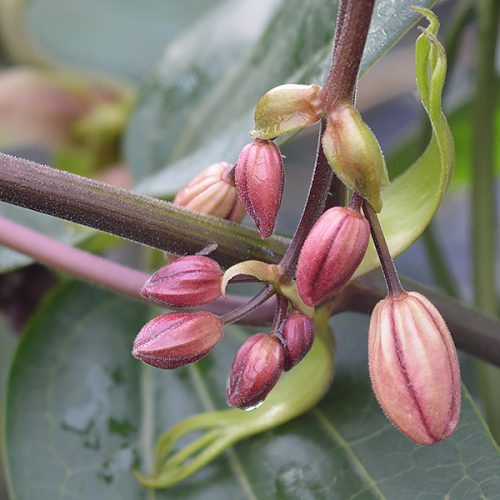


- mandevillia
- bouganvillia
- lapageria rosea
- hardenbergia (happy wanderer)
- pandorea (bower of beauty)
- petra volubilis
You can search for and find a huge range of plants both common and rare using our specialist nursery index