Hedging plants are widely used in Australian gardens for privacy, wind protection, screening and creating structure. A well-chosen hedge can divide garden spaces, soften boundaries, provide shelter and add year-round greenery. Flowering hedges can also bring colour and fragrance to the garden.
With so many plants suitable for hedging, a little thought needs to go into selecting the right one. Some are ideal for low, neatly clipped borders, while others make excellent tall screens or informal flowering hedges. Climate, soil, available space and the amount of maintenance you are prepared to undertake will all influence your choice.
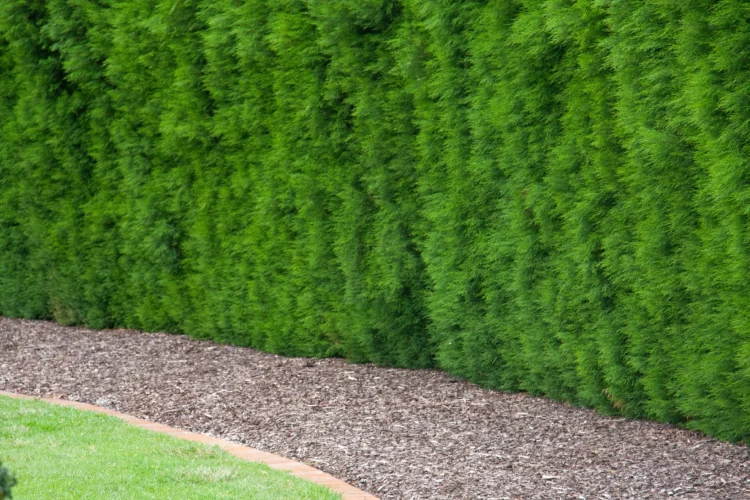
Traditional choices such as Buxus and conifers remain popular, but Australian natives such as Lilly Pillies and Acacia cognata cultivars are also worth considering.
- Choosing the Right Hedging Plant
- Best Hedging Plants for Australian Gardens
- Flowering Evergreen Hedges
- Fast-Growing Hedging Plants
- Australian Native Hedging Plants
- Low-Growing Hedging Plants
- Tall Screening Plants and Windbreaks
- How to Choose Between Formal and Informal Hedges
- Final Considerations Before Planting
- Where To Buy Hedging Plants
- More About Hedging Plants
Choosing the Right Hedging Plant
Before selecting a plant, consider what you want your hedge to achieve. Are you looking for privacy from neighbouring properties, protection from wind, a formal garden border or an attractive flowering screen?
The best hedging plants are generally those that suit the site, grow to the required size and provide the appearance you want without excessive maintenance.
Consider the following:
- Height and width: Choose a plant that will reach the required size without constant hard pruning.
- Density: For privacy and screening, look for dense foliage that provides good coverage.
- Growth rate: Fast-growing plants establish a screen quickly but may need more frequent pruning.
- Climate: Select plants suited to your local temperatures, rainfall, humidity and exposure.
- Light: Check whether the site receives full sun, filtered light or shade.
- Soil and drainage: Some plants tolerate a range of soils, while others need well-drained or moisture-retentive conditions.
- Water requirements: Consider whether you can provide supplementary watering, particularly while plants establish.
- Maintenance: Formal hedges need regular clipping, whereas informal hedges can often be left to grow more naturally.
- Appearance: Evergreen foliage, attractive flowers, fragrance and seasonal colour can all influence your decision.
A hedge that suits one garden may not be the best choice for another. Always check the mature dimensions and growing requirements of the particular species or cultivar.
Best Hedging Plants for Australian Gardens
The following plants offer a range of options for formal hedges, informal screens, flowering boundaries and privacy planting. Suitability will depend on your local climate, available space and growing conditions.
Lilly Pilly
Lilly Pillies are among the most versatile Australian native hedging plants. Depending on the species and cultivar, they can form dense evergreen screens ranging from relatively low garden hedges to taller privacy plants.
Syzygium smithii (commonly known as Lilly Pilly, formerly Acmena smithii) is widely used for hedging. It responds well to pruning, has attractive foliage and can produce colourful new growth and berries.
Other options include Syzygium luehmannii, sometimes called Riberry or Small-leaved Lilly Pilly, and selected compact or upright cultivars suited to smaller gardens.
Lilly Pillies generally prefer reasonable growing conditions and benefit from watering while establishing. Check cultivar size and susceptibility to psyllids before planting, as not all varieties are equally suited to every garden.
Camellias
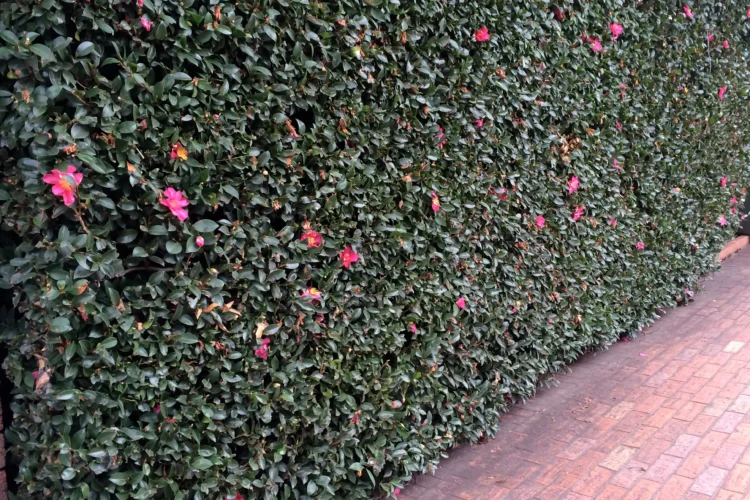
Camellias make excellent evergreen hedges in suitable climates, particularly where a dense screen with attractive flowers is wanted. They are relatively slow-growing compared with many screening plants, but their glossy foliage and winter or spring flowers make them worth considering.
Both Camellia sasanqua and Camellia japonica can be used for hedging. Sasanqua varieties are often particularly useful for garden screens and clipped hedges.
Camellias generally prefer well-drained, humus-rich, slightly acidic soil and protection from harsh afternoon sun in warmer areas. They can reach several metres in height, depending on the variety, but can be maintained at a smaller size with pruning.
Pittosporum tenuifolium
Originally from New Zealand, Pittosporum tenuifolium is a popular choice for screening because of its relatively fast growth and range of foliage colours and growth habits.
Cultivars such as ‘Silver Sheen’, ‘James Stirling’ and ‘Green Pillar’ are worth considering. ‘Silver Sheen’ has small, silvery-green leaves and a lighter appearance, while upright cultivars can be useful where space is limited.
Pittosporums can form attractive informal screens or be clipped into a more formal hedge. Check the mature height and width of the cultivar, as these can vary considerably.
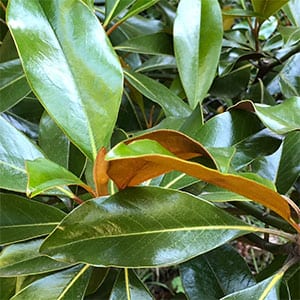
Magnolia grandiflora
Evergreen magnolias are useful for taller, substantial screens with glossy foliage and large, fragrant flowers. Selected cultivars of Magnolia grandiflora, including ‘Little Gem’, ‘Kay Parris’ and ‘Teddy Bear’, can be used where a more compact or manageable plant is required.
As hedging plants Magnolias are generally slower-growing than some conventional screening choices, but their foliage and flowers provide considerable ornamental value.
Allow sufficient room for the mature plant and consider the width as well as the height. Evergreen magnolias are best suited to gardens with enough space for their root systems and canopy.
Orange Jessamine — Murraya paniculata
If you are looking for a fragrant flowering hedge, Murraya paniculata, commonly called Orange Jessamine or Mock Orange, is worth considering in suitable climates.
It has glossy evergreen foliage and clusters of fragrant white flowers, particularly during warmer months. It can be pruned to maintain a relatively compact hedge or allowed to grow into a larger informal screen.
Murraya prefers a warm, sheltered position and does not tolerate significant frost well. Check local weed and planting guidance before choosing it, as its suitability varies by region.
Weeping Lilly Pilly — Syzygium luehmannii
Syzygium luehmannii is another Australian native worth considering for screening and informal hedges. Its attractive foliage and growth habit can provide a softer appearance than a tightly clipped formal hedge.
Selected forms can be pruned to shape, although the natural growth habit and mature dimensions should be considered when planning the planting.
Cultivars vary in size and form, so check their suitability for the intended hedge before purchasing.
Cupressus — Leighton Green
Cupressus × leylandii cultivars, commonly known as Leyland cypress, are fast-growing conifers often used for tall evergreen screens and wind protection. ‘Leighton Green’ is a well-known selection.
These plants can grow into substantial trees and require enough room to accommodate their eventual size. Regular pruning may be necessary to maintain a dense, manageable hedge.
Consider the mature height, width, root environment and ongoing maintenance before planting. Fast growth is useful when screening is needed quickly, but it can also mean more work over time.
Cape Plumbago — Plumbago auriculata
Cape Plumbago is a useful flowering shrub for informal hedges and garden boundaries in warm climates. It produces clusters of blue flowers over a long season, often from spring through autumn in suitable conditions.
Plumbago auriculata can grow into a substantial shrub but responds well to pruning. ‘Imperial Blue’ is a popular blue-flowering selection, while white-flowering forms are also available.
It is best suited to sunny positions and generally performs well in warmer areas. Allow room for its spreading growth habit and check its frost tolerance for your location.
Flowering Evergreen Hedges
Flowering hedging plants can provide screening while adding seasonal interest, fragrance and colour. They are particularly useful where a boundary needs to be attractive as well as functional.
Magnolia
Selected Magnolia grandiflora cultivars combine evergreen foliage with large, fragrant flowers. They are useful for substantial ornamental screens where sufficient space is available.
Camellia
Camellias offer dense foliage and flowers through the cooler months, depending on the species and cultivar. They are particularly effective in sheltered gardens with suitable soil conditions.
Murraya
Murraya is an option for warm-climate gardens where fragrant flowers and a neatly maintained evergreen hedge are desired. It is sensitive to frost and should be chosen with local conditions in mind.
Lilly Pilly
Lilly Pillies are grown primarily for their foliage and screening qualities, but many also offer attractive new growth, flowers and colourful berries. Their appearance varies by species and cultivar.
When selecting a flowering hedge, consider whether you want flowers throughout a particular season, fragrance, wildlife value or year-round screening. A flowering hedge may be less dense at certain times of the year, depending on the plant.
Fast-Growing Hedging Plants
If privacy or screening is required quickly, consider plants with a relatively fast growth rate and a naturally dense habit.
Options include:
- Lilly Pillies: Selected cultivars can establish into dense evergreen screens and respond well to pruning.
- Pittosporum tenuifolium: Useful for relatively fast-growing evergreen hedges, with several foliage colours and growth habits available.
- Cape Plumbago: A fast-growing flowering shrub for informal hedges in warm, sunny locations.
- Leyland cypress cultivars: Suitable for substantial, tall screens where there is sufficient room for their mature size.
- Selected Acacia cognata cultivars: Useful for native hedging and lower screens, depending on the variety.
Remember that fast-growing does not necessarily mean low-maintenance. Vigorous plants may need frequent pruning to prevent them from becoming too large or encroaching on paths and neighbouring properties.
If you need a hedge to remain narrow, choose an appropriately compact or upright cultivar rather than relying on repeated hard pruning to control a naturally wide-growing plant.
Australian Native Hedging Plants
Australian native plants offer a wide range of options for hedges, screens and informal boundaries. Many are well suited to local conditions when the right species is selected for the climate and soil.
Lilly Pillies
Lilly Pillies are versatile evergreen plants available in a range of sizes and growth habits. They are useful for privacy screens, clipped hedges and informal boundaries.
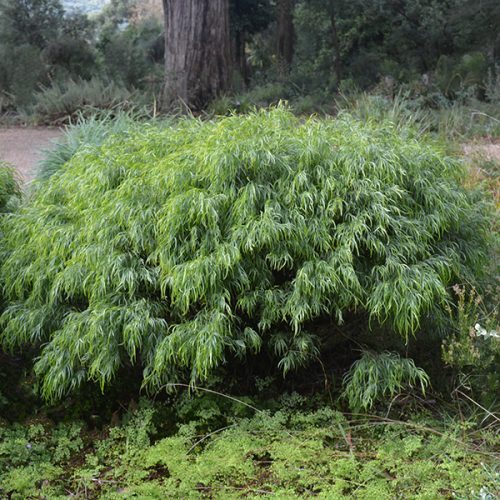
Acacia cognata
Selected forms of Acacia cognata, commonly known as Bower Wattle, have attractive fine foliage and arching growth. Compact cultivars can be particularly useful for low informal hedges and garden borders.
Choose the cultivar carefully, as growth habit, mature size and longevity vary.
Hakea salicifolia
Willow-leaved Hakea is a fast-growing Australian native shrub or small tree that can be used for informal screening where space permits. Its mature size makes it more appropriate for larger gardens than narrow boundaries.
Dodonaea viscosa
Hop Bush is a hardy Australian native shrub that can be useful for screening and informal hedges. It tolerates a range of conditions once established, although growth and appearance will vary with climate and cultivar.
Backhousia citriodora
Lemon Myrtle is an attractive Australian native with aromatic foliage. It can be grown as a screen or hedge in suitable warm, sheltered locations, provided enough space and appropriate moisture are available.
Waterhousia floribunda
Weeping Lilly Pilly is a larger Australian native tree with attractive foliage and a naturally graceful growth habit. It can be useful for substantial screens in larger gardens, but its mature size needs to be considered carefully.
Native does not automatically mean drought-tolerant, frost-hardy or suitable for every Australian region. Match the plant to local conditions and check its mature dimensions before planting.
Low-Growing Hedging Plants
Low hedges are useful for defining garden beds, edging paths, separating outdoor spaces and creating a formal garden structure without blocking views.
Buxus
Buxus, commonly known as Box, is a traditional choice for low formal hedges. Its small leaves and dense growth make it suitable for clipped borders, geometric shapes and formal garden designs.
Different species and cultivars vary in size and growth rate. Select a variety suited to the intended height and local conditions, and consider potential pest and disease issues.
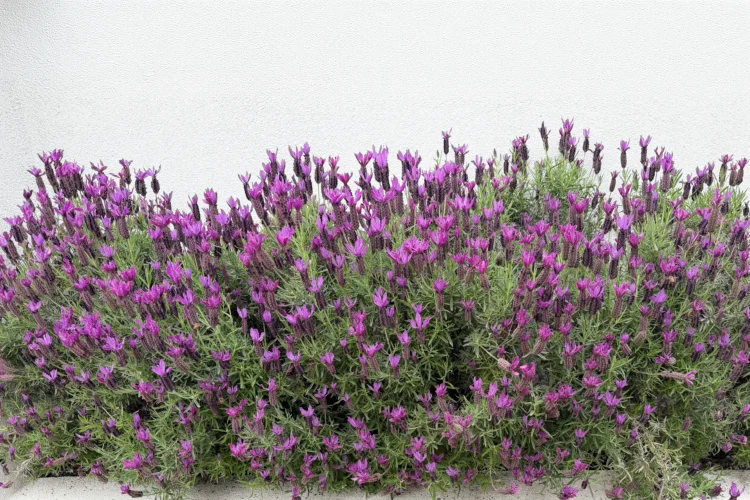
Lavender
Lavender can make an attractive informal low hedge, particularly in sunny gardens with well-drained soil. It offers fragrant foliage and flowers, although it is less suited to dense, year-round screening than many evergreen shrubs.
Rosemary
Rosemary is useful for low informal hedges in sunny, well-drained positions. Its aromatic foliage and flowers provide additional garden interest, and it generally responds well to regular light pruning.
Santolina
Santolina is a compact shrub with aromatic foliage, often silver-grey in colour. It can be used for low edging and informal hedges in sunny locations with good drainage.
Acacia cognata cultivars
Selected compact forms of Acacia cognata provide an alternative to traditional clipped hedges, with fine foliage and a softer, more natural appearance.
For low hedges, consider the plant’s natural width as well as its height. Some plants spread considerably and may need more room than expected.
Tall Screening Plants and Windbreaks
Tall hedging plants or screening plants are useful for privacy, shelter and reducing exposure to wind. They can also soften fences, screen neighbouring buildings and provide a green backdrop for the garden.
Depending on the site, options include:
- Magnolia grandiflora: An evergreen screen with glossy leaves and fragrant flowers.
- Lilly Pillies: Suitable for dense evergreen screening, with a range of mature sizes.
- Pittosporum: Useful for relatively fast-growing screens, depending on cultivar.
- Waterhousia floribunda: A larger native tree suited to substantial screening where there is enough space.
- Leyland cypress cultivars: Fast-growing conifers for tall screens where their mature size and maintenance requirements can be accommodated.
- Elaeocarpus reticulatus: Blueberry Ash, an Australian native tree with attractive foliage and flowers, suitable for larger gardens and informal screening.
- Ceratopetalum apetalum: Coachwood, an Australian native tree that may suit larger, sheltered gardens where a more natural screen is wanted.
- Thuja plicata cultivars: Evergreen conifers that may be suitable for taller hedges in appropriate climates.
For wind protection, consider the direction and strength of prevailing winds and whether you need a dense visual screen or a more permeable windbreak. A hedge that is too dense can create different wind patterns, while a carefully selected planting can help reduce exposure.
Always check mature height, root space, local climate suitability and maintenance requirements before planting a tall screen.
How to Choose Between Formal and Informal Hedges
Formal hedges are regularly clipped to maintain a defined shape, making them suitable for structured gardens, borders and neat boundaries. Buxus is a traditional example, although many other plants can be maintained formally.
Informal hedges are allowed to retain more of their natural growth habit. Flowering shrubs, native plants and plants with arching foliage can be particularly effective in this style.
Before deciding, consider how much time you want to spend pruning, whether the hedge needs to remain a precise height and width, and whether flowers or a natural appearance are more important than a uniform outline.
Final Considerations Before Planting
The right hedging plants are those that suit both the garden and the gardener. A fast-growing plant may provide privacy sooner, but a slower-growing species may require less pruning and remain easier to manage over time.
Before buying, check the plant’s mature height and width, soil and drainage requirements, light preferences, frost tolerance and water needs. Consider the distance from buildings, fences, paths, underground services and neighbouring properties.
Allow sufficient space for plants to reach their intended size. Planting too closely can lead to competition, poor airflow and additional maintenance, while spacing plants too far apart may delay the formation of a continuous screen.
For a formal hedge, choose plants with a naturally dense habit that respond well to pruning. For an informal hedge, consider the natural shape, flowering period and seasonal appearance of the plant.
There is no single best hedging plant for every situation. The most successful hedge is one suited to your climate, soil, available space and intended use.
Where To Buy Hedging Plants

55 McDougal Rd Neerim South Victoria 3831 PH: (03) 56281507
Advanced ornamental trees and garden designs and concept plans. Direct to your property combined with specialist knowledge and outstanding service.
www.blericktreefarm.com.au

Online nursery: hedging, screening trees, natives and advanced trees delivered from grower to door, no minimum order.
nurserynearme.com.au

Phone: 0411 435 314
Online Retailer of Landscaping Plants, large quantities of small pot sizes up to advanced sizes & plant Sourcing.
SYDNEY | NORTHERN NSW | GOLD COAST | BRISBANE | MELBOURNE | ADELAIDE
www.egardens.com.au
357 Monbulk Road SILVAN VIC 3795
Guaranteed "garden worthy" bulbs, plants and perennials. Visit the website to browse our large range of daffodils or request the latest free catalogue.
www.tesselaar.net.au
Wholesale Suppliers Include

WINTER HILL TREE FARM Ph: 02 4878 9193 Fax: 02 4878 9109
NSW Southern Highlands
Retail & Wholesale. Advanced trees & hedging. Grown in pots for year-round planting. 45 litre - 1000 litre available. Great range. Great Quality. Delivery available.
www.winterhill.com.au

email [email protected]
One of Australia's largest wholesale trade nurseries. Over 30,000 species available, tubestock to advanced trees, an almost unlimited choice of plants.
www.plantmark.com.au

111 Stanhope Road Theresa Park NSW 2570
Offering a variety of sun hardy Australian natives and exotic trees, shrubs, groundcover's and perennials from semi advanced through to super advanced and semi-mature stock.
www.downesnursery.com.au
More About Hedging Plants