
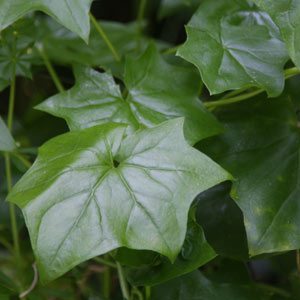
Cape Ivy is a fast-growing climbing plant that will quickly take over if left unchecked. The key to how to control Cape Ivy is timing and persistence. The best results come from acting before it flowers and sets seed each year.
When to Control Cape Ivy
The best time to control Cape Ivy is from late winter to early spring, before flowering begins.
Once it flowers, it will produce seed that spreads easily, making control much more difficult. Early action reduces regrowth and long-term spread.
What is Cape Ivy?
Cape Ivy (Delairea odorata, syn. Senecio mikanoides) is a perennial plant that grows as both a ground cover and a climber.
- Leaves are bright green, glossy and fleshy with 5–7 lobes
- Leaves grow alternately along soft stems
- Flowers are clusters of small yellow daisy-like heads with an unpleasant scent
- Flowers appear from July to September
Quick Identification Guide
Use this to help confirm you are dealing with Cape Ivy:
- Glossy, ivy-shaped leaves with soft stems
- Strong climbing or scrambling habit
- Dense growth that smothers other plants
- Yellow flowers with a noticeable smell in winter to spring
Why Cape Ivy is a Problem
Cape Ivy is an aggressive environmental weed in many areas.
- Smothers native plants by blocking light
- Spreads by seed and stem fragments
- Small pieces left on the ground will regrow
- Seeds are spread by birds
- Toxic to some native plants and animals
It is particularly invasive in bushland, coastal areas and gardens where it escapes cultivation.
Best Control Method by Situation
Choosing the right method makes control much more effective:
- Small infestations → Hand weeding
- Large infestations → Cut and paint or spray
- Near native plants → Careful hand removal
- Heavy ground cover → Combination of cutting and follow-up spraying
How to Control Cape Ivy – Methods to Control Cape Ivy
Hand Weeding
Cape Ivy breaks easily, which makes complete removal difficult.
- Remove as much of the root system as possible
- Follow up regularly to remove regrowth
- Do not allow plants to flower or set seed
This method works best for smaller infestations or sensitive areas.
Herbicide Control
Herbicides are effective, especially for larger infestations.
Cut and Paint Method
- Cut stems close to ground level
- Immediately apply herbicide to the cut surface
- This targets the root system directly
Foliar Spraying
- Suitable for dense infestations
- Spray leaves thoroughly
- Take care to avoid surrounding plants
Common Herbicides
- Glyphosate (general use)
- Metsulfuron-methyl (for woody and invasive weeds)
Always follow label directions and avoid spraying in windy conditions.
Seasonal Control Guide
- Winter → Identify plants and plan control
- Late Winter–Early Spring → Main control period before flowering
- Spring–Summer → Monitor and treat regrowth
Disposal of Cape Ivy
Disposal is critical, as the plant will regrow from fragments.
- Seal in plastic bags and dispose at landfill
- Dry completely (e.g. on metal sheeting) before burning where permitted
Do not compost or leave material on the ground.
Environmental Considerations
- Avoid spraying near waterways
- Take care around native vegetation
- Prevent spread when removing or transporting plant material
We are Asked
How do you kill Cape Ivy permanently?
A combination of cutting and herbicide application, followed by regular monitoring, is the most effective long-term approach.
When is the best time to spray Cape Ivy?
Late winter to early spring, before flowering and seed set.
Can Cape Ivy regrow from cuttings?
Yes. Even small stem fragments can take root and grow into new plants.