
Pseudopanax plants and species

Pseudopanax is a genus of evergreen shrubs and small-to-medium trees native to New Zealand (and formerly Tasmania).
Known for striking foliage ranging from glossy green to variegated or purple leaves, Pseudopanax species offer year-round architectural interest and sculptural garden presence.
Their diversity—from compact shrubs to taller tree forms—makes them suitable for gardens, courtyards, and landscaped spaces alike.
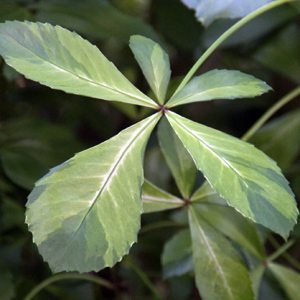
Pseudopanax Species
- Pseudopanax lessonii: Glossy palmate leaves, grows 5–6m tall.
- ‘Gold Splash’: Variegated shrub ideal for containers or garden accents.
- ‘Purpureus’: Purple-leafed cultivar for bold contrast.
- Pseudopanax crassifolius (Lancewood): Notable juvenile serrated leaves maturing to broad adult leaves.
- Pseudopanax ferox (Fierce Lancewood): Dramatic downward-hanging leaves, perfect for architectural accents in shade.
Key Characteristics
- Evergreen foliage: Thick, leathery leaves with palmate, lobed, or serrated shapes provide strong structure year-round.
- Diverse growth habits: Species range from compact shrubs to statuesque, architectural trees.
- Foliage variety: Wide range of leaf colors including bright green, variegated ‘Gold Splash,’ purple-toned ‘Purpureus,’ and bronze hues.
- Hardiness: Many species withstand coastal winds, light frost, and dry periods once established.
- Low maintenance: Minimal care after establishment; great for informal, modern, or container gardens.
Growing & Care Guide
Light & Position:
- Most thrive in full sun to part shade; lancewoods tolerate semi-shade—useful in hotter or sheltered gardens.
- Suitable for garden beds, feature planting, or large containers, especially smaller cultivars for portability.
Soil & Water:
- Prefers well-drained soils; avoid heavy clay and waterlogged conditions.
- Tolerates poor to moderately fertile soils; not demanding of rich soil amendments.
- Drought tolerant once established; occasional watering helps containers and during dry spells.
Maintenance & Pruning:
- Very low maintenance; prune mainly to shape or control size.
- Container plants benefit from pruning to maintain compact forms.
- Mulching and light fertilizing support growth but avoid over-fertilizing or waterlogging.
Landscaping Uses & Design Ideas
- Use as dramatic feature or specimen plants for strong visual impact.
- Compact cultivars such as P. lessonii (cyril watson, gold flash and purpureus) are smaller growing and work well in large pots containers or courtyards near patios.
- Architectural leaf forms add texture to contemporary landscapes. Pseudopanax are used in landscaping, P.crassifolius with its architectural leaf form and good structure make a good specimen tree.
- Suitable for coastal or low-water gardens—tolerates salt and dry conditions.
- Part shade tolerant species integrate well in mixed borders or under taller trees.
Where To Buy

MUSKER'S at BROUGHTON HALL Rare Plant Nursery - ph 0417056110
125 Palmer Rd Jindivick 3818
Open Thursday - Sunday 10am - 4pm
Specialising in growing and selling Rare and Unusual Trees, shrubs Perennials Bulbs and Climbers, a unique nursery with amazing stock.
www.muskersbroughtonhall.com.au
125 Palmer Rd Jindivick 3818
Open Thursday - Sunday 10am - 4pm
Specialising in growing and selling Rare and Unusual Trees, shrubs Perennials Bulbs and Climbers, a unique nursery with amazing stock.
www.muskersbroughtonhall.com.au