
Tasmanian Leatherwood

Eucryphia is a small genus of attractive flowering trees and shrubs, best known in Australia for Eucryphia lucida, the famous Tasmanian Leatherwood. While the plant itself is highly ornamental, many gardeners first recognise the name from Leatherwood honey, one of Tasmania’s most distinctive natural products.
Although Eucryphia species are found both in Australia and South America it is the Australian species that are widely used in landscaping.
Best known of all is the Tasmanian Leatherwood, these are the trees that give their name to the honey.
Eucryphia lucida is a medium-sized evergreen tree or large shrub, valued for its glossy green foliage and masses of white, open flowers that appear from late spring into summer. The flowers are not only visually appealing but also highly fragrant and rich in nectar, making them excellent for attracting bees.
In its natural habitat, it grows as an understory tree in Tasmania’s cool, moist forests, which gives a good indication of its preferred growing conditions in the garden. It performs best in cool to temperate climates and benefits from protection against hot winds and harsh sun.
Other Australian Eucryphia Species
Although E. lucida is the best known, several other Australian species are also of interest for gardeners and landscapers, particularly in cooler regions.
- Eucryphia moorei (Eastern Leatherwood or Pinkwood)
A taller species native to southern New South Wales and Victoria, typically found in sheltered rainforest gullies. It features pinnate leaves and can reach significant height in ideal conditions, making it suitable for larger landscapes. - Eucryphia milliganii
A smaller, high-altitude species from Tasmania, often seen as a shrub or small tree. It is well suited to cooler gardens and exposed sites where other species may struggle. - Eucryphia jinksii (Springbrook Leatherwood)
A rare rainforest tree found near the Queensland–New South Wales border. It is less commonly cultivated but of botanical interest and suitable for warm temperate to subtropical rainforest-style plantings. - Eucryphia wilkiei
A high-altitude species from northern Queensland, typically found in cloud forests. It remains uncommon in cultivation but may suit specialist collections and cool upland gardens.
Eucryphia wilkiei is generally smaller growing than other Australian Eucryphia species and is valued for its white flowers, which are usually produced in summer and may extend into the cooler months depending on climate and conditions.
While some species are also native to South America, it is the Australian species that are most widely used in local landscaping.
Popular Cultivars
Several named varieties of Eucryphia lucida and hybrids offer variation in flower colour and foliage:
- ‘Pink Cloud’ – A small tree with soft pink, fragrant flowers.
- ‘Gillanders’ Rose’ – Deeper pink blooms, selected in Tasmania.
- ‘Ballerina’ – Pale pink flowers with a delicate appearance.
- ‘Leatherwood Cream’ – Variegated foliage adds year-round interest.
- Eucryphia × nymansensis ‘Nymansay’ – A hybrid with abundant white, scented flowers, widely grown in cooler climates.
Growing Conditions and Care
Eucryphia performs best when its natural habitat is closely matched.
- Soil: Humus-rich, moist, and well-drained soil is essential.
- Climate: Cool to temperate climates are ideal; some species tolerate mild subtropical conditions.
- Light: Best in part shade, though they can tolerate full sun in cooler regions.
- Shelter: Protect from strong winds and hot, drying conditions.
- Water: Consistent moisture is important, particularly during establishment.
- Pruning: Can be lightly pruned to maintain shape and size; suitable for training as a small tree or large shrub.
Pruning Eucryphia
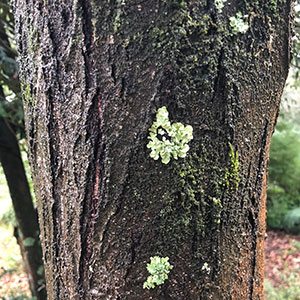
Eucryphia generally requires only minimal pruning. It naturally forms an attractive shape and responds best to light maintenance rather than heavy cutting.
- Prune after flowering to avoid removing next season’s buds.
- Remove dead, damaged, or crossing branches to maintain structure.
- Light shaping can be carried out to control size, especially in smaller gardens.
- Avoid hard pruning into old wood, as recovery can be slow.
Younger plants can be lightly trained to develop a strong framework, either as a single-trunk tree or multi-stemmed form.
Landscaping Uses
Eucryphia species are versatile plants for cool and temperate gardens, particularly where a soft, naturalistic look is desired.
- Feature tree: Ideal as a flowering specimen in lawns or garden beds, especially where the summer flowers can be appreciated up close.
- Woodland and rainforest gardens: Perfect for layered planting schemes, working well as an understory tree beneath taller canopy species.
- Screening and shelter: Dense foliage makes them suitable for informal screening in sheltered positions.
- Pollinator gardens: Excellent for attracting bees and beneficial insects due to their nectar-rich flowers.
- Large containers: Smaller forms and cultivars can be grown in containers, making them suitable for patios in cooler climates.
They combine well with other cool-climate plants such as Camellias, Magnolias, and tree ferns, helping to create a lush, woodland effect.
Propagation
Eucryphia can be propagated by:
- Seed: Fresh seed germinates best, although growth can be slow.
- Cuttings: Semi-ripe cuttings taken in late summer to autumn can be successful with the right conditions.
Where To Buy

412 James Lane, Fern Hill VIC. 3458 - Phone 0419002651
Large range of Rare plants, Climbers, Bulbs, Perennials Fruit Trees, Ornamental Trees and Shrubs. Available both Retail and by Mail Order
www.whitehousenursery.com.au