
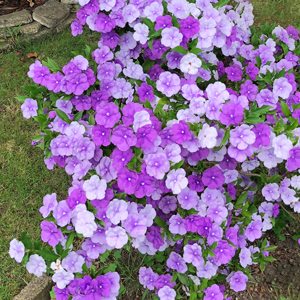
The Yesterday, Today and Tomorrow Plant.

Brunfelsia latifolia, often known as the Yesterday, Today and Tomorrow plant, is a compact evergreen shrub grown for its floriferous display and sweet fragrance. The flowers open purple, fade to mauve and then to white over several days, so the shrub carries three colours at once in full bloom. This unique flowering habit gives rise to its common name, Yesterday, Today & Tomorrow.
At a Glance
- Botanical name: Brunfelsia latifolia
- Common names: Yesterday, Today & Tomorrow, Kiss Me Quick
- Plant type: Evergreen flowering shrub
- Mature size: 1.5–2 metres high and wide
- Flowers: Purple flowers that fade to lilac, then white
- Fragrance: Sweet and noticeable, especially during flowering
- Growth rate: Slow to moderate

Description and Landscape Uses
This is a small, rounded shrub with mid‑green foliage and masses of flowers produced from late spring into the warmer months. It works well near paths or seating areas where the perfume can be appreciated, and in protected courtyards or subtropical gardens.
Brunfelsia latifolia suits mixed shrub borders, feature containers and warm coastal gardens where frosts are rare. It can also be grown as a patio specimen in a large pot that is moved to shelter over winter in cooler zones.
Growing Conditions and Care
You can grow Brunfelsia latifolia from the far north of Queensland to as far south as Melbourne. In cooler climates you will need to find a warm protected position.
This is a shrub from Central America, so the need for warmth is understood. However in suburban Melbourne you will find many good examples of this small shrub. It thrives in Sydney and further north.
Light and Position
Plant in a warm, protected position in full sun to light, filtered shade, avoiding heavy frost pockets. In very hot climates, some afternoon shade helps prevent leaf scorch and keeps the shrub looking fresh.
Soil and Water
Brunfelsia latifolia prefers a humus‑rich, moist but well‑drained soil. Work in compost or well‑rotted manure before planting, and mulch to help maintain even moisture through the warmer months.
Water regularly during dry periods, especially in the first couple of years and while the plant is forming buds. Allow the top of the soil to dry slightly between waterings, as constantly sodden conditions can lead to root problems.
Fertiliser
Feed in spring with a balanced, slow‑release fertiliser suited to flowering shrubs to promote strong growth and abundant blooms. A light top‑up after the main flush of flowers can help extend the display.
Pruning and Maintenance
Lightly prune after flowering to maintain a neat, bushy habit and to encourage new growth for next season’s blooms. Remove any dead, weak or crossing branches to open up the centre of the plant and improve air circulation.
Older plants that have become leggy can be rejuvenated by cutting back more firmly, but leave some foliage on each stem to help the shrub recover well. Always follow with a light feed and water to support regrowth.
Growing in Pots
Brunfelsia latifolia makes an attractive container plant for patios and small gardens. Use a high‑quality potting mix, choose a pot with good drainage, and raise it slightly off the ground to help water flow freely.
Keep potted plants consistently moist but not waterlogged, and feed with a controlled‑release fertiliser or a liquid feed during the growing season. In cooler areas, place containers in a warm, sheltered position and protect from frost.
Common Problems and Solutions
- Lack of flowers: Often due to insufficient light, poor nutrition or pruning at the wrong time; ensure good sun, feed in spring and prune after flowering, not before.
- Yellowing foliage: Can be linked to poor drainage, inconsistent watering or nutrient imbalance; improve drainage, adjust watering and consider a suitable fertiliser.
In marginal climates, plants may be damaged by cold snaps and frosts, so choose a sheltered microclimate or grow in containers that can be moved under cover when needed.
Features
Colour-Changing Flowers
- Flowers open deep purple
- Fade to pale lilac after one day
- Turn white as they age
- Multiple colours appear on the plant at the same time

Long Flowering Period
- Main flowering from spring to summer
- May flower sporadically year-round in warm climates
Versatile Garden Use
- Feature or specimen shrub
- Informal hedge or screening plant
- Garden borders
- Large pots and containers
Important Considerations
- All parts of the plant are toxic if ingested
- Keep away from pets and children
- Yellowing leaves may indicate cold stress or nutrient deficiency
Best Uses in the Garden
- Feature shrub in garden beds
- Fragrant patio or courtyard plant
- Informal hedge or screening
- Cottage, tropical and subtropical garden designs
Brunfelsia latifolia Quick Reference Guide
- Botanical Name – Brunfelsia latifolia
- Common Names – Yesterday, Today and Tomorrow, Kiss Me Quick.
- Height – To around 1 – 2 metres in height.
- Spread – To around 1m across.
- Growth Rate – Slow
- Soil – Humus rich, well drained and moist.
- Position – Full sun to a little afternoon shade.
- Flowers – Purple fading to a lilac blue and then white.
- Flowering period – Late Spring to Summer
- Frost tolerant – No
More Small Flowering Hedges and Fragrant Plants


