
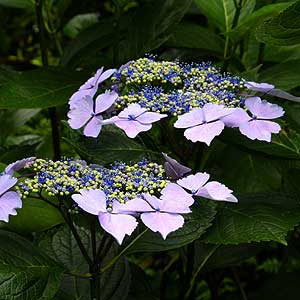
Hydrangea macrophylla is probably the most widely grown of all hydrangea species. Native to Japan and parts of China, it has become a garden favourite around the world thanks to its large colourful flower heads, long flowering season and ability to thrive in partly shaded positions.
Flowering from spring through summer, Hydrangea macrophylla provides months of colour in the garden. Depending on the variety and the soil conditions, flowers can be white, pink, mauve, purple or blue.
One of the most interesting characteristics of this species is its ability to change flower colour according to soil pH.
Hydrangea macrophylla includes two distinct groups, the Mophead Hydrangeas and the Lacecap Hydrangeas. Both are excellent garden plants and are equally at home in cottage gardens, woodland plantings and mixed borders.
Mophead and Lacecap Hydrangeas
The Mophead Hydrangea is the form most gardeners are familiar with. It produces large rounded flower heads packed with showy sterile florets that create a bold display throughout summer.
The Lacecap Hydrangea, botanical name Hydrangea macrophylla ‘Normalis’, has a flatter flower head made up of fertile flowers surrounded by a ring of larger decorative florets. Often overlooked in favour of the mophead forms, lacecaps have a more delicate and natural appearance and make excellent border plants.
Flower Colour and Soil pH
One of the reasons Hydrangea macrophylla remains so popular is its ability to change flower colour.
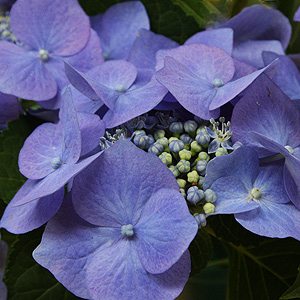
In acidic soils with a pH of around 5.5 or below, flowers tend to develop blue tones. In alkaline soils with a pH above 7, flowers are generally pink. White flowering varieties are usually unaffected by soil pH and remain white.
To encourage blue flowers:
- Lower soil pH
- Apply aluminium sulphate
- Avoid adding lime.
To encourage pink flowers:
- Raise soil pH with garden lime
- Avoid aluminium sulphate
Changes in flower colour are not instant and may take a season or two to become fully apparent.
Growing Hydrangea macrophylla
Hydrangea macrophylla is relatively easy to grow provided it receives adequate moisture and protection from extreme heat.
Climate
Hydrangeas perform best in cool temperate and coastal climates where summers are not excessively hot and dry. They can be grown successfully in warmer regions provided they receive some protection from afternoon sun.
Position
Choose a position with morning sun and afternoon shade. In cooler climates plants can tolerate more direct sunlight, while in warmer regions some shade during the hottest part of the day will help prevent leaf scorch.
Soil
Hydrangeas prefer fertile, moisture-retentive soils enriched with compost and organic matter. The soil should be well drained but should not be allowed to dry out completely.
Watering
Hydrangeas are thirsty plants and require regular watering during dry periods. Deep watering once or twice a week is generally more beneficial than frequent shallow watering.
Applying mulch around the base of the plant will help retain moisture and keep the root system cool.
Fertiliser
Feed plants in late winter or early spring using a balanced slow-release fertiliser. Well-rotted compost and aged manure can also be used to improve soil structure and provide nutrients.
Avoid overfeeding with high-nitrogen fertilisers as these may encourage leafy growth at the expense of flowers.
Growing Hydrangeas in Pots
Hydrangea macrophylla grows very well in containers and is an excellent choice for patios, courtyards and shaded balconies.
Use a large container with good drainage and fill it with a premium quality potting mix. Container-grown plants will require more frequent watering than those planted in the garden.
Compact cultivars such as Hydrangea macrophylla ‘Pia’ are particularly suited to container growing, although larger varieties can also be grown successfully with regular pruning.
Repot every few years to refresh the potting mix and maintain healthy growth.
Hydrangea macrophylla Care
Although not difficult to care for, Hydrangea macrophylla does benefit from regular maintenance.
Remove spent flower heads to keep plants tidy and inspect stems for signs of disease or damage. Mulching each spring helps conserve moisture, suppress weeds and improve soil quality.
Older stems can be gradually removed to encourage vigorous new growth and maintain an open framework.
Left unpruned, plants may reach around 3 metres in height, however most gardeners maintain them at around 1 to 1.5 metres.
Pruning Hydrangea macrophylla
Pruning Hydrangea macrophylla can be a little trickier than pruning some other hydrangea species.
Most traditional varieties flower on old wood, meaning that flower buds are produced during the previous growing season. Heavy pruning at the wrong time can remove the buds that would otherwise produce next season’s flowers.
For established plants:
- Remove spent flower heads by cutting back to a strong pair of buds.
- Remove any dead, damaged or diseased stems.
- Remove up to one quarter of the oldest stems each year to encourage new growth.
- Avoid cutting healthy stems back hard unless rejuvenation is required.
Many modern cultivars differ in that they flower on both old and new wood, making them more forgiving if pruning is carried out incorrectly.
Hydrangea macrophylla Through the Seasons
Spring
Fresh growth emerges and flower buds begin to develop. Apply fertiliser and top up mulch around the base of the plant.
Summer
Plants are at their flowering peak. Regular watering is important during hot weather, especially for container-grown specimens.
Autumn
Flowers gradually fade and often take on attractive antique tones. Many gardeners leave the flower heads on the plant for added seasonal interest.
Winter
In cooler climates plants become dormant and lose their leaves. This is
Hydrangea macrophylla varieties and colours
With flower colours ranging from white to pink, near red, blue and lilac depending on the variety and the soil, we look at a few varieties by predominant color.
Red Flowering Hydrangea macrophylla
- H.macrophylla ‘Altona’
- H.macrophylla ‘Hamburg’
- H.macrophylla ‘Harry’s Red’
- H.macrophylla ‘Red Star’
- H.macrophylla ‘Miss Belgium’
- H.macrophylla ‘Mamam’
White Flowering Hydrangea macrophylla
- H.macrophylla ‘Agnes’
- H.macrophylla ‘Imaculata’
- H.macrophylla ‘Madam Emile Mouilere’
- H.macrophylla ‘Libelle’
Blue Flowering Hydrangea macrophylla
- H.macrophylla ‘Blaumeise’
- H.macrophylla ‘E.G.Hill’
- H.macrophylla ‘Parzifal’
- H.macrophylla ‘Renata Steiniger’
Best Companion Plants for Hydrangeas
Hydrangeas combine beautifully with other shade-loving plants.
Good companion plants include:
- Hostas
- Hellebores
- Clivia
- Ferns
- Heuchera
- Camellias
- Azaleas
- Japanese Forest Grass
These plants enjoy similar growing conditions and help create a lush woodland or cottage garden effect.
Hydrangea macrophylla vs Hydrangea paniculata
Gardeners often compare Hydrangea macrophylla with Hydrangea paniculata. While both are popular garden shrubs, they have different growing habits and requirements.
For hotter inland areas, Hydrangea paniculata is often the more heat-tolerant choice, while Hydrangea macrophylla excels in cooler and coastal gardens.
You may also like
- Hydrangea paniculata
- Hydrangea petiolaris
- Hydrangea quercifolia
- Hydrangea semanii
- Schizophragma hydrangoides
- Hydrangea macrophylla ‘Kirsten’
- Hydrangea macrophylla ‘Ayesha’
- Pruning Hydrangeas
- Hydrangea plants for sale
- Plants for Shade
- Cottage Garden Plants