

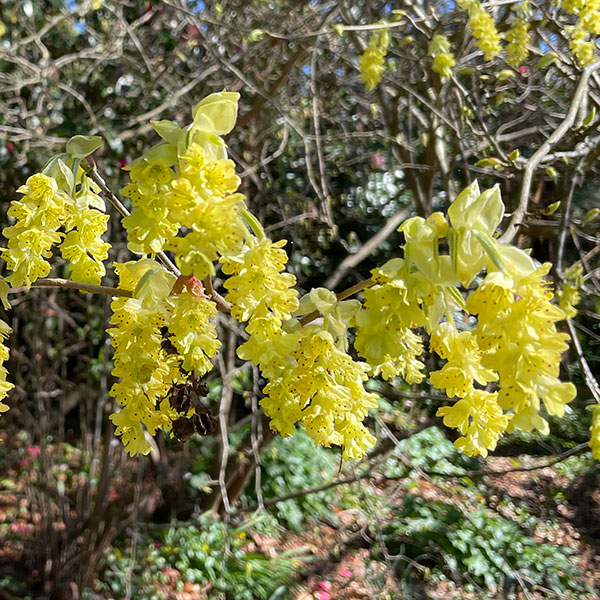
Corylopsis sinensis, commonly known as Chinese Winter Hazel, is a graceful deciduous shrub or small tree admired for its buttery-yellow catkins that bloom in late winter. Native to northern China, this elegant plant brings early seasonal colour to the garden and features a soft, layered form with arching branches and delicate foliage.
With a mature height of 3 to 4 metres, Corylopsis sinensis is perfect for smaller gardens or as a feature in shady borders. Its slightly fragrant flowers, vibrant autumn foliage, and low-maintenance nature make it a must-have for cool-climate gardeners.
Growing Conditions & Care
- Light: Best grown in full sun to part shade, especially with protection from hot afternoon sun in warmer regions.
- Soil: Prefers humus-rich, well-drained soil with consistent moisture.
- Watering: Keep well-watered during dry spells, especially in the first few years.
- Feeding: Apply a liquid seaweed fertiliser when planting, and mulch to maintain soil moisture.
Pruning Corylopsis sinensis
Over time the plant will form long arching canes. You can remove some of the lower canes to open up around the plant and perhaps plant some bulbs.
- Older canes can also be removed after a few years to promote new growth.
- The best time to prune is immediately after flowering.
This is a tree that is native to northern China, it will form multiple trunks over time, flowers are slightly fragrant and for masses of colour in late winter it makes an excellent small tree.
Best Uses in the Garden
- Winter Interest: Offers a burst of colour and fragrance in the late winter garden.
- Woodland Gardens: Thrives in dappled light and pairs beautifully with shade-loving plants.
- Feature Tree: Works well as a small specimen tree in lawns or garden beds.
- Understory Planting: Ideal beneath larger deciduous trees.
- Mixed Shrub Borders: Provides texture and colour from winter through autumn.
5 Reasons to Grow Corylopsis sinensis
1. Spectacular Late Winter Flowers
Long, pendulous clusters of buttery-yellow flowers appear before the leaves in late winter, brightening the garden when few other plants bloom.
2. Attractive Autumn Foliage
In autumn, the toothed green leaves turn soft shades of yellow, providing seasonal transition and colour.
3. Graceful, Multi-Stemmed Form
Over time, it develops a multi-trunked, arching shape that brings softness and movement to the garden.
4. Low Maintenance and Frost Tolerant
Once established, it’s easy to care for, requiring little beyond occasional pruning and is frost-hardy in temperate climates.
5. Pollinator-Friendly
Its lightly scented flowers attract early-season pollinators, supporting biodiversity in your garden.
Frost tolerant and easy care.
Planting Themes – What to Plant With
Corylopsis sinensis works well in cool climate and woodland planting themes. Complementary companion plants include:
- Helleborus orientalis – Adds winter colour and pairs well with Corylopsis’s soft form.
- Epimedium spp. – Ground cover with delicate foliage and spring blooms.
- Ferns – Provide lush texture beneath the arching branches.
- Camellia sasanqua – For extended flowering into winter.
- Galanthus (Snowdrops) and Eranthis (Winter Aconite) – Early bulbs that bloom under its canopy.
Together, these combinations create a serene, naturalistic garden with interest from winter into spring.
We are Asked?
When does Corylopsis sinensis bloom?
It flowers in late winter, typically before the leaves emerge. The blooms are yellow, lightly fragrant, and catkin-like.
How tall does Chinese Winter Hazel grow?
It typically reaches 3 to 4 metres in height and forms a multi-trunked shrub or small tree.
Is it drought tolerant?
While tolerant of some dry periods once established, it prefers consistent moisture, especially in warmer months.
Can I prune it to keep it small?
Yes, prune after flowering to shape and reduce size. Removing older canes every few years encourages new growth and a tidy habit


Available for sale from the following Nurseries

412 James Lane, Fern Hill VIC. 3458 - Phone 0419002651
Large range of Rare plants, Climbers, Bulbs, Perennials Fruit Trees, Ornamental Trees and Shrubs. Available both Retail and by Mail Order
www.whitehousenursery.com.au