
Jelly Bean Plant
Commonly known as the Jelly Bean Plant, Sedum rubrotinctum is a small, low-growing succulent valued for its colourful, rounded foliage.
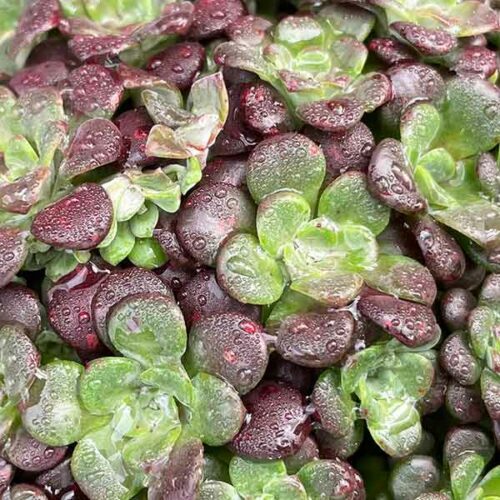
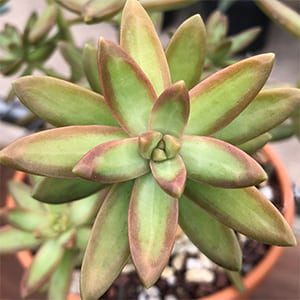
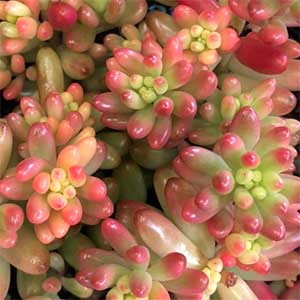
The leaves resemble jelly beans, with colour varying depending on the amount of sunlight.
This is a very easy-care plant and a popular choice for both beginners and experienced gardeners.
Key Features
- Distinctive “jelly bean” shaped foliage
- Colour changes with sun exposure
- Low-growing and spreading habit
- Drought tolerant and easy care
- Suitable for containers and garden beds
Growth Habit and Size
Sedum rubrotinctum is a compact, spreading succulent.
- Height: Around 20cm
- Spread: Around 35cm or more over time
- Growth habit: Low, clumping and slightly trailing
It works well as a ground cover or as a trailing plant in containers.
Flowers and Foliage
The foliage is the main feature, with seasonal colour changes adding interest.
- Foliage: Rounded, “jelly bean” shaped leaves
- Colour: Green in cooler months, developing red tips in sun and warmth
- Seasonal change: Red tones intensify in summer and fade back to green in winter
- Flowers: Small, bright yellow blooms
- Flowering time: Autumn
Good sunlight is essential for strong colour development.
Growing Conditions
This is a tough and adaptable succulent.
- Position: Full sun for best colour, tolerates part shade
- Soil: Well-drained soil is essential
- Watering: Low once established
- Climate: Prefers warm, frost-free conditions
Adding perlite to standard potting mix can help improve drainage.
Growing in Containers
Sedum rubrotinctum performs very well in pots and containers.
- Use a cactus or succulent potting mix
- Ensure containers have good drainage
- Allow soil to dry between watering
- Position in full sun for best foliage colour
It is also well suited to hanging baskets where stems can trail over the edges.
How to Use Sedum rubrotinctum in Rock Gardens
This plant is ideal for rock gardens due to its compact size and tolerance for dry conditions.
Plant it in well-drained areas between rocks or along edges. Its bright foliage adds contrast and colour, especially in sunny positions.
It can also be used to fill gaps and create a soft, natural look in gravel or stone landscapes.
Best Companion Plants for Sedum rubrotinctum
Sedum rubrotinctum pairs well with other drought-tolerant plants.
Good companions include:
- Other succulents and Sedum Plants for varied colour and form
- Blue or silver foliage plants for contrast
- Upright succulents to balance its low growth
- Small ground covers for layered planting
Mixing colours and textures helps create a more interesting display.
Landscaping Uses
This is a versatile plant for a range of applications.
- As a ground cover in sunny areas
- In rock gardens and gravel beds
- In containers and hanging baskets
- For underplanting taller succulents
Its low height makes it useful in small spaces and detailed plantings.
Care and Maintenance
Sedum rubrotinctum is very easy to care for.
- Use a free-draining potting mix
- Water sparingly
- Apply a light liquid fertiliser once a year
- Avoid over-fertilising to prevent weak growth
Minimal maintenance is required once established.
Propagation
Propagation is simple and highly successful.
- Use leaf cuttings, which root easily
- Place leaves onto soil and allow them to establish
- Can also be propagated from stem cuttings
This makes it easy to multiply plants quickly.
Varieties
A few variations are available, mainly differing in foliage colour.
- ‘Aurora’ (Pink Jelly Beans): Leaves tend toward pink tones rather than red
- Other forms vary in how intense the red colouring becomes in summer
Common Problems
Generally trouble-free, but watch for:
- Loss of colour in low light
- Rot from poor drainage or overwatering
- Leggy growth in too much shade
Providing good light and drainage will prevent most issues.
Summary
- Botanical Name: Sedum rubrotinctum
- Common Name: Jelly Bean Plant
- Height: Around 20cm
- Spread: Around 35cm+
- Position: Full sun to part shade
- Soil: Well-drained
- Foliage: Green with red tips in sun
- Flowers: Yellow
- Flowering: Autumn
- Frost tolerant: No
- Drought tolerant: Yes
More Sedum Varieties