
Agave species are originally from North America, the Southern states of USA and Mexico. They make excellent specimen plants and species such as Agave havardiana, can be planted with other succulents and cactus such as Ferocactus pilosus

All Agave species are monocarpic, they flower once in their lifetime and then die, however they do set seed and even put out offshoots to form clumps, so in fact propagation and ongoing display of foliage is not a problem. Agave monacanthus is an interesting species, pictured right.
Other popular species including, Decipiens, Desmettiana, Diffusa, Obscura and Xylonacantha which are all widely used in landscaping where low maintenance and drought tolerant plants are required.

- Growing conditions for Agave Plants – Basic care.
- Growing Agave Plants in Pots
- Popular Agave Species for landscaping
- Agave Species For Landscaping
- Where To Buy Agave Species
- Can you Grow Agave Plants Indoors
- Propagation of Stem Forming Agave Species
- What about water propagation?
- Propagation by division
- What about Agave species that do not set pups and do not have stems?
Growing conditions for Agave Plants – Basic care.
Agave like most succulents are sun loving, and are generally regarded as drought tolerant. Like yuccas, agaves require very little maintenance. Removal of spent flower heads, occasional watering and fertilizer application every month or two will keep your agave in good condition.
A well drained soil and full sun best suits agave, and a feed of slow release fertilizer four time a year is beneficial to growth.
Agave are suitable for growing in containers or pots, especially the smaller species. And yes agaves can be a little weedy at times, but easy to control.
Growing Agave Plants in Pots
Although Agave are a hardy plant and in the ground are reasonably drought tolerant, Agaves are a hungry plant especially the larger species and cultivars. They can quickly become pot bound, they can be root pruned, but are better potted up as they exhaust the potting mix and fill the pot with roots. This is why they will also need watering during dry spells.
So be a little careful with varieties, species and types. Look for factual information on plant tags. For example, Agave americana var. americana is a larger growing species while Agave americana ‘Medio-picta’ is much smaller. Agave parviflora is one of the smallest species while Agave gentryi is one of the largest.
Popular Agave Species for landscaping
Agave are popular with landscapers for the strong structural elements that many species bring. They suit the modern courtyard look, with strong structural lines, they can look great in terra cotta style pots.
In many areas of Australia Agaves will provide excellent architectural foliage all year round, however in colder climates they can suffer a little in winter.
Agave are widely used in both containers and in the ground. In container as a single specimen Agave have naturally strong sculptural shapes and work well in modern courtyards as commercial landscaping.
Also popular in home gardens where the low maintenance aspect of these plants fits in well with busy modern lifestyles.
Foliage varies from blue greens through to strong variegated types.
Agave Species For Landscaping
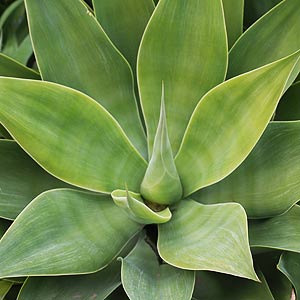

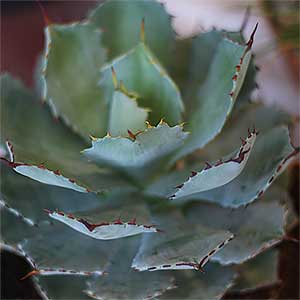

Size also varies from diminutive species to large dramatic plants.
- A. attenuata – Good tight pale to mid green rosettes of foliage. One of the most popular species, also known as the foxtail agave.
- A. franzosini ‘Grey Ghost’ (pictured right) – This is an outstanding large growing, if rare specimen.
- A. medio picta alba – Good variegated foliage, an excellent plant to add contrast to the landscaping scheme.
- A. stricta – Smaller growing with fine foliage. Tends to form a neat ball shape.
- A. americana – Large growing with fairly upright foliage. Blue green in colour and an excellent feature plant.
Large specimen plants are available to provide instant impact. Many species are well suited to growing in containers. These are a low maintenance, easy care plant.
Lots of new named cultivars are also available, however the species are attractive and will suit most situations.
Agaves will flower, usually in winter, and flowers vary from rather insipid types to colorful large flower spikes that rise high above the foliage.
Where To Buy Agave Species
With over 200 agave species including variegated forms the choice is wide. Advanced specimen plants are available as are smaller plants, offsets and tubestock.

Phone: 0411 435 314
Online Retailer of Landscaping Plants, large quantities of small pot sizes up to advanced sizes & plant Sourcing.
SYDNEY | NORTHERN NSW | GOLD COAST | BRISBANE | MELBOURNE | ADELAIDE
www.egardens.com.au

601 Sunnyholt Road Parklea NSW 2768
Parklea Pots and Plants are affordable, open 7 days and have everything you need for your garden - of any size!. Pots, plants, water features, fruit trees, hedging, potting mix and more.
Opening hours 7 days a week from 8:30am to 5pm
www.potsandplants.com.au

125 Palmer Rd Jindivick 3818
Open Thursday - Sunday 10am - 4pm
Specialising in growing and selling Rare and Unusual Trees, shrubs Perennials Bulbs and Climbers, a unique nursery with amazing stock.
www.muskersbroughtonhall.com.au

52 Rodd St Canowindra NSW 2804
An online nursery specialising in drought and frost tolerant perennials and fragrant, edible and herbs.
www.perennialle.com.au

470 Monbulk-Silvan Road Monbulk VIC 3793
"Guaranteed mail order flowering bulbs, perennials, roses, trees, landscaping plants, garden accessories and community fundraising Austra lia-wide."
www.gardenexpress.com.au
Wholesale

111 Stanhope Road Theresa Park NSW 2570
Offering a variety of sun hardy Australian natives and exotic trees, shrubs, groundcover's and perennials from semi advanced through to super advanced and semi-mature stock.
www.downesnursery.com.au

email [email protected]
One of Australia's largest wholesale trade nurseries. Over 30,000 species available, tubestock to advanced trees, an almost unlimited choice of plants.
www.plantmark.com.au
Can you Grow Agave Plants Indoors
Agaves can be gown indoors if you follow a few basic rules. Basically agaves are a a dry climate plant used to growing in hot conditions, lots of light and little water. Growing indoors can easily meet the hot and dry conditions it is the light that is the main problem.
When we try to grow these wonderful succulents indoors it is usually a lack of light and poor air circulation that cause the problems. The other issue is a tendency to over water.
So look for a position with lots of light, make sure you use a free draining potting mix , but do remember to allow to almost dry out between watering, usually no more than water once a week in a warm house. Fertilizer is generally not required, and in fact is usually avoided, except for a 1/2 application as they commence new growth.
YOU MAY ALSO BE INTERESTED IN
Aloe
Drought tolerant plants
Succulents
Propagation of Stem Forming Agave Species
Some Agave species notably Agave attenuata can be propagated both by cuttings and by division/removal of pups or offsets.
Agave cuttings are best taken in spring as the plant comes into active growth. You can take cuttings at other times of the year in warmer climates if needed.
Step-by-step:
- Remove all of the dead lower leaves.
- Remove badly damaged lower leaves by pulling gently down and then across.
- The trunk should be cut at around 4 inches below the lowest leaves.
- The cutting then needs to be left to callus over (the wound needs to be dry before planting. We leave it for 2 days in a cool shaded position, protected from rain.
- The cut should now be dry.
- Use a cactus and succulent potting mix and a pot with good drainage holes.
- The pot should be about the same diameter as the rosette of the cutting.
- The planting hole needs to be the same diameter as the stem or trunk of the cutting.
- The lowest leaves need to be just above the level of the potting mix.
- Firm the cutting in.
- A layer of gravel/pumice/akadama on top of the soil will help keep the lower leaves dry
- Hold off watering for 4 weeks.
- After this water and fertilise as you normally would.
The stem that is left after taking cuttings will reshoot often with multiple heads, these can be removed and replanted the same way once they reach a good size.
Other Stem-Forming Agave Species
- Agave angustifolia (Caribbean Agave): Short to medium-sized stems, often less than 0.5 meters high, but they are clearly visible and elevated.
- Agave decipiens (Florida Agave): Usually grows a tall, clear trunk that can exceed 0.5 meters.
- Agave vilmoriniana (Octopus Agave): This species can develop a noticeable trunk, particularly as it develops a leaning, trailing habit. However not always
What about water propagation?
Yes you can root agave cuttings in water, HOWEVER the roots produced in water are usually not as strong as those produced in soil and are also more subject to rot.
The other drawback is you still need to plant them into soil eventually so double handling. Commercial growers all use the soil method.
Propagation by division
Many agave species can also be propagated by division which is the removal of offsets or ‘pups’ or from seed. Removing the offsets is easy, just remember to retain the small stem that connected the offset to the main plant, this is the part that will have some roots and will send out new roots.
The offsets ( with roots )should be planted immediately into good potting mix and fertilised with a liquid fertiliser.
What about Agave species that do not set pups and do not have stems?
Some agave species do not form pups /offsets and also do not have stems. These species can by propagated by collecting bulbils (plantlets) from the flower stalk
And of course we have seed propagation and ALL Agave species can be propagated from seed. This is the slowest method of propagation and is not widely used.
With over 350 agave species originating in Mexico and Southern USA you can find an agave for any situation. Agaves will flower, and they have great flowers, but be patient, agaves may take 10 or more years to flower.