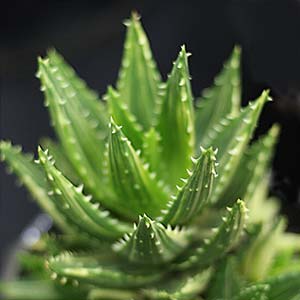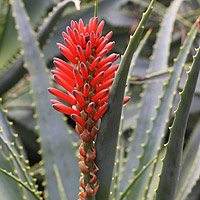

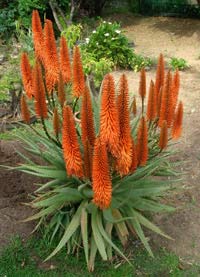
Aloe plants are a diverse and hardy group of succulents prized for their architectural foliage brilliant flowers, and in some cases, medicinal properties. Whether you’re looking for a statement plant for your garden or a functional addition to your patio, learning how to grow aloe plants correctly is key to success.
While Aloe Vera is the most well-known variety, there are over 400 species of aloe – many of which offer superior landscaping appeal, striking flower displays, and easy-care requirements.
With many modern hybrids available for sale, these wonderful garden plants are used in landscaping for their foliage as well as the rather spectacular flowers.
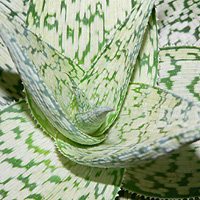
Popular Aloe Plant Varieties
Species range from small, low-growing ground covers to tall, tree-like specimens, making them suitable for a variety of garden styles and container settings.
- A. vera – Known as the “medicine plant”, widely used for skin treatments.
- A. ferox – A tree aloe, reaching up to 5 metres in height.
- A. arborescens – Spreads up to 2m, with **long-lasting orange flowers** in winter.
- A. aristata – A compact variety, perfect for pots (grows to about 20cm).
- A. peacockii – Stunning triangular leaves with green and white speckling.
- A. cameronii – Also known as Cameron’s Aloe, with copper-toned foliage and vibrant red-orange blooms.
- A. mitriformis – A trailing species, ideal for hanging pots or vertical gardens.
- A. juvenna – A compact, spiky-leafed aloe, although less commonly available.
- A. tarrington – Perfect for container gardening.
- A. ‘Eager Beaver’ – A hardy hybrid with spectacular flowering habits.
- A. ‘Venus’ – Newer release, striking red and white flowers.
How to Grow Aloe Plants: Essential Care Guide
Whether in pots or garden beds, growing aloe plants is simple when you provide the right conditions. Here’s everything you need to know:
Soil
All species plants require free-draining, sandy or gritty soil. Avoid heavy clay soils, which can lead to root rot.
Best practice: Use a commercial cactus or succulent mix , or make your own by mixing:
- 1 part potting mix
- 1 part coarse sand or pumice
- Optional: Add perlite for extra drainage
Sunlight
All thrive in full sun, though they can tolerate partial shade especially in very hot or dry climates.
Indoors: Place near a bright, sunny window.
Outdoors: Choose a north-facing position (in the Southern Hemisphere) or south-facing (in the Northern Hemisphere).
Watering
These are drought-tolerant succulents, but still need watering during the growing season (spring to early autumn).
Watering tips:
- Water deeply but infrequently.
- Allow soil to dry completely* between waterings.
- In winter, reduce watering drastically.
- Avoid overwatering, which is the most common cause of failure.
Fertiliser
These are plants don’t need much feeding, but occasional fertiliser boosts growth and flowering.
Fertiliser schedule:
- Feed in spring and summer with a balanced, diluted liquid fertiliser*.
- Avoid high-nitrogen fertilisers; they promote leafy growth at the expense of flowers.
Pruning
Minimal pruning is needed. However, you should:
- Remove dead or damaged leaves at the base.
- Cut back spent flower stalks after blooming.
- Remove offsets (pups) to encourage airflow and new plant growth.
Climate Zones
All varieties are plants that grow best in warm, frost-free climates, but can be grown indoors or in containers in cooler areas.
Australia
- Best suited to climate zones 8–11 (tropical, subtropical, arid).
- In cooler regions like Victoria or Tasmania, grow in pots and move indoors in winter.
United Kingdom
- Grow indoors year-round unless in Cornwall or coastal south.
- Place outdoors in summer but bring inside before frost (Zone 9+).
United States
- USDA zones 9–11: Grow outdoors year-round (e.g., California, Florida, Texas).
- In colder zones: Grow in pots, bring indoors for winter.
Aloe Plants in Landscaping
Aloe plants are perfect for low-maintenance landscaping:
- Mass plantings of low-growing varieties create ground cover.
- Tall species provide vertical interest and focal points.
- Trailing types like Aloe distans suit vertical gardens or hanging baskets.
- Excellent for commercial gardens due to low water needs and minimal upkeep.
- Attract pollinators and birds with their vibrant flowers.
Pests, Problems, and Diseases
While generally hardy, aloe plants can suffer from a few issues:
Common Pests
- Aphids – Especially on flower spikes.
- Mealybugs – White cotton-like clusters near leaf bases.
- Spider mites– Fine webbing and leaf spotting.
Solution: Use neem oil or insecticidal soap. Isolate affected plants.
Common Problems
- Leggy growth / long stems – Caused by low light or age. Re-rooting the top section is an easy fix.
- Yellowing leaves – Usually a sign of overwatering** or poor drainage.
- Soft, mushy stems – A sign of root rot.
Diseases
- Root rot – Caused by waterlogged soil.
- Leaf spots or mildew – Fungal diseases in high humidity. Improve air circulation and reduce watering.
Where To Buy Aloe Plants

Phone: 0411 435 314
Online Retailer of Landscaping Plants, large quantities of small pot sizes up to advanced sizes & plant Sourcing.
SYDNEY | NORTHERN NSW | GOLD COAST | BRISBANE | MELBOURNE | ADELAIDE
www.egardens.com.au

470 Monbulk-Silvan Road Monbulk VIC 3793
"Guaranteed mail order flowering bulbs, perennials, roses, trees, landscaping plants, garden accessories and community fundraising Austra lia-wide."
www.gardenexpress.com.au

125 Palmer Rd Jindivick 3818
Open Thursday - Sunday 10am - 4pm
Specialising in growing and selling Rare and Unusual Trees, shrubs Perennials Bulbs and Climbers, a unique nursery with amazing stock.
www.muskersbroughtonhall.com.au

111 Stanhope Road Theresa Park NSW 2570
Offering a variety of sun hardy Australian natives and exotic trees, shrubs, groundcover's and perennials from semi advanced through to super advanced and semi-mature stock.
www.downesnursery.com.au

email [email protected]
One of Australia's largest wholesale trade nurseries. Over 30,000 species available, tubestock to advanced trees, an almost unlimited choice of plants.
www.plantmark.com.au