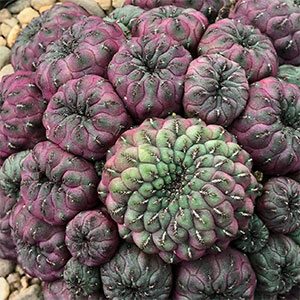

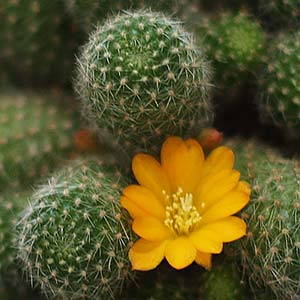
A group of very colourful and small growing cacti, Rebutia are also very popular and commonly called the Crown Cactus. They flower easily and grow very well in containers.
These are a group of succulents, and they do come from South America, however as they are mainly found in the foothills, they grow well in cooler temperate climates.
How To Grow Rebutia – Basic Care
As with most succulents the important factors are light, watering and drainage.
- Light :
Rebutia are best grown in strong filtered light or good morning light with part afternoon shade especially in warmer climates. - Watering :
These are plants that naturally grow on hillsides and rock faces, drainage need to be excellent and watering controlled. In winter, watering is kept to minimum, when the plants are in active growth, water well and then let the growing medium almost dry out before watering again. A simple test for moisture is to stick your finger down into the growing medium. - Soil or Growing Medium :
A specialist cactus and succulent potting mix is best. You can use a normal potting soil with some gravel mixed through, or maybe some perlite. Always ensure that the drainage is fast. - Fertiliser :
Only light amounts of fertiliser are needed. If you repot every 2 – 3 years as recommended, then no extras fertiliser will be needed. - Repotting :
These are a plant that will form a clump in 2 – 3 years and need to be repotted to prevent overcrowding. This is also a time to divide the plants.
Use a pot that is not to large, remove the old potting soil and repot and new cactus and succulent mix.
Suggested Potting Mix
A fast-draining mix is essential for Rebutia, especially in Australian climates where sudden rain events can waterlog pots.
Recommended potting mix recipe:
- 40% coarse sand or washed river sand
- 30% premium cactus & succulent mix
- 20% pumice or perlite
- 10% fine orchid bark (adds structure and airflow)
Optional additions:
- A handful of crushed granite or scoria for improved drainage
- A light sprinkle of dolomite lime if your mix is very acidic
Best Types Of Pots
Rebutia prefer containers that dry out quickly.
Best pot types:
- Unglazed terracotta (ideal: breathability, prevents rot)
- Shallow, wide bowls — great for clumping species
- Pots with multiple drainage holes
Avoid deep, narrow pots, which stay wet too long at the base.
Propagation
The easiest way to propagate Rebutia is by division or removal of offsets. The best time to do this is in spring.
As with most succulents, you do need to allow any cut area to callus over before potting up. This helps prevent root rot and fungal problems.
Common Problems & Troubleshooting
1. Overwatering (The Most Common Rebutia Issue)
Symptoms:
- Yellowing from the base
- Soft or translucent tissue
- Black mushy roots
Fix:
- Unpot immediately
- Remove rotten roots
- Allow to dry for 3–5 days
- Repot into completely dry mix
2. Sunburn
Symptoms:
Brown or white patches on the exposed side.
Fix:
Move to bright indirect light; gradually reintroduce morning sun.
3. Failure to Flower
Causes:
- Too much water in winter
- Not enough sun
- Too much nitrogen fertiliser
Fix:
Provide cooler winter dormancy and brighter light during spring.
4. Pests
Mealybugs (root & body), scale, and spider mites are the main issues.
Treatment:
- Use isopropyl alcohol for spot treatment
- Repot if root mealies are found
- Improve airflow and reduce nitrogen feeding
Rebutia Varieties.

Common names foe different species include Crown Cacti, Fire Crowns, Little Mice, or Snowball Cacti. Along with named cultivars such as Rebutia ‘Pink champagne’ a number of species are popular with collectors.
- R. fabrisii – Orange red or yellow flowers depending on variety.
- R. miniscula – Attractive mid pink flowers.
- R. fiebrigii – Orange flowering commonly called “Orange Crown Cactus” or “Flame Crown”
- R. krainziana – Deeper green coloured stem or body than most, sometimes called the “Krainz’ Crown Cactus”.
- R.musclula – Low growing, clump forming with orange flowers. Commonly called “White-haired Crown” or “Little Mouse”
- R.albiflora – Very attractive with white flowers as the name suggests.
- R.marsoneri – Small growing usually with yellow flowers. Commonly called “Marsoner’s Crown Cactus”
Companion Plants
Here are some companion plants for Rebutia, chosen because they prefer similar conditions (bright light, good airflow, fast-draining soil, cool-dry winters) and complement Rebutia’s compact, colourful form: