
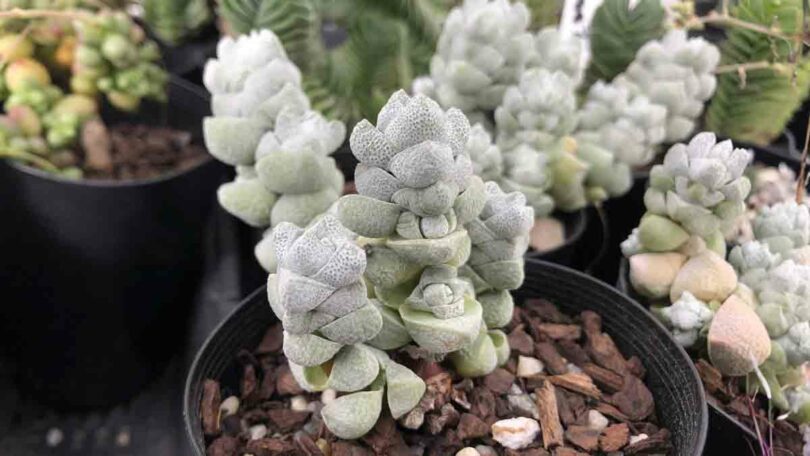
Crassula deceptor is a captivating succulent native to the arid regions of South Africa and Namibia. This dwarf, columnar plant stands out for its variable forms across its wide natural range, often appearing as a compact, upright grower that mimics the rocky landscapes around it.
One of the most popular cultivars earns the common name Alabaster Towers thanks to its striking silver-grey to near-white leaves. These fleshy leaves stack tightly in overlapping pairs, forming neat columnar towers. Under ideal conditions, the plant remains low-growing but readily produces pups or offsets, quickly developing into attractive clumps.
Appearance and Natural Habitat
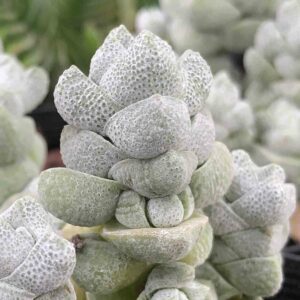
The plant features thick, fleshy leaves densely packed along short, erect branches. Its silvery, textured surface helps it blend seamlessly into its rocky, semi-desert surroundings—a clever adaptation reflected in its species name deceptor, meaning “deceiver” or imposter.
The genus name Crassula comes from the Latin for “thick” or “fat,” aptly describing its plump, water-storing leaves. It belongs to a group known as stacked Crassulas, prized by collectors for their architectural form and subtle coloration.
In the wild, it endures extreme heat, cold, and prolonged dry periods in rocky outcrops, making it a resilient choice for succulent enthusiasts.
How to Grow Crassula deceptor
Its natural habitat is in rocky and dry, so semi desert and the extremes of heat and cold as well as dry conditions.
This tough little succulent thrives when you replicate its harsh native conditions. Focus on excellent drainage, bright light, and minimal water to keep it looking its best.
Light and Position
Place Crassula deceptor in full sun to partial afternoon shade outdoors. Strong light promotes the tight leaf stacking and vibrant silver-grey to white foliage color. Avoid intense afternoon sun in very hot climates to prevent scorching. Indoors, a bright south-facing window or grow lights works well.
Soil
Use a fast-draining cactus or succulent potting mix. The container must have ample drainage holes to prevent water from pooling around the roots.
Watering
Follow a wet-dry cycle: water thoroughly, then allow the soil to dry out completely before watering again. In summer, every 4–5 days often suffices, though very hot areas may need slightly more frequent checks. Reduce watering significantly in cooler months—once a month or even less during winter dormancy. Overwatering is the quickest way to lose this plant.
Fertilizer
Go easy on feeding. Excessive fertilizer encourages loose, elongated growth that ruins the plant’s compact, stacked appearance. Apply a diluted, balanced succulent fertilizer just once in spring.
Temperature and Overwintering
Ideal temperatures range from 15–27°C (59–80°F). It tolerates brief dips but needs daytime temperatures above 10°C (50°F) in winter. Protect from cold, wet conditions, which can cause rot. In cooler climates, move it indoors or to a sheltered spot during the colder months.
Additional Care Tips
- Repotting: Handle sparingly and only when the plant outgrows its pot, preferably in spring.
- Pests: Watch for common succulent pests like mealybugs. Treat promptly with insecticidal soap or neem oil.
- Flowering: Expect small flowers on tall stalks, typically in late summer, though container-grown plants may bloom at other times.
Propagation
Crassula deceptor is one of the easiest succulents to propagate, making it perfect for beginners and collectors alike. The best time is during the active growing season (spring through autumn).
Primary Methods:
- Stem Cuttings: Take 3–7 cm (approx. 1.5–3 inch) cuttings. Allow the cut ends to callous over for 1–3 days in a dry, shaded spot. Plant in a well-draining mix (such as equal parts sand and peat moss or a commercial succulent blend). Keep in bright, indirect light and water only when the soil is completely dry.
- Offsets/Division: Gently separate pups or offsets from the main plant and treat them like stem cuttings.
- Leaf Cuttings: Remove healthy leaves and let them callous before placing on soil.
- Seeds: Possible but slower and less common for home growers.
New plants root readily with minimal fuss and will soon begin forming their signature stacked columns.
Fun Facts and Other Information
- Crassula deceptor will flower in late summer, however it may flower at other times of the year when grown in containers or indoors.
- The species name ‘deceptor’ refers to the plants ability to blend in with the rocks around it, so an imposter, if you like.
- The Genus name, Crassula means Fat
- This is one of many ‘Stacked Crassulas’