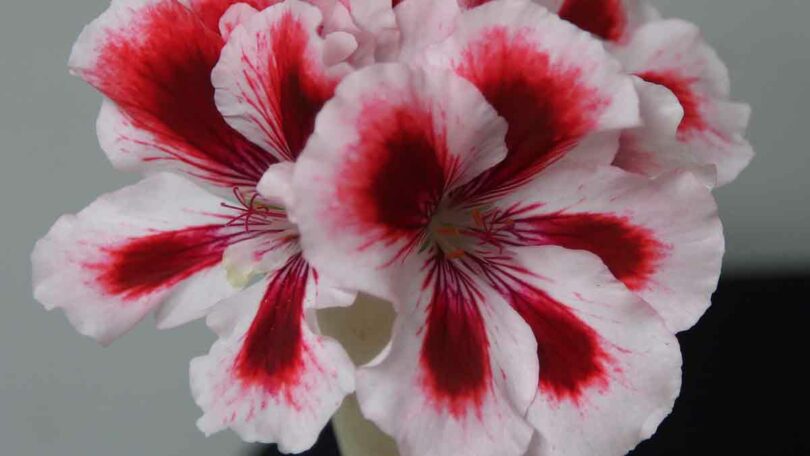
Scented geraniums — more accurately Pelargonium species — are valued for their beautifully fragrant foliage and delicate blooms.

Their leaves release aromatic oils when brushed or crushed, infusing the garden with scents of rose, lemon, mint, cinnamon, and even apple.
With dozens of varieties available, these plants make a wonderful collector’s favourite or an easy sensory feature in any garden.
- Fragrance and Foliage
- How to Grow Scented Geraniums
- Planting Steps.
- Watering and Feeding
- Pruning and Maintenance
- Popular Scented Geraniums – Varieties
- Using Scented Geraniums in the Garden
- The Difference Between Geraniums and Pelargoniums
- Hardy Geraniums (Cranesbills)
- Why the Confusion?
- A Brief Naming History
- The Geraniaceae Family
- Where They Come From
- Key Physical Differences
- In Short
- You May Also Like
Fragrance and Foliage
It’s the foliage that gives scented geraniums their appeal. Each variety offers a unique leaf shape, texture, and fragrance profile.
Many gardeners plant them along pathways or near outdoor seating where the scent is released with a light touch. While their flowers are small and pretty, it’s the perfumed leaves that truly shine.
Tip: Grow a few varieties together to create a naturally scented border or herb garden.
How to Grow Scented Geraniums
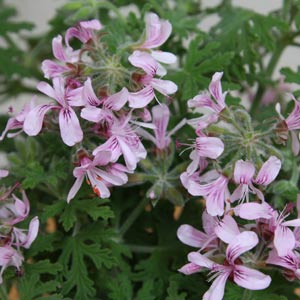
Scented geraniums are easy to cultivate in most temperate climates if given the right conditions.
Soil: Choose a well-drained, humus-rich mix. Good drainage is essential to prevent root rot.
Light: Aim for at least six hours of sunlight daily. Most varieties enjoy full sun to light shade, although some benefit from protection during the hottest part of the day in warmer regions.
Location: Ideal beside paths, in sunny garden beds, or in pots on patios and balconies. Their compact growth and aromatic foliage make them perfect container plants.
After planting, water in with a liquid seaweed fertiliser to promote strong root development. Add a layer of mulch around the base to help keep the roots cool and the soil moist.
Extra tip:
Scented geraniums are great natural companions for outdoor entertaining areas where their fragrance can help mask insect-attracting odours.
Planting Steps.
Choose a position where the plants will get around 6 hours sun a day. In warmer climates, try for a position with some shade from the hottest part of the day.
- Dig over the area to be planted adding some well rotted compost.
- Water in well with a liquid seaweed fertiliser.
- Mulch around the plants to maintain a cool root run and help retain some moisture.
- Water regularly through the first summer.
Watering and Feeding
During the warmer months, check the soil regularly. If it feels dry, water thoroughly.
Feed your plants with a general-purpose fertiliser in spring and again in early summer to encourage healthy new growth and more blooms.
Pruning and Maintenance
Keep your plants neat with light pruning through the growing season.
- Remove spent flowers and any damaged stems to tidy up the plant.
- Pinch out tips regularly to encourage a bushier habit.
- In early autumn, prune back by about one-third to maintain shape.
- Cuttings taken at pruning time can be easily propagated in free-draining soil or a mix of perlite and peat.
On Going Care
Check the soil for moisture, is it is dry, its time to water.
Use a general purpose fertiliser in spring and again early summer to promote good growth.’
Popular Scented Geraniums – Varieties
There’s a Pelargonium to suit nearly every scent preference. Here are some popular types:
- Rose-scented geranium (Pelargonium graveolens) – a classic, widely grown favourite.
- Lemon-scented geranium (Pelargonium crispum) – fresh and citrusy, perfect for containers.
- Apple-scented geranium (Pelargonium quercifolium) – round leaves with a fruity fragrance.
- Mint-scented geranium (Pelargonium tomentosum) – soft, velvety leaves with a cooling aroma.
- Cinnamon-scented geranium (Pelargonium ‘Ardwick Cinnamon’) – compact and delicately fragrant.
- Orange-scented geranium (Pelargonium × citriodorum) – light, uplifting citrus fragrance.
- Old Spice geranium (Pelargonium fragrans ‘Logees’) – warm, spicy scent reminiscent of cologne
Using Scented Geraniums in the Garden
Scented geraniums are not only ornamental but also practical. Their leaves can be used in craft projects, potpourri, or even for scenting sugar and baking ingredients. Place a few pots near doorways or windows where the breeze can carry their refreshing aroma inside.
They are especially useful as:
- Border plants near pathways.
- Container plants for patios and balconies.
- Sensory plants in cottage gardens and herb gardens.
- Low-maintenance plants for sunny, sheltered spots.
What is the difference between scented geraniums and geraniums?
Scented geraniums are actually Pelargonium species, not true geraniums. The name is widely used, but the botanical name is the more accurate one.
When should scented geraniums be pruned?
Light tip pruning helps keep plants bushy, and a harder prune can be done in early autumn. Spent flowers and damaged growth can be removed at any time.
The Difference Between Geraniums and Pelargoniums
Pelargoniums (commonly called geraniums) are tender, shrubby perennials often grown in pots or used as annuals. They have clustered, asymmetrical flowers and prefer warmer conditions.
True Geraniums (also known as cranesbills) are hardy, mostly deciduous perennials that return each year in the garden. They produce simple, symmetrical flowers and are well suited to cooler climates.
Hardy Geraniums (Cranesbills)
Hardy geraniums can be evergreen, semi-deciduous, or deciduous depending on the species and climate zone. With over 400 species, this group offers enormous variety in form, foliage, and flowering.
Why the Confusion?
Both belong to the same plant family: Geraniaceae.
The confusion dates back to the 1600s, when Dutch traders introduced pelargoniums from southern Africa to Europe and mistakenly called them “geraniums,” despite being quite different from the native European geraniums.
A Brief Naming History
- The name Geranium dates back to the 1540s, from Latin geranium, derived from the Greek geranion, meaning “crane.”
- Pelargonium first appeared as a name around 1738.
- In 1753, Carl Linnaeus formally named the genus Geranium.
- Later in the 18th century, botanist Charles L’Héritier correctly separated Pelargonium into its own genus.
The Geraniaceae Family
The Geraniaceae family contains around 5–7 genera (with some debate about the lesser-known ones), including:
- Geranium – hardy cranesbills
- Pelargonium – tender “geraniums”
- Erodium – storksbills (~80 species)
- Monsonia – ~25 species
- California – a single species (California macrophylla)
- Hypseocharis – 2 species
- Sarcocaulon – ~14 species, spiny succulent shrubs from southern Africa
Where They Come From
Pelargoniums are mainly native to:
- Southern Africa (primary centre)
- Also parts of eastern Africa, Australia, New Zealand, Tasmania, Turkey, and Iraq
Geraniums are mainly native to:
- Europe
- Parts of Russia, China, and the Himalayas
- North America (around 23 species)
Well-known examples include:
- Geranium himalayense (Himalayas)
- Geranium sylvaticum (Europe/Russia)
- Geranium wallichianum (Himalayan region)
- Geranium viscosissimum (North America)

Key Physical Differences
Geraniums (Cranesbills)
The common name Cranesbills comes from the appearance of seed capsule resemblance said to a crane’s head and bill.
- Five petals, all the same size and shape
- Ten fertile stamens
- Seed pods that open, dispersing the seeds away from the plant
- Fine stems with fibrous roots
- Prefer cooler climates, this differs with the species

Pelargoniums
The name Pelargonium comes from the Greek for “stork,” referring to the shape of the seed pod.
- Five petals, with the upper two different from the lower three
- Ten stamens, but not all are fertile
- Seed pods with feathery tails that drift on the wind
- Thick, often succulent stems that store moisture
- More tolerant of heat and dry conditions
In Short
- Geraniums = hardy, symmetrical, cold-tolerant perennials
- Pelargoniums = tender, asymmetrical, heat-loving plants commonly called “geraniums”
You May Also Like