
How to Propagate ferns from Bulbils or Plantlets

Some ferns have a wonderful ability to reproduce asexually. Instead of relying on spores, they form tiny plantlets—called bulbils—right on the tips of their fronds. When these plantlets touch moist soil, they naturally take root and grow into new ferns.
This method is by far the easiest and fastest way to propagate many fern species. However, keep in mind that not all ferns produce bulbils. Many are still propagated the traditional way: from spores or by division.
Which ferns can we propagate this way
Only certain species readily develop bulbils. Some of the most common and reliable include:
- Asplenium bulbiferum — Hen and Chicken fern
- Polystichum proliferum — Mother Shield fern
- Polystichum setiferum — Soft Shield fern
These ferns all produce small, ready-made “baby” plants on the ends of their fronds. Once they mature, they can easily be rooted to form new, independent ferns.
Propagating Ferns from Bulbils
Why this method is so easy
Bulbils are essentially tiny ferns already partway through development. Once they find the right conditions—moisture, contact with soil, and a bit of stability—they naturally start sending down roots. This makes propagation almost foolproof, even for beginners.
Best Propagation Methods
You have two simple options:
(1) Peg the frond tip to the ground, or
(2) Root the bulbil in a pot.
Both work well—choose whichever suits your space and gardening style.
1. Pegging the Fern Tip into the Ground
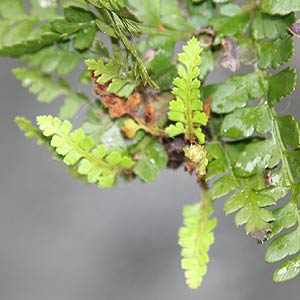
This is the simplest, most natural method.
- Choose a healthy frond with well-developed bulbils at the tip.
- Gently bend the tip down so the bulbil makes contact with moist, loose soil.
- Peg or pin it down using a small wire clip, a stone, or even a garden staple.
- Keep the soil consistently moist (never dry, never waterlogged).
Within a few weeks, you’ll see the bulbil begin to root. Over time, it will grow into a new plant that can be separated from the mother fern.
2. Rooting Bulbils in Pots
If you prefer more control—or want to grow multiple new plants—pot propagation is just as effective.
What you’ll need
A moisture-retentive, free-draining propagating mix. A simple blend works well:
- peat moss or coir
- sharp sand
- perlite
This gives the bulbil the airy moisture it needs without becoming soggy.
Steps
- Fill a small pot with the propagating mix.
- Position the frond tip so the bulbil sits on the surface of the potting mix.
- Peg it gently into place so it doesn’t shift.
- Keep the mix moist but never soggy—consistent humidity is key.
- Once new growth appears, snip the young plant free from the parent frond.
- Keep it in a cool, moist, sheltered position while it establishes.
After a few months, the new fern will have developed a strong enough root system to be potted up or planted into the garden.
A Final Note
While propagating from bulbils is wonderfully simple, remember that many fern species still rely on spore propagation or division. Each species has its preference—but for those lucky enough to produce bulbils, you’ll have an endlessly renewable supply of new ferns with very little effort.
Resources