
Lavender plants and varieties
Lavender (Lavandula) is one of our favourite aromatic garden plants, and indeed it is used widely all over the world as a garden plant, hedging plant and as a commercial crop. It has to be one of the most adaptable and hardy plants available for sale.
Originally from sunny Italy, Greece and surrounding areas it is a plant that grows well in just about any climate as long as it receives lots of sun and is in a well drained soil. And speaking of soils, it is not that fussy, poor soils are OK.
So the secret to growing lavender is out, sun and a well drained soil, it is really that simple.
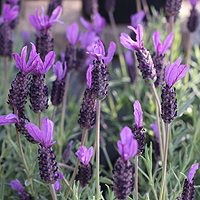
With many varieties and cultivars found growing in gardens and farms around the world. Used as a hedging plant and also popular flowering plant in cottage gardens (see picture above right), Lavender is also grown to harvest for its flowers and essential oils. Lavandula x intermedia grosso, Lavandula ‘sumian’ grosso and Lavandula x intermedia provence are all popular varieties.
Lavender types for sale include English Lavender, French and Spanish lavender as well as Lavandula canariensis (Canary Island Lavender). How tall will they grow ? between 30cm and 90cm depending on variety and cultivar. One of the most fragrant lavenders is Lavendula x intermedia, which is a hybrid between L. angustifolia and L. latifolia, however for hedges Lavendula denata (Lavandula stoechas) or French lavender is great as they flower for such a long period.
Lavender Plant Profile and Growing Notes
Lavender comes in many forms and is a very hardy plant. Aromatic, long flowering and a great hedging plant. Best grown in a sunny position in a humus rich well drained soil, lavender can be planted from autumn right through until early summer, or even later given some water until established. Lavandula ‘Sidonie’ is a hybrid, ‘bred in Australia’ and is a variety best suited to warmer climates.
The best time to plant is is early autumn or in early spring, the soil is still warm, or warming up so you will get some root growth. You will not need to water a lot, and the plants should be established before the heat of summer.
As for fertilizer, these plants do not usually require a lot of fertilizer, however that will depend on the soil, a slow release fertilizer in early spring is a good idea. Mulch at the same time. Although this is a plant that will grow in containers it is happiest in the ground. Fertilize every 12 months in spring for great results.
Lavender plants are fairly long lived, around 10 -15 years before they need replacing. Regular pruning will increase the useful life.
Pruning is easy and is best carried out starting when plants are still young, to encourage bushy growth. In general, prune the plant back by 30% in spring. Dentata species require little pruning at all except for a tidy up after flowering.
Species and cultivars include:
- Lavandula angustifolia ‘Alba’ – White Lavender
- Lavandula x intermedia grosso
- Lavandula x intermedia provence.
- Lavandula allardii, augustifolia, canariensis, dentata, heterophlla, intermedia, lanata, latifolia, minutolii, multifida, officinalis, pinnata, pubescens, rotundifolia, stoechas and viridis.
The Best Lavender
Choosing the best Lavender for your garden will depend on what you want from the plant. The usual requirement is landscaping however other uses are also important.
Landscaping Lavenders
- Lavandula angustifolia ‘Munstead’ – This is a smaller growing plant with good purple flowers, it will also often repeat flower. Also available in a dwarf variety.
- Lavandula angustifolia ‘Hidecote’ – Another smallish plant deep blue to purple flowers.
- Lavandula angustifolia ‘Folgate’ – Early flowering variety with pale to violet blue flowers
- L. x intermedia ‘Grosso’ – A larger growing plant with purple flowers
- Lavandula pedunculata ‘Princess Lavender’ – Long flowering, low growing and very easy to prune, excellent i containers as well as in the garden.
Lavender for dries flowers
Some varieties are better than others for the dried buds and these include:
- L. x intermedia ‘Grosso’
Lavenders for weaving
Others are suited for use in making wreaths etc (Crafting)
- L. x intermedia ‘Grosso’ – With good long stems this is a versatile plants
- Lavandula angustifolia ‘Folgate’ – This one is suited for weaving into wreaths and bouquets.
For Cut Flowers
- L. x intermedia ‘Grosso’ with its long stems is a favourite for cut flowers.
For production of Essential Oils.
- L. angustifolia ‘ Maillette’ is the one used widely in perfumes and considered the best.
- L. x intermedia ’Super’ has a high oil content.
Lavender Plants and Varieties for sale online

52 Rodd St Canowindra NSW 2804
An online nursery specialising in drought and frost tolerant perennials and fragrant, edible and herbs.
www.perennialle.com.au

www.planterspatch.com.au

357 Monbulk Road SILVAN VIC 3795
Guaranteed "garden worthy" bulbs, plants and perennials. Visit the website to browse our large range of daffodils or request the latest free catalogue.
www.tesselaar.net.au

470 Monbulk-Silvan Road Monbulk VIC 3793
"Guaranteed mail order flowering bulbs, perennials, roses, trees, landscaping plants, garden accessories and community fundraising Austra lia-wide."
www.gardenexpress.com.au