
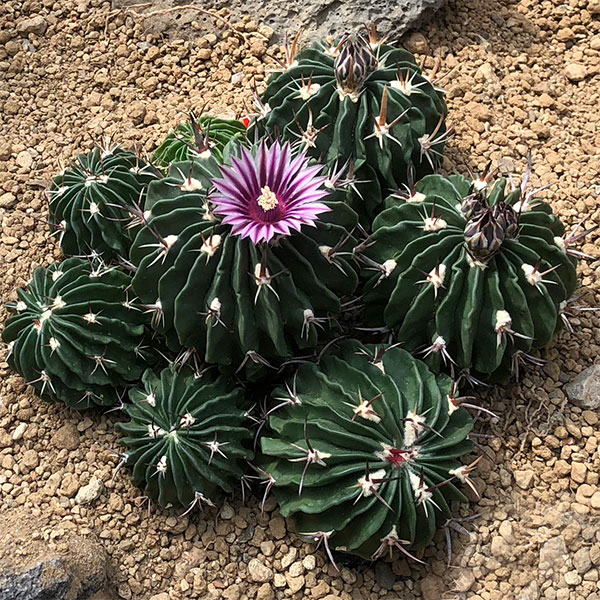
What Are Cactus Plants?
All cacti are from the Americas, they ‘generally’ have, Spines, Flowers, No Leaves and they all have Areoles and only cacti have these.
With so many different types of Cactus Plants available for sale it is easy to become a little lost when looking for information on cactus for the home.
And yes, ALL cacti are succulents, but not succulents are cacti so we deal with succulents in another section.
Growing Cactus – general Information
Basic information on growing cactus relates to potting mix, watering, warmth and light. If these factors are suitable you should have little to no problems with care and propagation.
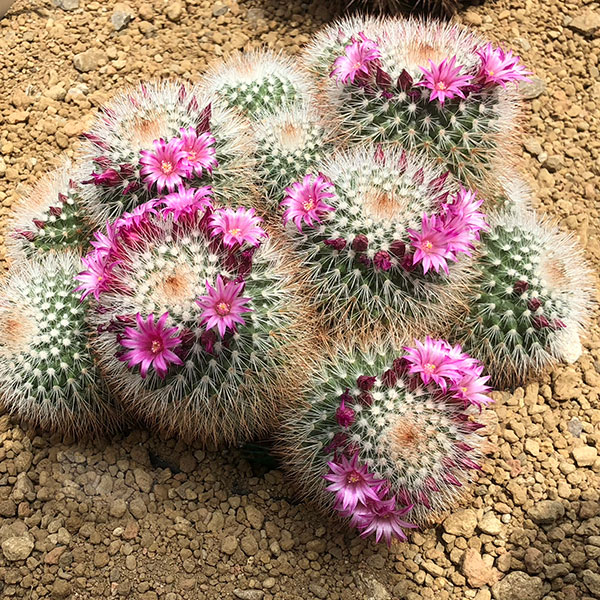
Potting Mix For Catus
One of the main keys is the choice of potting mix, although cacti grow in a range of soil types they have one factor in common, they are free draining. Proprietary potting mixes are readily available from most good garden centres. Another option is ‘make your own’ . A mix of sandy loam, sharp sand and composted pine bark seems to be a favourite.
One of the major problems with cacti, and other potted plants is failure to repot as required. All potting mixes become exhausted after 2 – 3 years, the structure breaks down over time, plants also outgrow pots in time. Repot during dormancy and replace all of the potting mix. ALways water well after repotting.
Fertilizer
Fertilizer is of course required and although cacti seem to be tough plants they actually do need regular fertilizer. We use liquid seaweed fertilizer during the growing season and a general purpose slow release fertilizer at the beginning if the growing season.
The active period of growth for cacti is from spring to summer and this is when watering is important. As a rule of thumb, potting mix should be allowed to almost dry out between watering, overwatering is a major problem. During winter no watering is generally required.
Light and Heat
Seen as desert and arid area plants cacti do in deed cope with heat, they do however require some protection from the extremes of heat. In nature many species grow best in areas of afternoon shade. And as for humidity, nearly all species come from arid (dry) climates, humidity and cactus really do not mix.
How to get your Cactus to Bloom
This information applies to the desert type cactus
- These plants need a winter rest, reduce watering and keep the soil dry and the plants in a cool position
- In spring remove all of the old seed pods
- Remove the offsets so that the plant puts its energy into producing flowers
- Fertilise with a low nitrogen high phosphorus and potassium (eg tomato fertiliser)
1/3 strength after winter dormancy and do this 3 times through spring - Desert cacti need full sun in spring and summer – however watch out for very hot sun.
Indoors and Outdoors.
Although many species grow well indoors lack of light can inhibit or prevent flowering. So ask your suppliers about particular needs.
SUMMARY
- If you are growing cactus in pots or containers choose a pot that is not much bigger than the rootball of the plant itself.
- A free draining potting mix is essential
- Cactus plants need sun and good ventilation (air flow)
- Cactus plants should only be watered when the soil in the pot begins to dry, 10cm of dry soil on the top is a sign, as long as the pot has good drainage.
- In winter try to keep plants fairly dry if growing outdoors, especially in cooler climates
Cactus Plants are available for sale online from the following participating nurseries

Phone: 0411 435 314
Online Retailer of Landscaping Plants, large quantities of small pot sizes up to advanced sizes & plant Sourcing.
SYDNEY | NORTHERN NSW | GOLD COAST | BRISBANE | MELBOURNE | ADELAIDE
www.egardens.com.au

Indoor Plant specialists for Melbourne. - Ph : 0435 677 428
"Indoor potted house plants & plant gifts delivered throughout Melbourne.
Delivering quality indoor plants with convenience every time. Easy online plant purchasing, gift wrapping and delivery Melbourne."
www.garnerstore.com.au

357 Monbulk Road SILVAN VIC 3795
Guaranteed "garden worthy" bulbs, plants and perennials. Visit the website to browse our large range of daffodils or request the latest free catalogue.
www.tesselaar.net.au
One thing to look for when buying any plants is a fact sheet outlining individual growing requirements. And when it come to growing from seed, look for comprehensive seed germination note specific to the cactus species you are considering.
We can say that many species make wonderful garden plants, and of course many also grow well in pots and containers. In fact container growing both indoors and out is a favoured method of growing in Australia.
You can browse our individual species pages for pictures of a variety of cactus. A google image search is also worth while for the beginner.
Consider joining the Australian Cactus and Succulent Society to gain access to a wealth of knowledge.
RORAIMA NURSERY – phone/Fax: (03) 5282 8704
20 Swan Street, Lara, Vic. 3212 Contact:
Geelong’s biggest range of cacti and succulents. Trees, palms, ferns, natives, shrubs & perennials.
RAINBOW DAYLILIES & IRISES Ph: (08) 97553006 – Mob: 0437206207
P.O. Box 504 DUNSBOROUGH W A 6281