Hibiscus coccineus is a fast-growing, herbaceous perennial native to the wetland regions of the southeastern United States.

Commonly called the ‘Texas Star Hibiscus’ it is sometimes mislabeled as Hibiscus coccinea, the correct botanical name is H. coccineus.
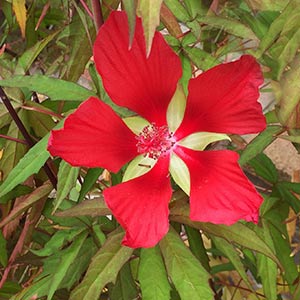
This unique species stands out thanks to its deeply lobed leaves—similar to Japanese maple—and its brilliant, star-shaped red flowers that can reach up to 20 cm across.
These striking blooms appear in late spring and summer, attracting bees, butterflies, and other pollinators to your garden.
Hibiscus coccineus Growing Conditions
Ideal Growing Conditions for Hibiscus coccineus:
- Natural Habitat
Hibiscus coccineus thrives in swampy, boggy areas and along streambanks. It’s well-suited for life in consistently wet conditions and even shallow standing water. - Soil Type
Rich, loamy, moisture-retentive soil is ideal. You can plant it in heavy garden soil or aquatic compost if growing in containers submerged in ponds. - Sunlight
For best flowering, plant it in full sun (6–8 hours per day). It will tolerate partial shade but may produce fewer blooms. - Temperature & Climate Zones
This hardy perennial survives in USDA Zones 6–10. In colder areas, it dies back in winter but regrows from the roots in spring. Protect roots with mulch if grown in-ground in cooler climates. - Fertilising
Feed with slow-release aquatic fertilizer tablets in spring and again in early summer to support strong flower production.
Hibiscus coccineus Care & Maintenance
- How to Plant
You can plant H. coccineus in containers submerged in ponds (leaving the crown just above the water level) or directly into moist, boggy garden beds. Choose a spot that is sheltered from strong winds to protect its tall, upright growth. - Repotting
Repot every 2–3 years in early spring. Refresh the soil and divide if necessary to prevent overcrowding. - Watering Needs
Keep the plant consistently moist or submerged. Never allow it to dry out completely. - Dormancy and Pruning
This is a deciduous plant. As temperatures drop in autumn, it will die back. Prune it to ground level once the stems turn brown. In spring, tip-prune new shoots to encourage bushier growth and more flowers. - Common Problems
Generally trouble-free, but watch for aphids on new growth. Provide wind protection to avoid snapping stems. Plants grown in poor light may become leggy and flower less.
Propagating Hibiscus coccineus
Propagation is easiest by division in early spring as new shoots emerge. Simply divide the root mass and replant. You can also grow it from seed, although seeds are not always easy to find. Scarify and soak seeds before planting to improve germination rates.
Popular Varieties
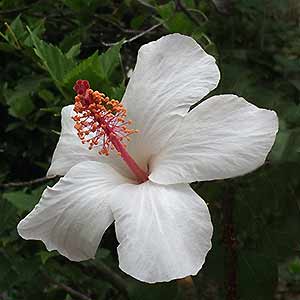
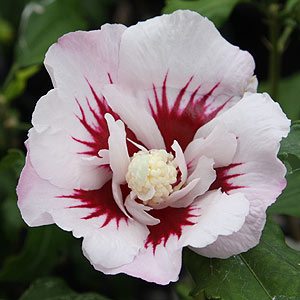
While Hibiscus coccineus typically features crimson-red blooms, some varieties may show variations in petal shape or leaf texture. Most plants available in nurseries are red-flowered, but white and pink-flowered forms do exist (often hybridized or mislabeled).
Care summary
- In spring, it is beneficial to tip prune the first shoots.
- In early summer the plant will benefit from a little more tip pruning, this will result in more foliage, and more flowers will be the result.
- Fertilise in spring using water plant tablet type fertiliser.
- Propagation is easy by division, also possible from seed.
Why Grow Water Hibiscus?
If you’re looking for a dramatic, pollinator-friendly plant that thrives in wet soils or water gardens, Hibiscus coccineus is a top choice. Its tropical appearance, easy care routine, and seasonal transformation make it an eye-catching and rewarding addition to any garden.