
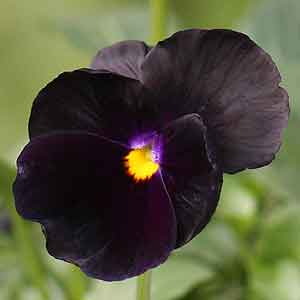
Violas and pansies are so closely related that it’s easy to confuse them. In fact, the colourful garden pansies we grow today are hybrids within the Viola genus (Viola × wittrockiana), while the violas most commonly grown in Australian gardens are cultivars of Viola cornuta and Viola odorata.
Although they belong to the same genus and have very similar growing requirements, there are some noticeable differences. Pansies produce larger flowers, often with the familiar “faces”, while violas have smaller blooms carried in greater numbers, making them excellent for long-lasting displays in garden beds, hanging baskets and containers.
The violas you’ll usually find in garden centres are Viola cornuta cultivars, valued for their wide range of colours and prolific flowering. Viola odorata, or Sweet Violet, is grown more for its wonderfully fragrant flowers than its colour.
They look great in hanging baskets, use them beneath roses that are bare this time of the year, or mass plant them in the border. Perhaps fill an old wheelbarrow with them, or any container you can find.
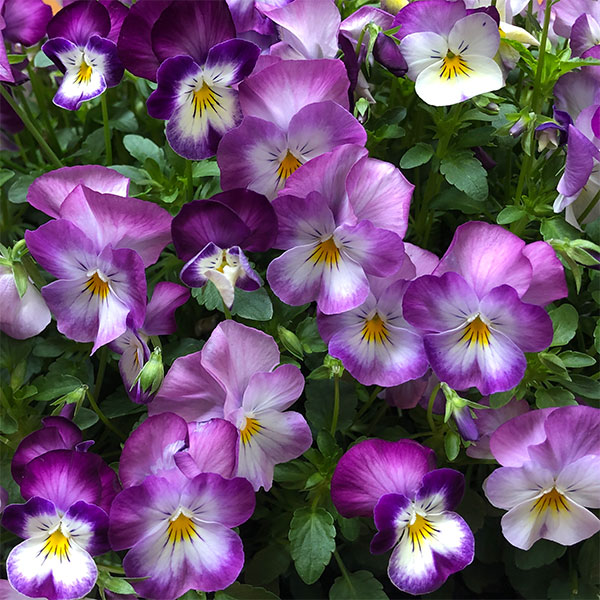
Growing Violas
Violas are among the easiest cool-season flowers to grow.
Plant them in a position that receives plenty of winter sunshine. In warmer parts of Australia they’ll also appreciate a little afternoon shade.
They thrive in moist, well-drained soil enriched with compost or other organic matter. Regular watering during dry periods and an occasional application of liquid fertiliser will keep plants flowering for months.
Remove spent blooms as they fade to encourage continuous flowering.
Grow violas from seedlings, or sow seed from late summer through early autumn. Seeds usually germinate in two to three weeks and germinate best with a little darkness.
Where to Plant Violas
Violas are wonderfully versatile.
Plant them beneath deciduous roses while the roses are bare, use them to fill gaps in garden borders, brighten hanging baskets or create colourful displays in pots and containers. An old wheelbarrow planted with violas also makes a charming winter feature.
Although the flowers are small, they are produced in abundance. Available in shades of white, yellow, blue, mauve, purple and almost black, they make excellent filler plants wherever they receive good winter sun.
Growing Violas in Pots
Violas perform exceptionally well in containers.
Use a quality potting mix, keep the soil evenly moist without becoming waterlogged and feed every few weeks with a liquid fertiliser. They’re ideal for hanging baskets, window boxes and mixed winter containers.
Viola Varieties
Some classic varieties have remained favourites for many years.
- Viola cornuta ‘Boughton Blue’ — beautiful icy blue flowers.
- Viola cornuta ‘King Henry’ — rich purple flowers with a contrasting yellow throat.
- Viola cornuta ‘White Perfection’ — masses of pure white flowers.
- Viola odorata (Sweet Violet) — an old-fashioned favourite with richly fragrant flowers. It grows to around 50cm and prefers moist, humus-rich soil in dappled shade.
- Viola dissecta — an unusual species well worth seeking out.
- Viola labradorica — the attractive Purple Perennial Violet with distinctive purple foliage.
Common Problems
Violas are generally trouble-free but can occasionally be affected by aphids, slugs and snails, particularly in damp weather. Powdery mildew may appear where air circulation is poor, while overly wet soils can lead to root rot. Good drainage, regular deadheading and healthy growing conditions usually keep plants looking their best.
Although the flowers are small, they are colourful and numerous. From white through to yellows and deep purple (almost black) you can use them as fillers anywhere in the garden where they get good winter sun.
Grow them from seedlings, or sow seeds from late summer to early in autumn and plant them out when they reach a good size. Seeds may take 2 – 3 weeks to germinate, and a little darkness will help.
Violas vs Pansies
| Violas | Pansies |
|---|---|
| Smaller flowers | Larger flowers |
| More blooms per plant | Fewer but larger blooms |
| Longer flowering season | Spectacular individual flowers |
| Mostly Viola cornuta cultivars | Viola × wittrockiana hybrids |
| Excellent for edging, pots and hanging baskets | Ideal for bold bedding displays |
| Some, such as V. odorata, are fragrant | Most have little fragrance |
Viola Varieties
A few named varieties have stood the test of time and are worth seeking out
- V. cornuta ‘Boughton Blue’ an icy blue flower
- V. cornuta ‘King Henry’ purple flowers with a yellow throat
- V. cornuta ‘White Perfection’, white flowers as the name suggests.
- V. odorata flowers and plants or Sweet Violet is an old fashioned garden plant. Growing to 50cm and preferring a moist humus rich soil in dappled shade.
- V. dissecta is well worth looking for as well.
- V. labridorica – The Purple perennial violet.
Viola are available for sale online from the following growers

357 Monbulk Road SILVAN VIC 3795
Guaranteed "garden worthy" bulbs, plants and perennials. Visit the website to browse our large range of daffodils or request the latest free catalogue.
www.tesselaar.net.au

www.planterspatch.com.au
PO Box 7040 Leura NSW 2780
Rare woodland plants, Trilliums Epimediums, Arisaemas, plus much more.www.lynnsrareplants.com.au

'Umbango' 750 Humula Rd, Humula NSW 2652
Phone 0408692773 Great Range of Perennial plants available for sale by mail order.
www.nutshellnursery.com.au

470 Monbulk-Silvan Road Monbulk VIC 3793
"Guaranteed mail order flowering bulbs, perennials, roses, trees, landscaping plants, garden accessories and community fundraising Austra lia-wide."
www.gardenexpress.com.au