A Colourful Ground Cover for Sunny Gardens
If you are looking for a low-maintenance flowering ground cover that quickly forms a carpet of colour, Phlox subulata is one of the best choices. Commonly known as Creeping Phlox or Alpine Phlox, this hardy perennial is loved for its masses of spring flowers, dense evergreen foliage and ability to thrive in sunny positions.

Ideal for rock gardens, retaining walls, cottage gardens and slopes, Creeping Phlox creates a stunning display when in flower. Once established it requires very little care and gradually spreads to form a colourful mat that helps suppress weeds while softening hard landscaping.
One of two plants commonly known as Creeping Phlox, Phlox subulata is the sun-loving species and is particularly useful in Australian gardens where a reliable flowering ground cover is needed.
Quick Facts
Botanical Name: Phlox subulata
Common Names: Creeping Phlox, Alpine Phlox, Moss Phlox
Plant Type: Evergreen perennial ground cover
Height: 10–15cm
Spread: 50cm–1m+ over time
Position: Full sun to part shade
Soil: Well-drained, humus-rich soil
Flower Colour: Pink, white, lavender, blue, magenta and bi-colours
Flowering Time: Spring with occasional repeat flowering
Foliage: Fine, needle-like evergreen foliage
Growth Rate: Moderate to fast
Frost Tolerance: Excellent
Drought Tolerance: Moderate once established
How To Grow Creeping Phlox – Basic Care
Choose the right position for the climate, Creeping Phlox does like sun, however in warmer climates it is best grown in afternoon shade.
One of the main tricks is to prune back after flowering, this encourages good dense new foliage growth and perhaps some more flowers.
Some gardeners like to dig a little lime into the soil before planting. In Australia’s conditions some extra water during the heat of summer will be beneficial. Consider planting where a little afternoon shade is available in hot areas.
Dig in some well rotted compost and aged cow or sheep manure before planting, water in well with a liquid seaweed fertilizer for excellent results.
Over time the plant will slowly spread to form a dense clump. Propagation is possible by division of established clumps.
Landscaping Uses
Phlox subulata is one of the most versatile flowering ground covers available.
Plant it:
- Along the top of retaining walls where it can cascade naturally over the edge.
- In rock gardens amongst boulders and gravel.
- On gentle slopes where it helps stabilise soil.
- Along pathways and borders.
- Beneath roses and taller perennials.
- In cottage gardens.
- In alpine gardens.
- In containers and hanging baskets where the foliage can spill over the sides.
It combines particularly well with lavender, agastache, dwarf dianthus, ornamental grasses and spring flowering bulbs.
Mass planting creates an impressive carpet effect that is particularly striking when several flower colours are used together.
Best Features at a Glance
- Spectacular spring flowering display.
- Excellent flowering ground cover.
- Evergreen foliage.
- Suitable for retaining walls and rock gardens.
- Pollinator friendly.
- Frost tolerant.
- Easy care once established.
Seasonal Care Guide For Phlox subulata
Summer
- Water: Deeply once or twice a week in prolonged dry or very hot weather; allow soil surface to dry slightly between waterings.
- Feeding: Light application of a balanced, slow-release fertiliser in early summer if growth looks weak.
- Pruning: After the main spring flush has finished and light re-flowering is over, lightly shear back any straggly or spent stems to keep the mat dense and compact.
- General care: Watch for heat or drought stress; mulch lightly around (not over) the crown to keep roots cool while maintaining sharp drainage.
Autumn
- Water: Reduce frequency as temperatures fall, keeping soil just moist, never waterlogged.
- Feeding: No heavy feeding; a light top-dress of compost or well‑rotted organic matter around the clumps is usually enough.
- Pruning: Trim back any dead, diseased or badly damaged stems; tidy edges where plants spread beyond their space.
- General care: Check drainage before winter rain; creeping phlox dislikes sitting in cold, wet soil.
Winter
- Water: Minimal watering, only during extended dry spells if soil becomes very dry.
- Feeding: Do not fertilise in winter.
- Pruning: Remove any winter-damaged foliage towards the end of winter to make way for fresh spring growth.
- General care: Ensure plants are not smothered by heavy mulch or wet debris; they prefer good air flow around the foliage.
Spring – Peak Season for Phlox subulata
- Water: Regular watering if rainfall is low, keeping soil evenly moist but not saturated.
- Feeding: Apply a balanced, slow‑release fertiliser in early spring to support flowering and new growth.
- Pruning (key time):
- Immediately after peak flowering, shear back spent flowers and the top few centimetres of growth to encourage a dense mat and possible light reflowering
- Remove any dead patches and thin weak, congested areas.
- General care:
- Weed carefully around plants so low stems are not disturbed.
- Consider dividing and replanting older, woody patches in mid–late spring after flowering if the centre is thinning.
Propagation
Easy by division in late winter to early spring. Phlox subulata can also be grown from seed best sown in early spring, or late winter in a greenhouse or cold frame.
Phlox subulata Varieties
Lots of named cultivars are available including :
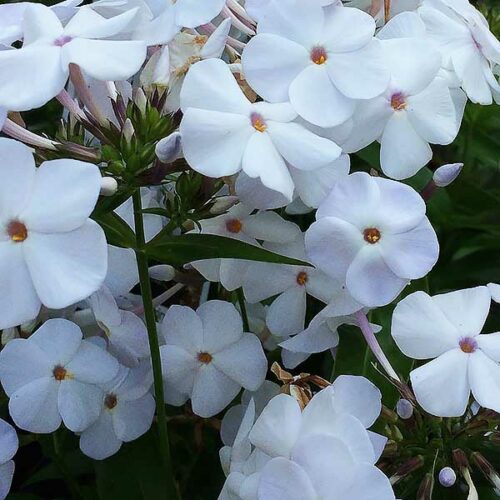
- The white flowering ‘Amazing Grace’.
- Phlox subulata ‘Emerald Cushion Blue’ – Fine needle like foliage and masses of lavender blue flowers in spring.
- P. subulata magenta sprite – Flower colour is a magenta red flowers.
- The Bright Pink ( Moss pink) P. subulata rosea.
- ‘Emerald Blue’ with its lavender blue flowers.
- Phlox subulata ‘Tamaongalei’ with its striped pink flowers, see picture above.
Creeping Phlox Festivals in Japan
The beauty of flowering Creeping Phlox is celebrated in Japan where large-scale plantings create spectacular carpets of colour.
Notable Shibazakura festivals include:
- Fuji Shibazakura Festival near Mount Fuji.
- Hitsujiyama Park near Tokyo.
- Takinoue Park in Hokkaido.
- Higashimokoto Moss Pink Park.
Where To Buy

PO Box 7040 Leura NSW 2780
Rare woodland plants, Trilliums Epimediums, Arisaemas, plus much more.www.lynnsrareplants.com.au

www.planterspatch.com.au
You May Also Like
Popular Varieties of Phlox subulata
Some of the best cultivars include:
- ‘Amazing Grace’ – Pure white flowers.
- ‘Emerald Cushion Blue’ – Lavender-blue flowers and fine foliage.
- ‘Emerald Blue’ – Soft lavender-blue blooms.
- ‘Magenta Sprite’ – Rich magenta-pink flowers.
- P. subulata rosea – Bright pink Moss Phlox.
- ‘Tamaongalei’ – Distinctive striped pink flowers.