
Love in A Mist

Nigella or ‘Love in A Mist’ is not a plant named after a chef, but is is an attractive cottage garden plant, although the seeds of Nigella Sativa are used in cooking.
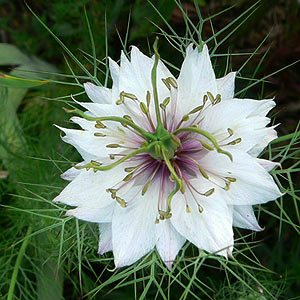
Nigella damascena is the well known ‘Love in a Mist’ and is certainly a most attractive addition to the perennial border.
Widely used in cottage gardens where it is happily allowed to self seed. The ferny foliage and delicate flowers combine to create a lovely tangles mist of flower and foliage.
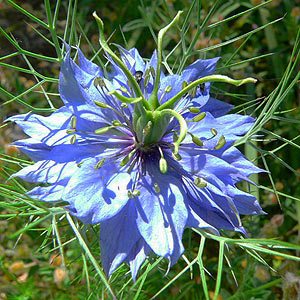
Regarded as an old fashioned annual flower Nigella or ‘love in a mist’ do have wonderful feathery foliage and delicate white, blue or pastel flowers circled by fine hair – like bracts.
The seeds of Nigella sativa are used in middle eastern cooking (bread and cakes). Seed heads can be dried and used for decoration.
How To Grow Nigella damascena – Basic Care
This is a very easy care – self seeding annual. It grows well drained humus rich soil and sun to part shade. Sow from seed, spring to early summer in cool to temperate climate zones. In tropical to sub tropical zones grow it in winter and in part shade.
Growing Love-in-a-Mist: Seeds, Seedlings & Planting
Sowing Seeds: Indoors or Outdoors
- Direct sow outdoors: The simplest method is to sow seeds where you want them to grow. Sprinkle them onto well-drained soil in a sunny spot in spring as the soil and weather begin to warm up.
- Shallow sowing: Nigella seeds need light to germinate — don’t bury them deeply. Press them lightly into the soil or cover with just a dusting of soil.
- Indoors or in punnets: You can start the seeds indoors or in a coldframe. Use a normal potting mix, seed raising mix or 50% peat Moss 50% Perlite. Again cover lightly and keep in a warm position.
- Germination Time: Expect seedlings to appear in 7–14 days with consistent soil moisture.
Tip: Nigella seedlings don’t like having their roots disturbed, so avoid transplanting if possible. Start indoors only if you must — but direct sowing gives the best results.

Ongoing Care
- Thin seedlings to 0–25 cm (8–10 inches) apart to avoid overcrowding.
- Water regularly, but avoid waterlogging — nigella prefers moist yet well-drained soil.
- Succession planting every 3–4 weeks will keep blooms coming throughout the growing season.
You can deadhead to encourage a second flush of flowers, that is if you not wish to collect seed or let the plants self seed.
Seed Pods and Seed Collection

After flowering, Love-in-a-Mist forms distinctive balloon-shaped seed pods with intriguing ridges and shapes that look almost sculptural in the garden. These pods:
- Contain black seeds which rattle when mature — a sign they’re ready for collection.
- Open the pods and place them in a paper bag, now break the pods more, seperate the seeds from the pod and chaff.
- Store in a paper bag or glassine envelope in a cool dry position until next spring.
Self Seeding
Love-in-a-Mist seeds will readily self seed, so if you are not fussy, you can just let them ‘do there own thing’.
If you don’t want them popping up in unusal spots, then save the seeds.
Growing in Pots & Containers
Yes — Love-in-a-Mist grows wonderfully in pots!
- Choose a large container for a good display.
- Use a good quality potting mix.
- Sow the seeds in spring and litghly cover.
- Keep moist.
- Keepthe pot in a position with good sun for best flowering.
Edibility & Safety: Is Love-in-a-Mist Poisonous?
Love-in-a-Mist (Nigella damascena) contains mildly toxic compounds and are not used for eating.
It Is the seeds from Nigella sativa, commonly called black cumin) that are used in Middle Eastern and Indian cuisine.
Seeds are readily available from good nurseries
You may also like
Author : JohnnyA