
Blue Mist Flower
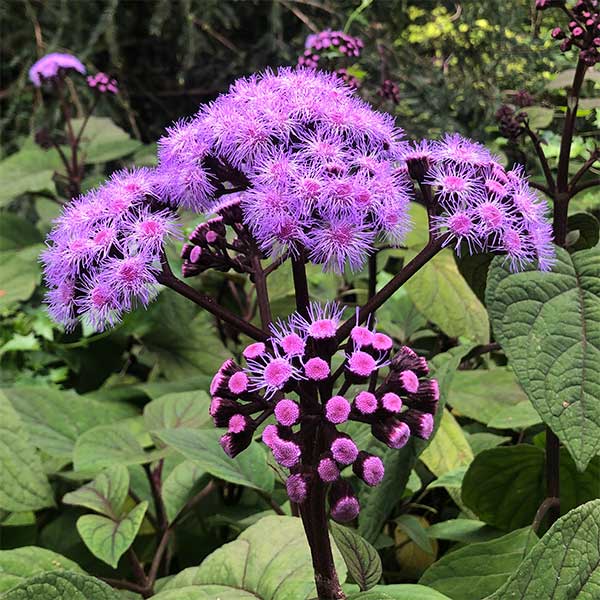
A tall-growing evergreen shrub, the Blue Mist Flower (Bartlettina sordida) is native to the cloud forests of Mexico where it grows as an understory plant in moist, sheltered conditions. Valued for its large tropical-looking foliage and masses of fluffy lilac-blue flowers, it makes an excellent feature plant for shaded gardens.
Growing to over 2 metres in height, the plant produces attractive rosy-red to purple flower buds which open to large clusters of soft lilac-blue flowers. The blooms are highly attractive to bees, butterflies and other pollinating insects.
How to Grow Bartlettina sordida
Position
As a plant from the cloud forests of Mexico, Bartlettina sordida prefers dappled shade or part shade. It performs best in a sheltered position protected from drying winds and hot afternoon sun.
Too much direct sun can scorch the foliage, particularly during hot summer weather.
Soil
Plant in a moist, humus-rich soil with plenty of organic matter incorporated before planting. Good drainage is important, however the soil should not be allowed to dry out completely.
Mulching around the plant helps retain moisture, suppress weeds and maintain a cool root run.
Watering
Regular watering is important, especially during dry periods and while plants are becoming established. Consistently moist soil will encourage lush growth and better flowering.
Climate
This is a frost-tender plant best suited to mild temperate, subtropical and frost-free climates.
Although established plants will often recover from light frost damage, protection from severe frosts is recommended. In suitable conditions it is a fast-growing shrub and useful for establishing new gardens quickly.
Garden and Landscaping Uses
Bartlettina sordida is valued as both a foliage and flowering plant.
Common uses include:
- Woodland gardens.
- Shade gardens.
- Tropical and subtropical garden designs.
- Large mixed borders.
- Background planting beneath taller trees.
- Informal screening.
- Pollinator-friendly gardens.
The large foliage provides a lush tropical appearance while the masses of blue flowers add colour when many other shade-loving plants are not in bloom.
Pruning
Prune plants after flowering to maintain a compact habit and prevent unwanted self-seeding.
Old flower heads can be removed as soon as flowering finishes. Established plants can also be cut back more firmly if they become too large or leggy.
Regular pruning encourages denser growth and helps keep plants manageable in smaller gardens.
Propagation
Propagation is relatively easy and can be carried out in a number of ways.
From Cuttings
Softwood cuttings strike readily and can be taken through much of the year. Cuttings taken after summer pruning or during spring generally root well.
By Division
Large clumps can be divided when actively growing. Each division should contain healthy roots and shoots.
From Seed
Seeds can be collected once flower heads mature and dry. Sow fresh seed into a quality seed-raising mix and keep moist until germination occurs.
Plants grown from seed generally establish quickly under suitable conditions.
Flowers and Pollinators
The fluffy lilac-blue flowers are rich in nectar and attract a range of beneficial insects.
Pollinators commonly attracted include:
- Bees.
- Butterflies.
- Hoverflies.
- Other nectar-feeding insects.
This makes the plant a useful addition to wildlife-friendly gardens.
Problems
Bartlettina sordida is generally free from serious pests and diseases.
The main issue is its tendency to self-seed. In warm, moist climates seedlings may appear around established plants if spent flowers are left in place.
Is Bartlettina sordida Invasive?
Although not generally regarded as a major invasive plant, it can naturalise in favourable conditions through self-seeding. Deadheading spent flowers and removing unwanted seedlings will usually prevent any problems.
Gardeners in frost-free regions should monitor seedlings and remove them where necessary.
Summary Description
- Botanical Name – Bartlettina sordida syn. Eupatorium sordidum
- Family – Asterales
- Common Name – Blue Mist Plant
- Origins – Mexico in the Cloud forests.
- Position – Part shade
- Soil – Humus rich. moist
- Height – to0 2 metres
- Spread – Over time it will spread to form a large clump.
- Flowers – Large lilac blue in colour
- Flowering Time – Spring
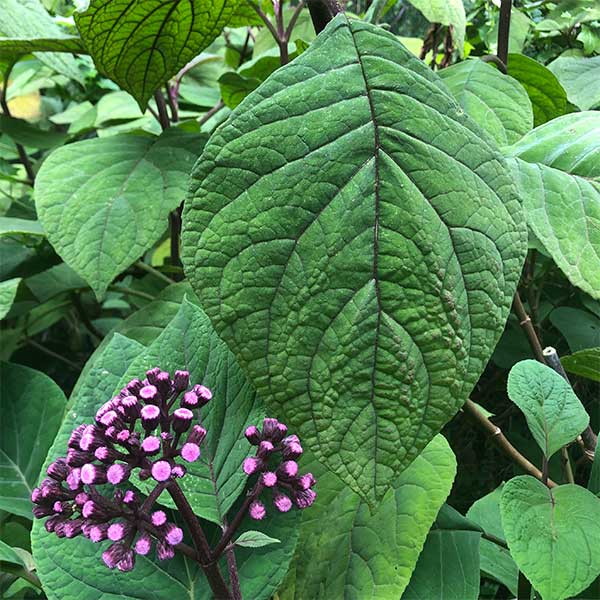
- Foliage – Large rounded mid to deep green.
- Frost tolerant – This plant is frost tender.
- Drought tolerant – No
Blue Mist plant (Bartlettina sordida) is available for sale from the following nurseries

Large range of Rare, Unusual and Old Fashioned Perennials. Includes Artemisias, Achilleas, Geraniums, Geums, Salvias, Penstemon and Francoa.
www.yellowhouseheritageperennials.com.au