
Anemone sylvestris, commonly known as the Snowdrop Anemone or Snowdrop Windflower, is a standout perennial ideal for shaded areas in the garden. Reminiscent of a miniature windflower, this low-growing plant brings soft elegance to woodland borders and shaded beds, especially when planted beneath deciduous trees near the drip-line. Here, it thrives naturally among the leaf litter, where soil conditions remain cool and moist.
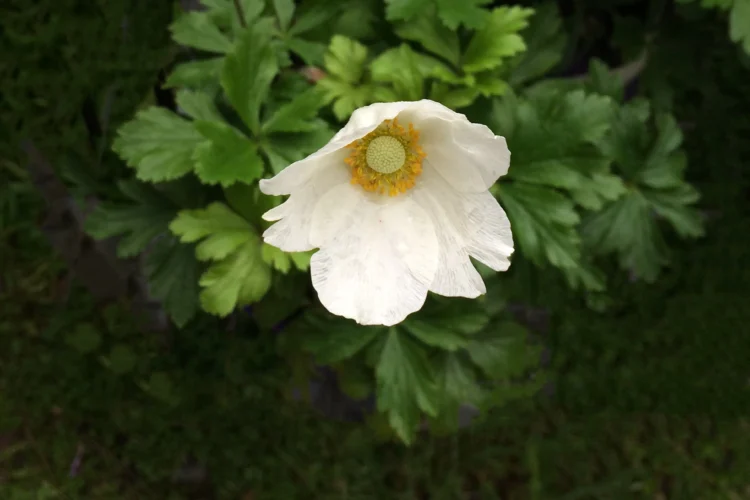
With its mound-forming habit and deeply cut green foliage, Anemone sylvestris provides a lush, textured ground cover. The true highlight, however, is its delicate, snow-white flowers held gracefully above the foliage on slender stems.
These flowers typically appear from spring into early summer, though it’s not unusual to see a few spot flowers lingering into summer. The flowers are held on long stems above the foliage and can reach around 8cm across.
Although often used as a shade plant, Snowdrop Anemone can also be grown in full sun where soil remains moist and well drained. In warmer climates, part shade is generally the better position.
Anemone sylvestris Care

For best results, grow the Snowdrop Anemone in part shade and moist, humus-rich soil. It prefers a naturalistic setting, such as under trees or along shaded garden paths, where the soil remains consistently damp but not waterlogged.
A position with morning sun or filtered light can also work well. Avoid extremely dry soil, particularly when establishing new plants, as this can result in poor growth and fewer flowers.
Soil
Plant Anemone sylvestris in a humus-rich, well-drained soil. Adding compost or other well-rotted organic matter before planting will help improve the soil and provide a good growing environment.
Although the plant appreciates moisture, good drainage is still important. Constantly waterlogged soil can lead to problems with the roots.
Watering
Water plants regularly while they are establishing, particularly through the first summer. Once established, plants are reasonably adaptable, but will perform best when the soil does not dry out for extended periods.
In dry shade beneath trees, additional watering may be needed because tree roots compete with the anemone for available moisture.
Feeding
A light application of a general-purpose fertiliser or compost in spring is generally sufficient. Avoid excessive fertilising, as the plant does not need heavy feeding to perform well.
Anemone sylvestris Growth and Spread
This anemone has a creeping rhizomatous root system, which allows it to spread and form a soft carpet over time. It can spread quite freely when growing conditions are favourable, making it useful as a groundcover but something to keep in mind when planting it in a small garden.
To manage its growth or propagate new plants, you can divide clumps in late winter or early spring.
Division is also a useful way to rejuvenate established clumps and create additional plants for other parts of the garden.
Growing Snowdrop Anemone Under Trees
Snowdrop Anemone is particularly useful beneath deciduous trees and in woodland-style plantings.
The combination of cool soil, leaf litter and filtered light creates a natural setting for the plant. It can be used to soften the area beneath trees and provide groundcover where other flowering perennials may struggle.
When planting beneath established trees, remember that the soil can be quite dry because of competition from tree roots. Water newly planted anemones well until they become established.
Design Tip: Companion Planting
- Snowdrop Anemone pairs beautifully with spring-flowering bulbs. As the bulbs emerge and bloom, they naturally push through the anemone’s foliage, creating a layered effect.
- Even after the bulb flowers fade, the anemone’s foliage continues to provide structure and interest, making it an excellent companion in mixed shade plantings.
- It also works well with other woodland-style perennials and can be used around the base of deciduous trees, along shaded paths and at the front of borders.
Landscaping Uses
There are many uses for Anemone sylvestris in the garden.
It can be planted:
- Beneath deciduous trees.
- In woodland-style gardens.
- Along shaded garden paths.
- At the front of perennial borders.
- As a groundcover in part shade.
- Among spring-flowering bulbs.
- In cottage and informal gardens.
- In naturalistic plantings.
The white flowers and attractive divided foliage make it particularly useful where a softer, more natural planting style is required.
Summary Information
- Botanical Name – Anemone sylvestris
- Common Name – Snowdrop Anemone, Snowdrop Windflower
- Family – Ranunculaceae
- Plant Type – Herbaceous perennial
- Position – Full sun to part shade; part shade is preferred in warmer areas.
- Soil – Humus-rich, moist but well-drained soil.
- Height – Around 50cm, with flower stems rising above the foliage.
- Spread – Can spread through rhizomes to form a colony.
- Growth Rate – Moderate to fast once established.
- Flowers – White, cup-shaped.
- Flowering Time – Spring to early summer, with occasional later flowers.
- Foliage – Mid green, deeply divided.
- Watering – Regular moisture while establishing.
- Drought Tolerant – Not suited to prolonged dry conditions.
- Frost Tolerant – Hardy perennial; tolerance varies with conditions.
- Maintenance – Low, apart from managing spread.
- Best Uses – Woodland gardens, dry-to-moist shade, borders, groundcover and planting beneath trees.
Anemone sylvestris for sale
Anemone sylvestris or Snowdrop Anemone is available from selected nurseries and specialist perennial growers. Availability can vary with the season, so check with local nurseries for current stock.

357 Monbulk Road SILVAN VIC 3795
Guaranteed "garden worthy" bulbs, plants and perennials. Visit the website to browse our large range of daffodils or request the latest free catalogue.
www.tesselaar.net.au

PO Box 7040 Leura NSW 2780
Rare woodland plants, Trilliums Epimediums, Arisaemas, plus much more.www.lynnsrareplants.com.au
You May Also Like


