
A no dig garden or a no Dig Vegetable garden is a fantastic way of establishing a productive vegetable garden or flower garden without digging.
Building no dig vegetable gardens are also great for establishing a vegetable garden of poor soil or rocky ground. Kits are also available for sale in timber, corrugated iron as well as UV resistant PVC.
You can also make your own from straw bales.
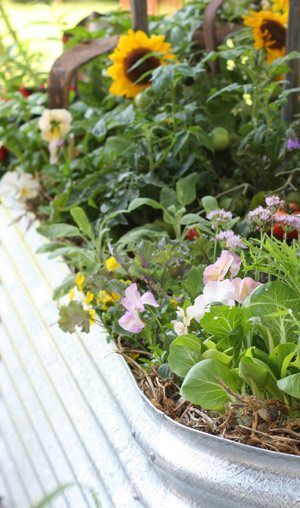
Pictured right is a galvanized iron kit growing both vegetables and ornamental flowers. As this system is raised it allows easy access for older gardeners and wheelchairs.
‘No Dig’ gardens and vegetable gardens are popular for a number of reasons.
- you don’t have to dig the soil, a great solution for poor soil, rocky or clay areas
- they can easily provide you with raised garden beds
- the growing mediums used in the garden itself can be controlled to provide a fantastic growing environment for vegetable
How to start
The first things to consider when building are shape and size of the vegetable garden to be created and the location.
Shape and size for a No Dig Garden.
- The easiest shape to maintain for a no Dig Vegetable is rectangular, this allows easy access from each side of the vegetable garden.
- it is best to keep the width of a vegetable garden to approximately 1m to 1.5m in width this allows easy access to the vegetable garden without the need to stand in the garden itself.
- if you are placing the garden along a fence then consider a narrow vegetable garden, perhaps using the fence as a trellis for climbing plants such as peas or beans.
Position
- Vegetable gardens require sun, find a sunny position, a position close to the kitchen is always handy where possible.
Materials and construction
- Timber construction is the easiest if you are going to use edging, although more permanent vegetable gardens may be constructed using brick or stone edges. Untreated timber should be used, remember you are going to eat the vegetable, so treated pine is generally not suitable.
- Level the area to be used including the paths or access points around the garden.
- Install the edging for the raised beds (if you are going to use edging) to a height of 30cm or 12 inches. Corners for timber may be nailed, bolted or simply secured with metal or timber stakes.
- Place a layer of newspaper on the ground to a depth of 5-6mm
- The next layer should be something like pea straw, lucerne hay or even shredded sugar cane mulch, make this layer 10-12 cm deep
- Follow with a layer of compost mixed with manure, such as cow manure or sheep manure, make this layer 10cm
- A second layer of pea straw with a few handfuls of blood and bone. Water this layer in well and make this layer up to 10 cm below the top of the garden bed
- Another layer of well rotted compost that will fill the bed up to the top or slightly higher, remembering that the bed will settle.
- Water in well and let settle for a week before planting out.
- Top up the bed with extra compost if needed.
- Plant out your vegetable seeds or seedlings and mulch well
Options
- a drip irrigation system may be installed after planting but before you mulch
- consider a wet – pot irrigation system, a very efficient watering system
- climbing frames or trellis
Maintenance of ‘No Dig’ Vegetable gardens
- weeding, no dig, does not mean no weeds, you will need to weed regularly. Mulch also helps to keep down the weeds.
- top up the organic matter in the No Dig Vegetable as it decomposes and settles.
- try not to walk on the vegetable garden, walking on the garden compresses the soil, this is why the beds are narrow, so everything can be reached from the sides.